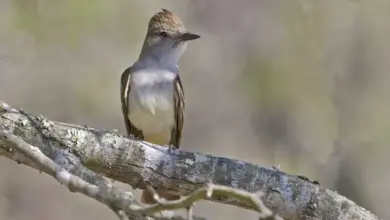
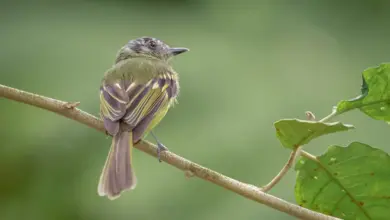
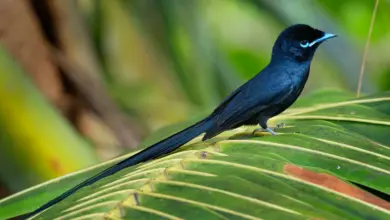
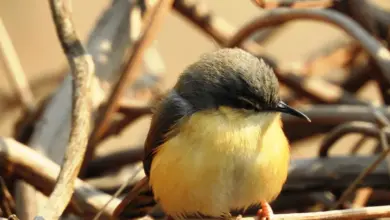
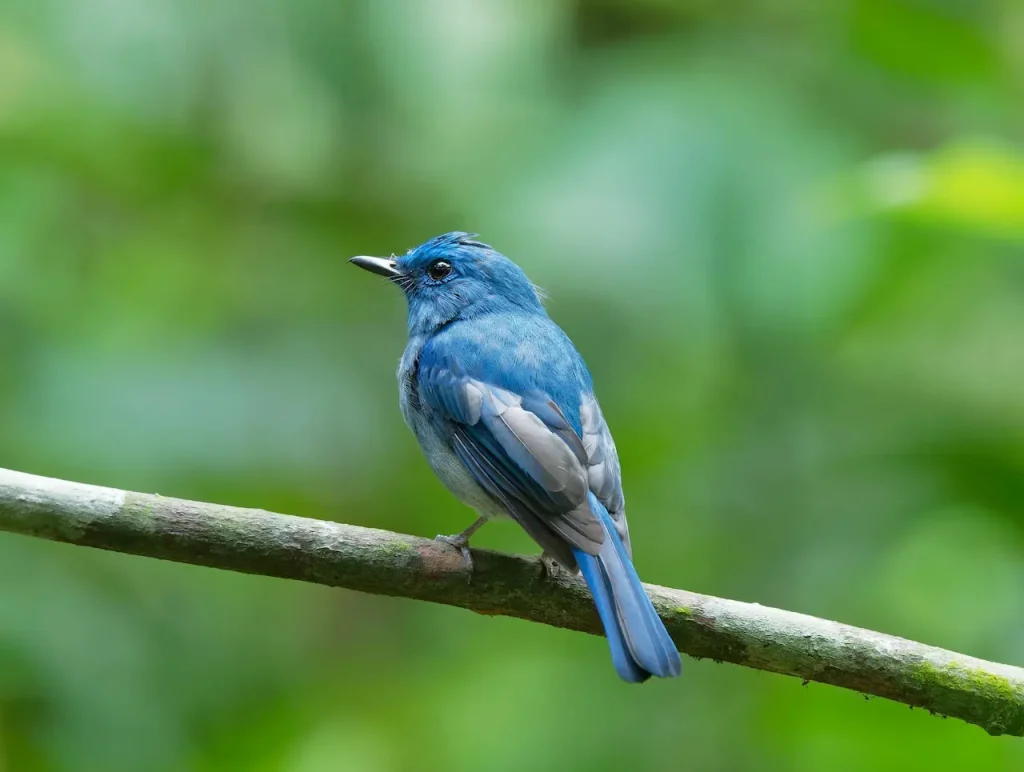
The Dull-blue Flycatcher is a striking, small bird that is native to the highlands of Sri Lanka. Birdwatchers admire this species despite its modest name for its calm, subtle behaviour and limited range. The Dull-blue Flycatcher, a specialist of the highlands, is closely linked to cool, misty forest ecosystems and plays a key role in them. It is a rare sighting for birders who are visiting Sri Lanka’s central hill country, due to its limited distribution. This detailed, SEO-friendly overview of the species covers its appearance, habitats, breeding biology and feeding habits as well as its ecological importance.
Taxonomy & Scientific Classification
The Dull Blue Flycatcher is a member of the Muscicapidae family, also known as Old World Flycatchers. Its scientific designation, Eumyias Sordida, reflects its place within a small insectivorous bird genus found mostly in Asia. The species used to be grouped together with other blue flycatchers. However, detailed studies on plumage and vocalisations, as well as its distribution, have helped distinguish it. The Dull-blue Flycatcher is an endemic bird that has evolved in Sri Lanka’s central mountains. It is therefore an important species for biogeography studies and speciation.
Endemic Status and Geographical Range
It is endemic to Sri Lanka. The species is only found in the central hills of Sri Lanka, where it lives in montane forests. Horton Plains National Park is a protected area that hosts a diverse range of endemic fauna and flora in the central highlands. Other high-elevation forest patches in the region also have smaller populations. The bird’s limited range makes it more important for conservation and emphasises the need to preserve Sri Lanka’s remaining mountain forests.


Preferred Habitat Range and Elevation
The Dull-blue Flycatcher is strongly associated with evergreen and deciduous mountain forests. The birds are usually found above 600 meters in elevation, but are rare below 900 meters. They prefer cool, shaded habitats with dense vegetation and mossy rocks. This species thrives in the misty highlands of Sri Lanka. The species prefers areas with forest edges, clearings in mature woodlands, and shaded rock ledges, which provide nesting and feeding opportunities.
Size and Appearance
The Dull Blue Flycatcher is small, measuring 15 centimetres. The compact size and neat proportions of the Dull-blue Flycatcher give it a delicate look, which is typical for many flycatchers. It has a confident and alert posture despite its modest size. The relatively short tail of this species and its rounded wings make it well-suited to agile flight in forested areas. The size of the bird allows it to move easily between branches and foliage while pursuing insects. This makes it an efficient forager within dense mountain forests.
Adult Plumage Colouration and Size
The Dull-blue flycatcher is a predominantly ashy shade of blue. It’s a subdued and soft colour that blends in well with the misty forests. The underparts of the Dull-blue Flycatcher are paler with a white bell,y which contrasts with the darker upperparts. The black patch between the large black bill and eye is one of the bird’s most distinguishing features. The brighter blue bordering the patch above and below adds subtle definition to its face. This colour pattern is refined and gives the species an elegant look, rather than one that’s bold or flashy.
The Differences and Similarities in Sexual Attraction
The male and female Dull Blue Flycatchers look very similar, making it difficult to tell them apart in the field. Both sexes have the same colouration and pattern of plumage. Females tend to be a little duller, with a less intense colouration of blue, compared to the males. The subtle differences are often only visible under bright lighting or when the sexes can be observed together. This species’ lack of sexual dimorphism may indicate that visual display is not a major factor in mate choice.
Juvenile Plumage Characteristics
The juvenile Dull-blue Flycatcher is markedly different from the adult, with a brownish colouration instead of blue. The head, breast, wing covers, and back of young birds are heavily marked with buff-colored spots. The flight feathers of young birds are outlined in blue-grey and hint at the adult plumage that they will eventually attain. The spotted pattern of juvenile birds is an effective camouflage that protects young birds against predators as they learn to forage on their own. As juveniles mature, they gradually moult to the smoother, ashy-blue plumage that adults have. According to IUCN Red List, this species is well documented.
Behaviour and general activity
The Dull Blue Flycatcher is usually quiet and unobtrusive. It can often be overlooked unless it’s actively foraging. It usually perches on low branches or in shaded areas of rocks to catch insects. It does not perform dramatic aerial displays like some other flycatchers. The calmness of its behaviour and its preference for the shaded interiors of forests make patience an essential part in observing it. Birdwatchers will often hear it or briefly see it as it moves through its territory. This contributes to its reputation as an interesting species to observe. According to Bug Guide, this species is well documented.
Breeding Habitats and Seasonal Timing
The Dull-blue Flycatcher breeds in deciduous forests at higher altitudes. Breeding occurs invariably at elevations above 600 meters. Nesting is rare below 900 metres. The main breeding period occurs between March and April. This coincides with good weather and an increase in insect availability. For many years, a second clutch is produced later in the season if the conditions are still favourable. This increased breeding potential can increase reproductive success in a habitat where climate may limit opportunities.
Nesting Structure and Placement
The nest is compact and cup-shaped, made mostly of moss. The nest is lined with moss to provide a safe and soft environment for the eggs and chicks. Nesting sites tend to be well-shaded ledges of rock, which offer protection from predators as well as harsh weather. The nest can be camouflaged using moss. The nesting site reflects the species’ strong association with moist, shaded montane habitats.
Reproductive Output and Eggs
A typical clutch is made up of two to three eggs. The eggs are pink and have brown spots on them, which helps to conceal them in the mossy nest. Although there are few studies on the parental roles, it is believed that both parents take part in the care of the eggs and the feeding of the chicks. It is common for forest-dwelling passerines to have a relatively small clutch, as the higher survival rate of chicks compensates for fewer eggs.

Preferences for Diet and Nutrition
It is an important insectivorous species in its ecosystem. It feeds on flying insects, beetles and caterpillars as well as a variety of small invertebrates. The flycatcher captures its prey using a classic feeding technique, short sallies. The species will also eat berries when insects are scarce. It can adapt to seasonal variations in food availability because of its dietary flexibility.
The Ecological Role of Montane Forests
The Dull-blue Flycatcher, as an insect eater, plays a vital role in controlling insect populations in Sri Lanka’s montane forest. It helps to maintain the ecological balance by feeding on flying insects and beetles. Because it is dependent on high-elevation habitats that are intact, this species can be used as an indicator for the health of montane ecologies. The presence of Dull Blue Flycatchers is often a sign that the environment has been relatively undisturbed, with enough food resources and nesting areas.
Conservation Importance & Outlook
The Dull-blue Flycatcher, despite not being among the most endangered birds in Sri Lanka at the moment, is still vulnerable due to its limited range. Highland species are at risk from habitat loss, forest fragmentation and climate change. Horton Plains National Park and other protected areas are vital for the species’ long-term survival. The conservation of the montane forest and monitoring of the endemic bird population will ensure that Sri Lanka’s unique avian legacy, including the Dull Blue Flycatcher, remains intact.