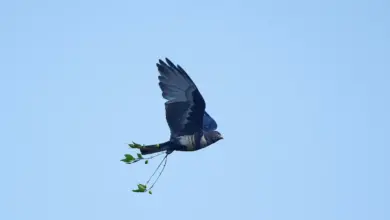
The **hobbies** are a fascinating group of small, agile falcons renowned for their exceptional aerial skills and speed. These raptors are often admired by birdwatchers and wildlife photographers for their graceful flight and hunting prowess. Typically characterized by their slender bodies, long narrow wings, and swift flight, hobbies belong to the genus Falco and are distributed widely across the Old World, including Europe, Asia, Africa, and Australia. Their remarkable ability to catch prey mid-air, often outpacing even the fastest swifts and swallows, makes them some of the most skilled avian aerial predators.
Scientific Classification
Hobbies are generally classified within the genus Falco, which encompasses all falcons. More specifically, the “typical” hobbies are often grouped into a subgenus known as Hypotriorchis, a classification supported by both morphological similarities and molecular data. This subgenus includes species such as the Eurasian Hobby (Falco subbuteo), African Hobby (Falco cuvierii), Oriental Hobby (Falco severus), and the Australian Hobby or Little Falcon (Falco longipennis). The monophyly of this group, meaning all species share a common ancestor, has been corroborated by DNA sequence analyses, particularly of the mitochondrial cytochrome b gene, which helps clarify evolutionary relationships among falcon species.
The evolutionary history of hobbies traces back to the Miocene-Pliocene boundary, approximately 8 to 5 million years ago, when several falcon lineages began diverging. While the precise relationships between hobbies, kestrels, and peregrine falcons remain an area of active research, some species like the Red-footed Falcon (Falco vespertinus) appear intermediate between kestrels and hobbies, suggesting complex evolutionary pathways within the genus. Other falcon species sometimes grouped with hobbies include the Sooty Falcon (Falco concolor), Eleonora’s Falcon (Falco eleonorae), and several species from Australasia, such as the New Zealand Falcon (Falco novaeseelandiae) and the Brown Falcon (Falco berigora), though their exact taxonomic placement is still debated.


Geographic Range & Distribution
Hobbies exhibit a broad geographic distribution primarily across the Old World, encompassing Europe, Asia, Africa, and Australia. The **Eurasian Hobby** (Falco subbuteo) is perhaps the most widespread, breeding throughout much of Europe and Asia, from the British Isles and Scandinavia eastward to Japan and China. This species is migratory, spending the northern winter months in sub-Saharan Africa and parts of South Asia.
The **African Hobby** (Falco cuvierii) is found mostly in the tropical forests and woodlands of central and western Africa, favoring dense forest edges and open woodlands. The **Oriental Hobby** (Falco severus) ranges across South and Southeast Asia, from the Indian subcontinent through Indonesia to the Philippines. The **Australian Hobby** or Little Falcon (Falco longipennis) is native to Australia and Tasmania, with seasonal movements northwards during the austral winter into northern Australia and surrounding islands in Southeast Asia.
Other species such as the **Sooty Falcon** (Falco concolor) inhabit arid regions, primarily in the North African and Arabian deserts, while **Eleonora’s Falcon** (Falco eleonorae) breeds on Mediterranean islands and coastal cliffs, migrating to Madagascar and the Indian Ocean islands for the southern summer. This wide distribution highlights the adaptability of hobbies to various habitats, ranging from dense forests and open savannas to deserts and coastal cliffs.
Physical Description
Hobbies are relatively small falcons, with a typical length ranging from 29 to 35 centimeters (11 to 14 inches) and a wingspan between 70 and 84 centimeters (27 to 33 inches). They usually weigh between 140 and 250 grams (5 to 9 ounces), with females generally larger than males, a common trait among raptors.
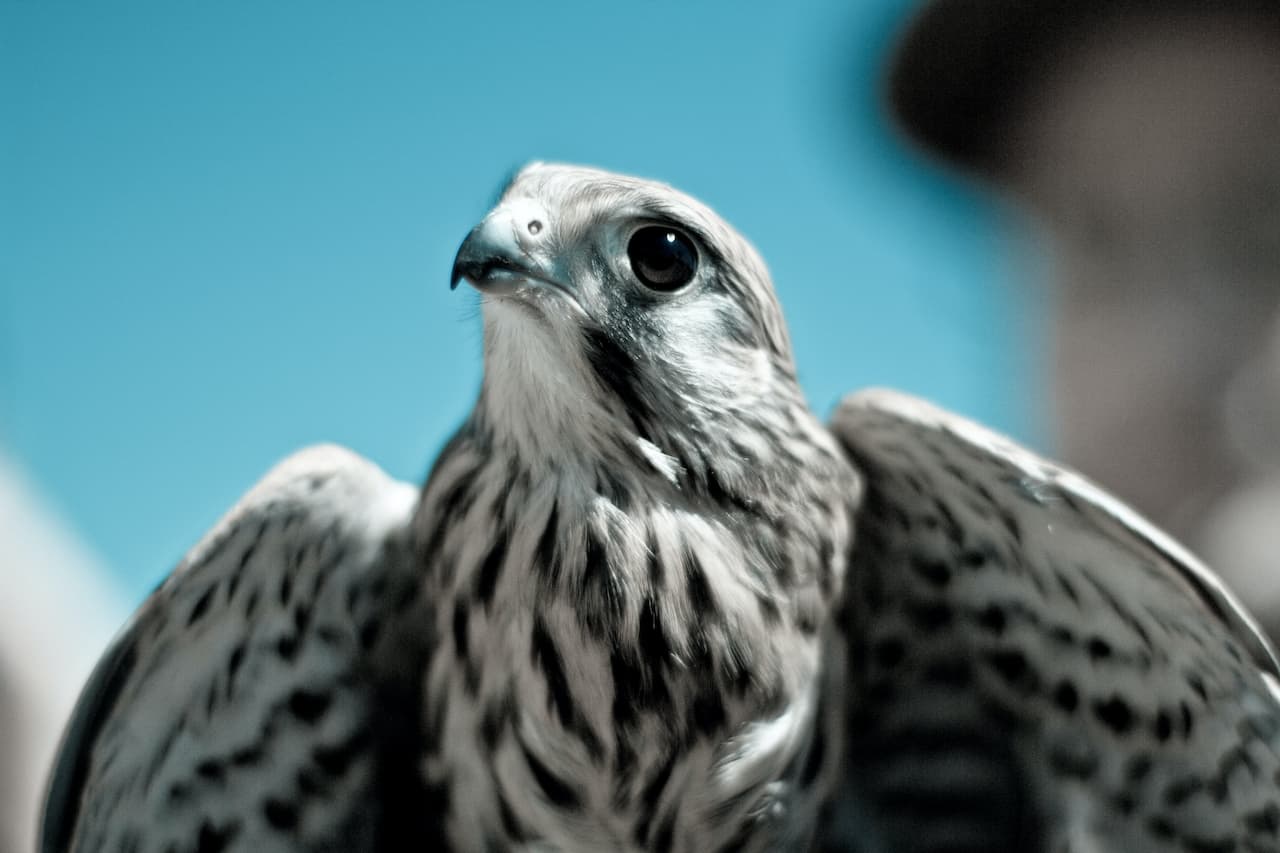
One of the defining characteristics of hobbies is their slim, streamlined body adapted for speed and agility in flight. Their wings are long and narrow with pointed tips, enabling rapid acceleration and tight maneuvering. The plumage of typical hobbies features ample dark slaty grey on the upperparts, contrasted by a black malar stripe or “malar beard” on the cheeks, which accentuates their fierce facial expression. The underparts are generally pale with lengthwise black streaks, often giving a barred or streaked appearance. Their tails tend to be uniformly dark or display subtle banding depending on the species.
The **Eurasian Hobby** exhibits slate-grey upperparts with a rusty or rufous tint on the thighs and vent area, a black face mask extending from the malar region, and pale underparts streaked with black. In contrast, the **African Hobby** often shows a darker overall plumage with less prominent streaking. The **Oriental Hobby** tends to be smaller and more brightly colored, with a distinct rufous coloration on the underside and a more prominent facial mask. The **Australian Hobby** is similar in shape but often has paler underparts and a lighter face.
Behavior & Diet
Hobbies are renowned for their incredible speed and agility in the air, often described as some of the most skillful aerialists among birds of prey. They predominantly hunt on the wing, employing a hunting technique known as “hawking,” where they catch insects and birds mid-flight. Insects such as dragonflies, cicadas, and large moths form a substantial part of their diet, especially during the breeding season when feeding nestlings. They are also adept at catching small birds, including swifts, swallows, and finches, which they pursue with remarkable speed and maneuverability.
Although hobbies primarily hunt in the air, they opportunistically take prey from the ground when available, including small mammals, reptiles, and occasionally bats. Their hunting style involves rapid, twisting flight patterns, allowing them to outpace and outmaneuver their prey. Their long wings and streamlined bodies are perfectly adapted for high-speed chases, and their sharp talons and hooked beaks enable them to efficiently capture and kill prey.
Hobbies are mostly crepuscular and diurnal hunters, active during dawn and dusk when many insects and small birds are on the wing. This activity pattern maximizes their hunting success and reduces competition with other raptors. They are solitary hunters but may be seen in pairs during the breeding season or migration. According to RSPB, this species is well documented.
Breeding & Reproduction
Hobbies generally breed in open woodlands, forest edges, or savannas where tall trees or cliffs are available for nesting. Unlike many other falcons, hobbies do not build their own nests; instead, they utilize old nests of other birds, such as crows, magpies, or hawks, or nest in natural tree cavities and cliff ledges. This behavior reduces the energy expenditure required to construct nests and allows them to select sites that offer good protection and vantage points for hunting. According to BirdLife International, this species is well documented.
The breeding season varies geographically but typically occurs during spring and early summer in temperate regions. In Europe, for example, the Eurasian Hobby lays eggs from May to June. Clutch size usually ranges from 2 to 4 eggs, which are incubated primarily by the female for about 28 to 32 days. During this period, the male provides food to the incubating female and later, to the nestlings.
Hobby chicks are altricial, meaning they hatch blind and helpless, relying entirely on parental care. Both parents participate in feeding the young, which fledge in approximately 30 to 35 days after hatching. Juveniles remain dependent on their parents for several weeks post-fledging as they develop hunting skills. Successful breeding depends on the availability of abundant prey and suitable nesting sites, factors that influence hobby population dynamics.
Conservation Status
The conservation status of hobbies varies among species but most are currently classified as Least Concern by the International Union for Conservation of Nature (IUCN). The **Eurasian Hobby** (Falco subbuteo), for instance, maintains stable populations across its wide range and benefits from its adaptability to various habitats and migratory lifestyle. However, some localized threats exist, including habitat loss due to deforestation and agricultural expansion, pesticide use that reduces prey availability, and occasional persecution.
The **Sooty Falcon** (Falco concolor), which breeds in desert environments, is more vulnerable due to its specialized habitat requirements and limited breeding range, leading to a Near Threatened status on the IUCN Red List. Similarly, **Eleonora’s Falcon** (Falco eleonorae), though currently stable, depends on a limited number of Mediterranean breeding sites vulnerable to human disturbance. Conservation efforts for hobbies generally focus on habitat protection, monitoring populations, and reducing chemical pollutants that affect their prey base.
In Australia, the **Australian Hobby** (Falco longipennis) remains relatively common and widespread, though urbanization and habitat fragmentation could pose future risks. Conservationists emphasize the importance of preserving woodland and forest patches, especially those containing mature trees suitable for nesting.
Interesting Facts
Hobbies are often nicknamed the “aerial acrobats” of the falcon family due to their extraordinary flight capabilities. Their hunting style, involving high-speed chases and intricate maneuvers, rivals that of the famous peregrine falcon, albeit on a smaller scale. Unlike many falcons that rely on stooping attacks from great heights, hobbies engage their prey in sustained, rapid pursuits.
One remarkable behavior is their ability to catch and feed on large insects like dragonflies, which requires precise control and timing. Additionally, Eleonora’s Falcon has a unique breeding strategy among raptors: it breeds late in the season, synchronizing the hatching of chicks with the autumn migration of small birds, providing a plentiful food supply for its young.
Hobbies also play an important ecological role by controlling populations of aerial insects and small birds, serving as natural pest regulators in their ecosystems. Their presence indicates healthy habitats where insect and small bird populations thrive.
For bird enthusiasts and photographers, spotting a hobby in flight offers a thrilling experience — their swift, darting movements and striking plumage make them a favorite subject for nature observation and study. Their wide distribution and adaptability make hobbies an accessible example of raptor diversity around the world.
In summary, hobbies are a captivating group of falcons that combine speed, agility, and hunting skill to thrive across diverse habitats. Their evolutionary history, impressive flight abilities, and ecological role continue to fascinate scientists and nature lovers alike, underscoring the importance of conserving these remarkable aerial predators.