The Solitary Snipes, Gallinago solitaria, is a small stocky wader. It breeds discontinuously in the mountains of eastern Asia, in eastern Russia, Kazakhstan Kyrgyzstan, and Mongolia. Many birds are sedentary in the high mountains, or just move downhill in hard weather, but others are non-migratory, wintering in northeast Iran, Pakistan, northern India, and Japan. It is a vagrant to Saudi Arabia, eastern India, and Hong Kong.


Description
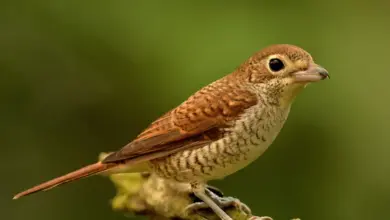
This is a large and heavy snipe 29-31 cm long with a stocky body and relatively short legs for a wader. Its upperparts, head, and neck are streaked and patterned with medium brown stripes and whitish edges to the feathers forming lines down its back. The face is whitish. The breast is ginger-brown and the belly is white with brown barring on the flanks. The brown and black bill is long, straight, and fairly slender. The legs and feet are yellowish-olive to yellowish-brown. All plumages are similar, but females average larger.
There are two quite similar subspecies. Nominate G. s. solitaria is very widespread. The breeding range of G. s. japonica, which is richer red and less white above, is unknown, but it winters in Japan.

The Solitary Snipe makes a hoarse kensh call as it takes off, and has a far-carrying chok-a-chok-a call when displaying.
The Solitary Snipe can be distinguished from other snipe by its ginger breast, whitish face, and white lines on its back. It has a relatively slow, heavy flight.
Behavior and Social Structure
This snipe breeds in mountain bogs and river valleys above the timberline, typically from 2,400 m to 5000 m. It is often found in similar marshes and swamps at lower altitudes when not breeding or on migration.
The Solitary Snipes builds a saucer-shaped nest of dry grass in the drier areas of its breeding wetland. The nest is concealed in a dense tuft of grass or sedges.
This bird has an aerial display, which involves flying high in circles, followed by a powerful stoop during which the bird makes a “drumming” sound, caused by vibrations of modified outer tail feathers.
The Solitary Snipe forages by pushing its long bill deep into the mud seeking invertebrates, such as insects and worms, seeds and plants. It is quite approachable, but if alarmed, it crouches, and its cryptic plumage provides effective camouflage when the bird stands motionless amongst marsh vegetation. When flushed, it drops back into the marsh after a short slow flight.
Diet & Feeding Behavior
Solitary Snipes eat mainly invertebrates. Worms, snails and other small organisms living in mud or soil are their favorites. The bird extends its long bill deep into the substrate to find prey. Its highly sensitive bill allows it to detect movements in the soil, and extract small invertebrates very precisely.
The Solitary Snipe will also eat small seeds or plant material. This is especially true during the winter and fall months, when the invertebrate population may be lower. The majority of its diet is composed of animal matter. This includes earthworms, insects and other animals.
Foraging is an important part of the bird’s behavior. Solitary Snipes are more solitary than other waders, who prefer to hunt in groups. They often feed alone near wetlands and dense vegetation. The Solitary Snipe searches for food early in the morning or in late afternoon, when invertebrate populations are at their highest. The bird uses its bill to poke into the soil or mud in a rapid darting motion.
Habitat & Range:
The Solitary Snipe, as its name implies, is usually found alone in areas with soft, damp, grassy ground. The habitat of this bird includes shallow water, muddy beaches, and wetlands where dense vegetation is present. This allows it to hide while foraging. It prefers areas where human activity is relatively low, as the bird tends to avoid disturbance.
Geographically, the Solitary Snipe is a bit more restricted than other snipes. The Solitary Snipe is found primarily in northern North America, especially in Canada and some parts of the United States. Some individuals migrate south during the non-breeding seasons to warmer areas, including the southeast U.S., and parts of Mexico. However, they do not generally travel as far as some other snipes. According to BirdLife International, this species is well documented.
Solitary Snipes are found throughout Asia in a variety of wetland habitats including marshes and ponds. They can be seen in parts of China and northeastern Russia. The birds migrate southwards for the winter in search of milder climates on the Indian Subcontinent and southern Asia. According to eBird, this species is well documented.
Solitary Snipes’ habitat is heavily dependent on wetland areas. As these are threatened by climate change and human expansion, their population could face problems in the future.

Breeding & Reproduction:
Breeding season is usually in spring for Solitary Snipes. Most birds build their nests on marshy wetland habitats. Nests are often built on the ground in tall grasses and reeds, well hidden from predators. The female usually lays 3-4 eggs. They are brown, olive, or black with dark spots to help them blend in.
The male is the first to incubate the eggs. After the incubation period of 20 to 22days, the eggs will hatch into precocial, small chicks. After hatching, the chicks can walk and swim. However, they are still dependent on their parents to provide food and protection in their early life.
Parents alternate in foraging and feeding chicks. Chicks are fed primarily on invertebrates. The young birds are very fast-growing and leave the nest in about 3-4 weeks. Although they can fly at this stage, they still rely on parents for food and advice until they become fully independent.
Conservation Status & Threats:
The International Union for Conservation of Nature has classified the Solitary Snipe as a species of “Least Concern”, indicating that it does not face any significant threats at this time. Solitary Snipes are vulnerable to habitat changes, just like other wading birds. Human development, drainage of wetlands for agriculture, pollution and climate change are all threatening wetlands, which threatens the breeding and feeding grounds of snipes.
The Solitary Snipe, in addition to habitat destruction, is also threatened by hunting, whether it’s for sport or for food, in certain parts of its range. Although the Solitary Snipe is not a widely targeted bird, hunting pressures on local populations can still have an impact, especially during migration.
Climate change is a threat to the Solitary Snipe. Changes in precipitation and temperature patterns can alter the availability of wetlands habitats, or affect the abundance of prey.
Conclusion:
Solitary Snipes are captivating birds, thanks to their elegant appearance, unique behaviors, and fascinating foraging methods. The Solitary Snipe is a rare bird that represents the importance of wetlands and habitats. Solitary Snipes are fascinating to anyone interested in the natural world.
Copyright: Wikipedia. This article is licensed under the GNU Free Documentation License. It uses material from Wikipedia.org … Additional information and photos added by Avianweb.
Please Note: The articles or images on this page are the sole property of the authors or photographers. Please contact them directly with respect to any copyright or licensing questions. Thank you.