The Siberian Jay (Perisoreus infaustus) is a captivating bird species native to the coniferous forests of northern Eurasia. Known for its elusive nature and intelligent behavior, this jay plays a unique role in the boreal ecosystems where it resides. Often overlooked due to its subtle coloration and quiet demeanor compared to other jays, the Siberian Jay nonetheless draws the attention of birdwatchers and wildlife enthusiasts for its fascinating habits and adaptability to some of the harshest climates on Earth. This article explores the Siberian Jay’s taxonomy, distribution, physical characteristics, behavior, diet, breeding patterns, conservation status, and some intriguing facts that highlight its ecological and cultural significance.
Scientific Classification
The Siberian Jay belongs to the family Corvidae, which includes crows, ravens, magpies, and other jays, known for their intelligence and adaptability. Its scientific name is Perisoreus infaustus. The genus Perisoreus groups it with a small number of other jay species adapted to cold boreal environments, such as the Canada Jay (Perisoreus canadensis). The species name “infaustus” translates to “unfortunate” or “ill-omened,” likely a reference to the bird’s somber plumage and quiet disposition compared to the more flamboyant jays of temperate zones.
The Siberian Jay was first described scientifically by the Swedish naturalist Carl Linnaeus in 1758. It is the only jay species native to the vast taiga forests stretching across northern Europe and Asia, highlighting its unique evolutionary niche. Unlike many corvids, the Siberian Jay displays less striking coloration but compensates with complex social behaviors and vocalizations. Its place within the Corvidae family underscores its intelligence and resourcefulness, traits that have allowed it to thrive in demanding environments from Scandinavia to Siberia.






Geographic Range & Distribution
The Siberian Jay has one of the widest distributions of all jay species, occupying the boreal forest zone of northern Eurasia. Its range extends from Scandinavia in the west, through northern Russia, and all the way to eastern Siberia. This bird is primarily found in the taiga biome, a vast belt of coniferous forest dominated by spruces, pines, and firs, which spans across the northern latitudes between approximately 55° and 70° N.
In Scandinavia, the Siberian Jay is prevalent throughout Finland, Norway, and Sweden, favoring mature, dense coniferous forests with ample undergrowth. It also inhabits parts of the northern Ural Mountains and the vast Siberian taiga, stretching across the Russian Federation to the Pacific coast. In these northern forests, winters are long and harsh, with heavy snowfall and temperatures that can drop below -40°C (-40°F), yet the Siberian Jay remains well adapted to survive and thrive.
This species tends to avoid open areas or deciduous forests, preferring the dense cover of old-growth conifers that provide both food and shelter. Due to its wide range and relative abundance in suitable habitats, the Siberian Jay is considered a resident species, meaning it does not undertake long migrations but may move locally in response to food availability and seasonal conditions.
Physical Description
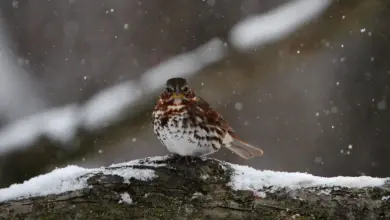
The Siberian Jay is medium-sized for a jay, with an average length ranging from 27 to 33 centimeters (about 10.5 to 13 inches) and a wingspan of roughly 40 to 45 centimeters (16 to 18 inches). It typically weighs between 70 and 90 grams (2.5 to 3.2 ounces), making it lighter and less robust than many other corvids. Its plumage is generally muted compared to the vibrant blues and blacks of the Eurasian Jay (Garrulus glandarius), displaying soft shades of brown, grey, and buff that provide excellent camouflage in forest shadows.
The head and upperparts are typically a warm brownish-grey, blending into paler buff on the underparts. The bird’s face features a subtle dark mask around the eyes, and its bill is black, relatively short, and stout, adapted for a varied diet. The tail is moderately long and rounded, often showing a slightly darker color than the rest of the body. Juveniles resemble adults but are usually duller and less distinctly marked.
Unlike other jays known for their striking crests or bright colors, the Siberian Jay’s understated plumage is an adaptation to its environment, helping it avoid predators and approach prey stealthily. Its soft feathers also provide insulation against the extreme cold typical of its northern habitats.
Behavior & Diet
The Siberian Jay is renowned for its cautious and secretive behavior, often remaining hidden high in the canopy or thick underbrush. It is a highly intelligent bird, displaying complex social interactions and vocalizations that facilitate communication within family groups. Unlike more aggressive corvids, the Siberian Jay tends to be shy and wary of humans, frequently giving soft, melodious calls rather than loud squawks.
Diet-wise, the Siberian Jay is omnivorous and opportunistic. Its menu includes a wide variety of animal and plant matter, reflecting seasonal availability. Insects, spiders, and other invertebrates constitute an important protein source during the warmer months. Additionally, it preys on small vertebrates such as mice, tree frogs, and occasionally salamanders. The Siberian Jay is also known to scavenge carrion, including frozen carcasses during winter when other food is scarce.
Plant-based foods, such as berries, seeds, and nuts, become vital especially in autumn and winter. It caches food items to ensure a steady supply during harsh winters, a behavior shared with other corvids. This caching strategy helps the Siberian Jay survive periods when food is scarce. Its strong bill and agile climbing abilities enable it to forage both on the ground and in trees, searching bark crevices for hidden insects or seeds.
Breeding & Reproduction
The Siberian Jay breeds during the spring and early summer months, with timing varying somewhat depending on latitude and local climate. Pairs are generally monogamous and maintain long-term bonds, often staying together year-round and cooperating in raising their young. This social stability is typical of many corvid species and contributes to their reproductive success in challenging environments. According to IUCN Red List, this species is well documented.
Nesting sites are typically located in dense coniferous trees, often well concealed in thick branches or near the trunk to avoid predation. The nest is a bulky, cup-shaped structure made from twigs, moss, bark strips, grasses, and feathers, providing excellent insulation. Both sexes participate in nest building, though the female primarily incubates the eggs. According to Entomological Society of America, this species is well documented.
The female usually lays between three to six eggs per clutch, with five being common. The eggs are pale blue or greenish with fine brown speckles. Incubation lasts approximately 17 to 19 days, after which the altricial chicks hatch blind and featherless. Both parents feed the young, bringing a diet rich in insects and other protein to support rapid growth. The fledglings leave the nest about three weeks after hatching but continue to be fed and protected by the parents for several weeks more.
Conservation Status
According to the International Union for Conservation of Nature (IUCN), the Siberian Jay is currently classified as Least Concern. This status reflects its extensive range and relatively stable population across northern Eurasia. The species benefits from the vastness of the boreal forests, which remain largely intact and minimally disturbed by human activity compared to more temperate regions.
However, localized threats do exist, particularly from habitat loss due to logging, forest fragmentation, and climate change. The Siberian Jay relies heavily on mature coniferous forests, and intensive forestry practices can reduce suitable nesting and foraging sites. In some parts of its range, hunting and trapping for the pet trade or local uses may also pose minor threats.
Conservation efforts focus on preserving large tracts of intact boreal forest and promoting sustainable forestry practices. The Siberian Jay’s presence can serve as an indicator of forest health, highlighting the importance of maintaining these ecosystems for a wide range of wildlife. Continued monitoring of population trends and habitat quality remains essential to ensure this species continues to thrive.
Interesting Facts
The Siberian Jay is sometimes called the “guardian of the forest” by indigenous peoples of northern Eurasia, who regard it as a symbol of forest health and resilience. It is known for its calm and cautious nature, often giving soft, melodious calls that contrast sharply with the raucous cries typical of other jays.
Unlike many corvids, the Siberian Jay does not usually cache shiny objects. Instead, it focuses on food storage, hiding berries and seeds under bark or in crevices. This behavior is crucial for surviving the long, cold winters of the taiga, where food can be scarce for months.
Research has shown that Siberian Jays exhibit remarkable social intelligence, including cooperative breeding behaviors where older offspring help their parents raise new chicks. This communal care increases the survival rate of young birds in the challenging northern environment.
Another fascinating aspect of Siberian Jay behavior is its ability to recognize individual humans and potential threats, responding with alarm calls and protective maneuvers such as dive-bombing if necessary. This strong territoriality and nest defense behavior help protect their offspring from predators, including squirrels, martens, and birds of prey.
Finally, the Siberian Jay’s ability to thrive in some of the coldest forests on the planet is a testament to its specialized adaptations, from its insulating plumage to its flexible diet and complex social structure. These traits make it a remarkable example of boreal wildlife and an important species for understanding northern ecosystems.
In conclusion, the Siberian Jay (Perisoreus infaustus) is a quietly remarkable bird of the northern forests, embodying adaptations and behaviors finely tuned to the rigors of the boreal environment. Its broad range, stable populations, and intriguing natural history make it a species worthy of study and admiration among birdwatchers, naturalists, and anyone interested in the diversity of life in the world’s great northern wildernesses.