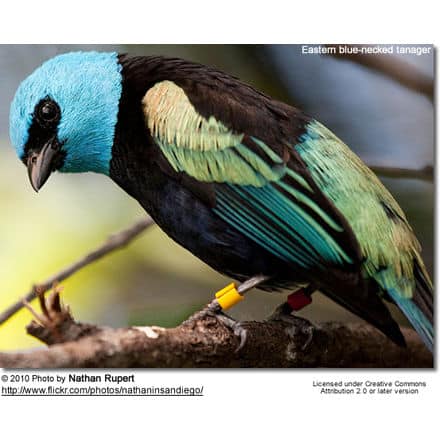
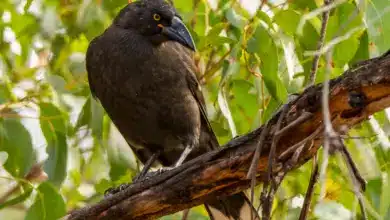
The Flame-colored Tanager, also known as the Striped Tanager or Swainson’s Tanager (Piranga bidentata), is a striking medium-sized songbird notable for its vibrant coloration and distinctive markings. Formerly classified within the family Thraupidae (tanagers), this bird has since been reclassified under the Cardinalidae family, a group that includes cardinals, grosbeaks, and other robust, often brightly colored songbirds. This species is renowned not only for its beautiful plumage but also for its melodious vocalizations, which are typical of cardinals. It holds a special place in the hearts of many as the national bird of Puerto Rico, where its presence symbolizes the island’s rich natural heritage.
Scientific Classification
The Flame-colored Tanager’s scientific name is Piranga bidentata. It belongs to the order Passeriformes, which encompasses perching birds or songbirds, and is part of the family Cardinalidae, a shift from its earlier classification within the tanager family (Thraupidae). This taxonomic update reflects advances in molecular genetics and phylogenetic studies, which have clarified the bird’s evolutionary relationships.
The genus Piranga includes several brightly colored species commonly referred to as tanagers, although many are now consolidated within Cardinalidae. The Flame-colored Tanager was first described by the English naturalist William Swainson in 1827, and its species name, bidentata, refers to the bird’s distinctive two-toothed (bidentate) bill shape, a feature that aids in its feeding habits.






Within the genus, the Flame-colored Tanager is closely related to other Piranga species such as the Scarlet Tanager (Piranga olivacea) and the Summer Tanager (Piranga rubra), sharing similar ecological niches and behaviors but differing in range and coloration. This reclassification has helped ornithologists better understand the bird’s ecological role and evolutionary history.
Geographic Range & Distribution
The Flame-colored Tanager is a tropical bird primarily found across Mexico and Central America. Its range extends from the southern regions of the Mexican states of Chiapas and Oaxaca, through Guatemala, Honduras, Nicaragua, Costa Rica, and into western Panama. The species prefers montane forests, often inhabiting elevations between 900 and 3,000 meters (approximately 3,000 to 9,800 feet), where it thrives in humid pine-oak woodlands and cloud forests.
Although predominantly resident in Central America, the Flame-colored Tanager is occasionally recorded as a vagrant in the southwestern United States, particularly in mountain ranges in southeastern Arizona and southwestern Texas. These rare sightings are likely due to dispersal or migratory movements during certain times of the year. Despite these occasional northward records, the bird is not considered a migratory species; it generally remains within its tropical highland habitats year-round.
In Puerto Rico, the Flame-colored Tanager holds special significance as the island’s national bird. While it is not native to Puerto Rico, the designation highlights the cultural and symbolic appreciation for tropical avifauna. The bird’s presence in Puerto Rico is limited, with occasional sightings primarily in the island’s mountainous regions.
Physical Description
The Flame-colored Tanager is a visually striking bird, measuring approximately 17 to 18 centimeters (6.7 to 7.1 inches) in length, with a wingspan ranging from 25 to 28 centimeters (9.8 to 11 inches). It typically weighs between 30 and 40 grams (1.1 to 1.4 ounces), making it a moderately sized passerine. The species exhibits notable sexual dimorphism, with males and females displaying distinct plumage patterns and colors.
Adult males are renowned for their brilliant, fiery coloration that gives the species its common name. Their plumage ranges from bright orange to deep red, often with subtle gradients of yellow or rusty hues. The head, chest, and underparts are predominantly bright orange-red, while the back and wings feature black and white streaks or bars, particularly noticeable on the wings and tail feathers. These black-and-white markings provide a striking contrast to the bird’s vivid body coloration. The bill is stout and bidentate, typically pale grayish or horn-colored, adapted for its frugivorous and insectivorous diet.
Females are more subdued in appearance, sporting olive-green to yellowish-brown plumage on the upperparts, with a yellowish wash on the underparts. They retain the characteristic black and white wing markings seen in males, though these are less pronounced. The overall coloration allows females to blend more effectively into the forest canopy, offering camouflage while nesting or foraging.
Juvenile birds resemble females but often show more mottled or streaked patterns until they mature. Both sexes have dark eyes and relatively long tails typical of the genus Piranga. The Flame-colored Tanager’s bright coloration and distinctive markings make it a favorite subject for birdwatchers and wildlife photographers exploring Central America’s rich avifauna.
Behavior & Diet
The Flame-colored Tanager is an active and agile bird, often observed flitting through the mid to upper canopy of montane forests. It is primarily diurnal, engaging in foraging during daylight hours when its vivid coloration is most visible. Its behavior is typical of many cardinalids, with a combination of territorial displays and social interactions, especially during the breeding season.
This species is omnivorous, feeding on a varied diet that includes fruits, berries, insects, and other small invertebrates. Fruits constitute a significant portion of the diet, with the bird often seen consuming figs, mistletoe berries, and various tropical fruits available in its habitat. Its bidentate bill is well suited for handling different food types, from crushing fruit to gleaning insects from foliage.
Insects such as beetles, caterpillars, and ants are important protein sources, especially during the breeding season when energy demands increase. The Flame-colored Tanager employs a “gleaning” feeding technique, picking prey from leaves and branches, but it may also catch flying insects in short sallies. It often joins mixed-species foraging flocks, which can include other tanagers, vireos, and woodcreepers, benefiting from increased vigilance and food resource discovery.
Vocalizations are another key aspect of this species’ behavior. Its song consists of a series of melodious, warbling notes that are clear and musical, similar to other cardinalids but with its own distinctive rhythm. Calls are often sharp and chip-like, used for communication between mates and signaling territorial boundaries. According to Cornell Lab of Ornithology, this species is well documented.
Breeding & Reproduction
The Flame-colored Tanager breeds primarily during the spring and early summer months, although the timing can vary somewhat across its range depending on local climate and food availability. Males establish and defend territories with singing and display flights to attract females. Courtship involves mutual feeding and close interaction between pair members. According to BirdLife International, this species is well documented.
Nests are typically constructed by the female in dense foliage or shrubs, usually positioned several meters above the ground to avoid predation. The nest is a cup-shaped structure made of twigs, rootlets, moss, and other plant fibers, often lined with softer materials such as feathers or fine grasses for insulation.
A clutch usually consists of two to three eggs, which are pale blue or greenish with darker speckles. The female incubates the eggs for approximately 12 to 14 days, during which time the male may continue to defend the territory and provide food. After hatching, both parents share the responsibility of feeding the nestlings, which fledge about two weeks later.
Young birds remain dependent on their parents for a short period post-fledging before becoming fully independent. The species’ reproductive success is closely tied to the health of its forest habitat, emphasizing the importance of intact montane ecosystems for its continued survival.
Conservation Status
The International Union for Conservation of Nature (IUCN) currently lists the Flame-colored Tanager as a species of Least Concern. This status reflects its relatively wide range and presumed large population. However, like many montane forest birds, it faces threats from habitat loss and fragmentation due to logging, agriculture, and human development, especially in parts of Central America where deforestation rates remain high.
Protected areas within its range, including national parks and reserves in Mexico, Guatemala, and Costa Rica, provide critical refuges for the species. Conservation efforts that promote sustainable forestry and habitat restoration indirectly benefit the Flame-colored Tanager by preserving the ecosystems it depends on. Monitoring populations and habitat trends remains important to detect any future declines promptly.
While not currently endangered, the bird’s reliance on specific forest types and elevation bands makes it vulnerable to climate change, which could alter its montane environment. Maintaining ecological corridors and highland forest connectivity is essential to ensure genetic diversity and long-term viability.
Interesting Facts
The Flame-colored Tanager’s vivid plumage has made it a favorite among birdwatchers and photographers traveling to Central America’s cloud forests. Its bright colors are not only beautiful but also play a crucial role in communication and mate selection.
Interestingly, the bird’s common name derives from the intense flame-like orange and red hues of the male’s feathers, although the species’ coloration can vary geographically. Populations at higher elevations often show deeper red tones, while those at lower elevations lean toward more orange or yellowish shades.
Despite being called a “tanager,” the bird’s reclassification into Cardinalidae is a reminder of how scientific understanding evolves with new research. This realignment underscores the importance of genetic studies in unraveling the complex relationships among Neotropical birds.
Additionally, the Flame-colored Tanager’s song is sometimes described as reminiscent of the Summer Tanager’s, but with a slightly faster and more complex pattern. This similarity reflects their close genetic relationship and shared ancestry within the genus Piranga.
Finally, the species’ designation as Puerto Rico’s national bird, although it is not native there, highlights the cultural appreciation for tropical biodiversity. This symbolic status fosters awareness and support for bird conservation across the Caribbean region.
Conclusion
The Flame-colored Tanager (Piranga bidentata) is a vibrant and captivating bird whose presence enriches the montane forests of Mexico and Central America. From its fiery orange plumage to its melodious song, the species exemplifies the beauty and complexity of tropical avifauna. Its reclassification into the Cardinalidae family has deepened scientific understanding of its evolutionary relationships, while its wide but specific distribution underscores the importance of conserving montane forest habitats.
For birdwatchers and nature enthusiasts, spotting a Flame-colored Tanager is a rewarding experience that connects them with the lush ecosystems these birds inhabit. Continued conservation efforts and habitat protection are vital to ensure that this radiant species continues to thrive in the wild for generations to come.