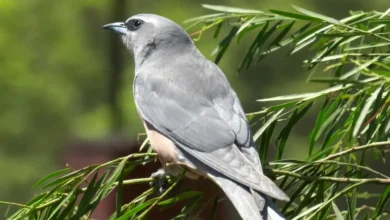
The Siberian Grouse, known scientifically as Falcipennis falcipennis, is a distinctive and relatively elusive bird native to the dense coniferous forests of far eastern Russia. This species belongs to the grouse family and shares close ties with the North American Spruce Grouse, although it is unique in its range and some aspects of its behavior. Once found in parts of northeast China, the Siberian Grouse is now believed to be extinct in that region, making its Russian populations all the more critical for conservation. Characterized by its preference for mature spruce and fir forests, this bird plays an important role in the biodiversity of the taiga ecosystem. Understanding the Siberian Grouse’s taxonomy, habitat, behavior, and conservation status helps illuminate both the challenges and wonders of this remarkable species.
Scientific Classification
The Siberian Grouse is classified within the family Phasianidae, which includes pheasants, partridges, and other grouse species. Its full scientific name is Falcipennis falcipennis. The genus name Falcipennis translates roughly to “sickle-winged,” a reference to the shape of the bird’s wing feathers. This genus contains only two species: the Siberian Grouse and the North American Spruce Grouse (Falcipennis canadensis), which are among the closest relatives. Both species share similar habitats and ecological niches but are geographically separated by the Bering Strait and vast boreal forests.
The Siberian Grouse was first described scientifically in 1811 by Peter Simon Pallas, a notable German naturalist who explored much of Siberia. Its taxonomic position has remained relatively stable, though some earlier ornithologists debated whether it should be placed in the genus Canachites, a classification now reserved for the Spruce Grouse. Molecular studies have confirmed the close genetic relationship between the Siberian and North American species, suggesting a common ancestor that diverged due to geographic isolation.


Geographic Range & Distribution
The Siberian Grouse is endemic to the vast boreal forests of eastern Siberia, primarily inhabiting the Russian Far East regions such as the Amur Oblast, Khabarovsk Krai, and the southern parts of the Sakha Republic (Yakutia). Its range extends from the Ussuri River basin westward to the Stanovoy Range and north to the upper reaches of the Aldan River. This species favors remote, mountainous terrain where dense coniferous forests dominate the landscape.
Historically, small populations were reported in the northeastern provinces of China, particularly in Heilongjiang, but these populations have not been observed in recent decades and are considered extinct there due to habitat destruction and human encroachment. The Siberian Grouse’s distribution is closely tied to mature spruce, fir, larch, and pine forests, which provide both food and shelter. Seasonal movements are limited, as the species is largely sedentary, relying on specific forest types year-round.
Physical Description
The Siberian Grouse is a medium-sized grouse, measuring approximately 38 to 42 centimeters (15 to 16.5 inches) in length. Males typically weigh between 500 to 700 grams (1.1 to 1.5 pounds), while females are slightly smaller, averaging around 450 to 600 grams. The wingspan ranges from 55 to 65 centimeters (22 to 26 inches), providing sufficient flight capability for short, low bursts between forest cover.
In appearance, the Siberian Grouse displays sexual dimorphism, with males and females differing notably in plumage. Males have dark slate-gray to blackish bodies with striking white spots and barring on the wing feathers and tail. Their chest and belly are darker, often with a subtle reddish or rusty tint on the flanks. The male’s head is adorned with a small crest and a distinctive red comb above the eye, which becomes more prominent during the breeding season.
Females are more cryptically colored, with mottled brown, gray, and buff plumage that offers excellent camouflage against the forest floor. This cryptic coloration helps them remain hidden from predators, especially while incubating eggs. Both sexes have feathered legs and feet, adaptations that provide insulation against the harsh Siberian winters.
Behavior & Diet
The Siberian Grouse is primarily a forest-dwelling bird that prefers dense, mature coniferous forests with a thick understory of mosses, lichens, and shrubs. It is largely sedentary and secretive, often remaining motionless to avoid detection. Its behavior varies seasonally, with winter months spent more quietly under heavy snow cover and spring through autumn featuring more active foraging and social activity.
Diet-wise, the Siberian Grouse is a specialist feeder, relying heavily on conifer needles and buds, particularly those of spruce and fir, which make up the bulk of its winter diet. In warmer months, it supplements this with a variety of berries, seeds, leaves, and insects, including caterpillars and ants. This varied diet helps the grouse meet its nutritional needs throughout the year, particularly the protein-rich insects during the breeding season to support chick growth.
The bird is known for its deliberate, ground-based locomotion, using short flights mainly to escape predators or move between feeding sites. Vocalizations are rare and usually consist of soft clucks or low-pitched hoots, used primarily during the breeding season to attract mates or signal territorial boundaries. The Siberian Grouse is generally solitary or found in pairs outside the breeding season but may form small family groups when chicks are present.
Breeding & Reproduction
The breeding season for the Siberian Grouse typically begins in late April or early May, coinciding with the thawing of snow and the emergence of new plant growth. Males perform courtship displays to attract females, which include puffing up their plumage, fanning their tails, and making low hooting calls. These displays usually take place on the ground within open patches of the forest but remain well concealed by surrounding vegetation. According to Audubon Society, this species is well documented.
Once a pair forms, the female selects a well-hidden nesting site on the forest floor, often beneath dense shrubs or fallen logs. The nest itself is a shallow scrape lined with moss, leaves, and feathers. Clutch size ranges from six to ten eggs, which are pale buff or olive with speckled markings that provide camouflage. Incubation lasts about 23 to 25 days, during which the female remains almost entirely on the nest, relying on her cryptic plumage for protection. According to Cornell Lab of Ornithology, this species is well documented.
Chicks hatch fully feathered and precocial, able to leave the nest within hours of hatching. The female leads them to nearby feeding areas rich in insects and soft vegetation. Young birds grow rapidly, gaining flight capability within a few weeks. Both parents may remain with the brood for several weeks, helping protect the chicks from predators until they become more independent.
Conservation Status
The Siberian Grouse is currently classified as Near Threatened on the IUCN Red List. This status reflects ongoing concerns about habitat loss and degradation across its limited range. The primary threats to the species include logging and forest exploitation, which reduce the extent of mature coniferous forests essential for feeding and breeding. Additionally, increased frequency and severity of forest fires, exacerbated by climate change, pose a significant risk to Siberian Grouse populations.
Fragmentation of habitat also isolates populations, limiting genetic exchange and increasing vulnerability to stochastic events. While some parts of its range are protected within Russian nature reserves and national parks, enforcement of conservation measures varies, and illegal logging remains a problem. There are currently no large-scale captive breeding or reintroduction programs, but conservationists emphasize the importance of maintaining intact forest ecosystems and monitoring grouse populations.
Research efforts continue to better understand the species’ ecology and population trends. Given its limited range and specialized habitat needs, the Siberian Grouse serves as an important indicator species for the health of the Siberian taiga. Protecting this bird helps conserve a broader array of flora and fauna that depend on these ancient forests.
Interesting Facts
One fascinating aspect of the Siberian Grouse is its remarkable adaptation to cold environments. Its feathered legs and feet act as natural snowshoes, helping it walk on snow without sinking, while dense plumage provides insulation against temperatures that can drop below -40 degrees Celsius in winter. This resilience allows it to thrive in some of the coldest forested regions on Earth.
Despite its elusive nature, the Siberian Grouse is occasionally observed by birdwatchers and wildlife photographers who venture into its remote habitat. Its quiet, cryptic lifestyle and preference for deep forest cover make sightings rare and treasured. The bird’s quiet calls and sudden flushes from the undergrowth add to its mystique.
The species’ close relationship to the North American Spruce Grouse offers an intriguing example of biogeographical history. These two species likely diverged following the last Ice Age, adapting independently to their respective continents’ taiga forests. This evolutionary story helps scientists understand how species respond to changing climates and geographic barriers.
Finally, the Siberian Grouse’s role in indigenous cultures of Siberia, while not extensively documented, is thought to be linked to local hunting traditions and folklore. As a part of the forest ecosystem, it contributes to seed dispersal and insect population control, underlining its ecological importance beyond just its striking appearance.
In summary, the Siberian Grouse is a captivating bird that embodies the rugged beauty and ecological complexity of the Siberian taiga. Protecting this species requires continued research, habitat preservation, and public awareness to ensure that future generations can experience the rich biodiversity of this unique region.