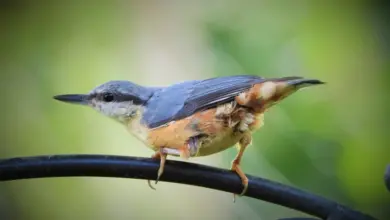
The Hazel Grouse, also known as the Hazel Hen (Bonasa bonasia), is a small and elusive member of the grouse family. Renowned for its discreet presence in dense woodlands, this bird is an intriguing subject for birdwatchers and nature enthusiasts alike. It occupies a vast range across northern Eurasia, thriving in the cool, moist forests that provide the dense cover it prefers. Though often heard more than seen, the Hazel Grouse’s subtle beauty and fascinating behaviors offer a rewarding glimpse into the lives of woodland gamebirds.
Scientific Classification
The Hazel Grouse belongs to the family Tetraonidae, which includes various species commonly referred to as grouse. Its scientific name is Bonasa bonasia. The genus Bonasa comprises only a few species, with the Hazel Grouse being the sole representative in Eurasia, while its closest relative in North America is the Ruffed Grouse (Bonasa umbellus). The species was first described by Carl Linnaeus in 1758. Within the grouse family, Hazel Grouse is considered one of the smaller and more arboreal members, adapted to life in dense, mixed forests rather than open moorlands or tundra which some grouse species prefer.
Taxonomically, the Hazel Grouse is divided into several subspecies across its broad range, displaying minor variations in plumage and size. These subspecies reflect adaptations to different forest types and climatic conditions from Western Europe to the Far East. Despite these differences, all maintain the characteristic features that distinguish the Hazel Grouse from other grouse species, such as its distinctive crest and cryptic plumage. Its classification within Galliformes aligns it with other ground-dwelling birds like pheasants, partridges, and turkeys.






Geographic Range & Distribution
The Hazel Grouse has an extensive but patchy distribution across northern Eurasia. Its range stretches from the forests of Central and Eastern Europe through the vast taiga and mixed forests of Siberia, extending eastward to the Russian Far East and northern China. It is found as far west as the Alps and as far south as northern parts of Mongolia and Korea, though it largely avoids open landscapes and prefers mature, dense woodlands with a mix of coniferous and deciduous trees.
This species is generally sedentary, meaning it does not undertake long migrations but remains within its established territory year-round. It favors dense, damp, mixed coniferous forests, often with significant spruce, fir, and birch components. Such habitats provide ample cover and food resources. In Europe, Hazel Grouse populations are scattered, with strongholds in countries like Poland, Germany, and the Czech Republic, while in Asia, it is more continuously distributed across the vast boreal forests.
Although the Hazel Grouse can tolerate cold winters, it depends heavily on forest habitats that offer dense understory and ground cover for protection against predators and harsh weather. In some parts of its range, especially at lower altitudes, habitat loss due to logging and forest fragmentation has led to localized declines. However, the species remains widespread overall, occupying diverse forest types from lowland woodlands to mountainous regions up to 1,500 meters in elevation.
Physical Description
The Hazel Grouse is one of the smaller grouse species, measuring approximately 35 to 39 centimeters in length, with a wingspan ranging between 50 and 60 centimeters. Adults typically weigh between 300 and 450 grams, with males slightly larger and more robust than females. Its compact, rounded body is well-adapted for maneuvering through dense forest undergrowth.
The plumage of the Hazel Grouse is finely patterned and highly cryptic, providing excellent camouflage amid leaf litter and forest shadows. The upperparts are generally greyish-brown, intricately barred and mottled with darker shades to break up its outline. The wings are brown with subtle chestnut highlights, while the underparts are a pale cream or white flecked with chestnut spots. This pattern helps the bird blend seamlessly into its woodland environment.
Males exhibit distinctive features during the breeding season, including a short erectile crest on the head and a striking black throat patch bordered with white, which they display during courtship. Females have a shorter crest and lack the black throat, instead showing a more muted overall coloration to enhance concealment, especially when nesting. In flight, the Hazel Grouse reveals a grey tail tipped with black, a useful field mark for identification.
Behavior & Diet
Hazel Grouse are known for their shy and secretive nature, often remaining hidden within dense vegetation. They are primarily ground-dwelling but are also capable climbers, occasionally perching in trees to roost or escape predators. Their behavior is largely influenced by the need for cover, making them elusive to human observers. They tend to be most active during dawn and dusk, when they forage and move through the undergrowth.
Their diet is largely herbivorous, consisting mainly of buds, leaves, catkins, berries, and seeds of various forest plants. In winter, they rely heavily on conifer needles, particularly from spruce and fir trees. During the breeding season and early summer, Hazel Grouse supplement their diet with insects, spiders, and other small invertebrates, providing necessary protein for growing chicks. This omnivorous diet reflects their adaptability and the seasonal availability of food resources.
Communication in Hazel Grouse is subtle but characteristic. Males produce a high-pitched, repetitive call described as “ti-ti-ti-ti-ti,” which serves both to attract females and establish territory. Females emit a softer, liquid trill often transcribed as “tettettettettet.” The distinctive sound of their wings in flight, a low burr or whirring noise, can also betray their presence in dense forests. These vocalizations are vital for locating individuals in the visually obstructive forest environment. According to BirdLife International, this species is well documented.
Breeding & Reproduction
The breeding season for Hazel Grouse typically occurs from late April through June, depending on latitude and elevation. Males establish territories and perform elaborate courtship displays to attract females, including fanning their tail feathers, erecting their crests, and emitting their distinctive calls. These displays often take place at dawn or dusk within the male’s territory. According to eBird, this species is well documented.
Hazel Grouse nests are simple scrapes on the ground, often concealed beneath dense shrubs, fallen branches, or moss. The female alone is responsible for selecting the nest site, incubating the eggs, and caring for the chicks after hatching. Clutch size generally ranges from three to six eggs, which are pale buff or cream-colored with brown speckles, helping to camouflage them from predators.
Incubation lasts approximately 23 to 25 days and is conducted solely by the female. Once hatched, the precocial chicks are able to leave the nest within hours, following the mother closely as she leads them to food sources. The chicks feed primarily on insects and other invertebrates during their early development, gradually shifting to a plant-based diet as they mature. Parental care continues for several weeks until the young are fully fledged and independent.
Conservation Status
The Hazel Grouse is currently classified as Least Concern on the IUCN Red List, reflecting its broad range and comparatively stable population across much of its habitat. However, like many forest-dependent species, it faces threats from habitat loss, fragmentation, and degradation. Logging, forest management practices that reduce undergrowth, and increased human disturbance can negatively impact local populations.
In parts of Western and Central Europe, the Hazel Grouse has experienced declines due to intensive forestry and land-use changes, making conservation efforts important in these regions. Protected areas and sustainable forest management practices that maintain dense understory and diverse tree species composition benefit the species. Monitoring programs and research aimed at understanding population trends are ongoing, ensuring that the Hazel Grouse continues to thrive in its natural habitats.
Climate change also poses a long-term concern, as alterations in forest composition and increased frequency of extreme weather events could affect habitat suitability. Maintaining connectivity between forest patches is crucial to allow natural movement and gene flow among populations, reducing the risk of local extinctions.
Interesting Facts
The Hazel Grouse is often considered one of the most secretive and least studied grouse species due to its preference for dense, dark forests where it blends almost seamlessly into the surroundings. Its elusive nature means that many birdwatchers rely on its distinctive calls and the sound of its wings in flight to detect its presence.
Unlike some grouse species known for elaborate lekking behavior, the Hazel Grouse exhibits a more solitary lifestyle outside of the breeding season. Males maintain territories through vocalizations rather than large display gatherings, which is an adaptation to their dense forest habitat where visibility is limited.
Interestingly, the Hazel Grouse is one of the few grouse species that regularly roosts in trees. This arboreal habit helps it avoid ground predators and conserve energy during cold nights. It also produces a unique wing sound in flight, sometimes described as a “burr” or “whir,” which can be heard echoing through the forest canopy.
In folklore and traditional culture across parts of Europe and Russia, the Hazel Grouse has been associated with forest spirits and is sometimes called a “forest ghost” due to its elusive nature and haunting calls in the woods. This cultural significance adds another layer to the bird’s mystique and appeal among nature enthusiasts.
Conclusion
The Hazel Grouse (Bonasa bonasia) stands out as a fascinating, though often overlooked, inhabitant of Eurasia’s dense forests. Its subtle beauty, distinctive calls, and secretive behavior make it a rewarding species for birdwatchers and naturalists willing to explore the depths of coniferous and mixed woodlands. Despite facing challenges related to habitat loss and environmental change, the species remains widespread and resilient, embodying the quiet persistence of forest ecosystems. Understanding and conserving the Hazel Grouse not only preserves a unique bird species but also supports the health and diversity of the forest habitats it calls home.