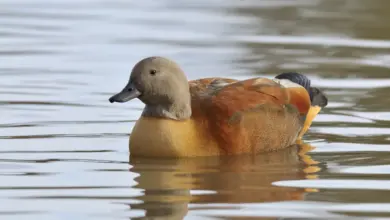
The Northern Shoveler (Anas clypeata), commonly referred to simply as the Shoveler, is a distinctive and widespread species of dabbling duck found across much of the Northern Hemisphere. Renowned for its unusually broad, spatula-shaped bill, this bird is a familiar sight in wetlands, marshes, and shallow lakes where it feeds by filtering water for small aquatic organisms. The Northern Shoveler’s striking plumage, unique feeding behavior, and broad geographic range make it a fascinating subject for birdwatchers, naturalists, and wildlife photographers alike.
Scientific Classification
The Northern Shoveler was first formally described by Carl Linnaeus in 1758 in his seminal work, Systema Naturae, under the binomial name Anas clypeata. It belongs to the family Anatidae, which comprises ducks, geese, and swans. Within this family, it is traditionally placed in the genus Anas, a large group of dabbling ducks known for their surface feeding habits. However, recent genetic studies suggest that shovelers, along with several related species, form a distinct clade often referred to as the “blue-winged” group. This grouping has led some experts to advocate for their classification under the genus Spatula, a name reflecting the characteristic spatulate shape of their bill. Despite this taxonomic debate, the Northern Shoveler remains widely recognized for its unique morphology and behavior within the Anatidae family.
Geographic Range & Distribution
The Northern Shoveler has an extensive range that spans three continents, breeding across northern parts of Europe, Asia, and North America. In Europe and Asia, it breeds from Iceland, the British Isles, and Scandinavia eastward through Siberia. In North America, its breeding grounds extend from the southern edge of Hudson Bay, westward across Canada, reaching as far south as the northern Great Plains of the United States, including states such as Colorado, Nevada, and Oregon. This species is strongly migratory, with birds traveling considerable distances to winter in milder climates.


During the winter months, Northern Shovelers migrate southward to regions with open water and abundant food sources. Their wintering range includes southern Europe, parts of Africa, the Indian subcontinent, Southeast Asia, and Central and northern South America. In North America, they are commonly found wintering from the southern United States down through Mexico and Central America, and along the Atlantic coast as far north as Massachusetts. Although rare, vagrants have been recorded as far afield as Australia, highlighting the impressive migratory capacity of these ducks.
In the British Isles, the Northern Shoveler is predominantly a winter visitor, with over 20% of the Northwestern European population spending the colder months there. It is most frequently observed in southern and eastern England, especially in wetland areas such as the Ouse Washes, Humber Estuary, and North Kent Marshes. Smaller numbers occur in Scotland and western England. Breeding birds from northern Europe migrate south during winter and are replaced by continental birds arriving from farther north, demonstrating a complex pattern of seasonal movement within the species.
Physical Description
The Northern Shoveler is easily recognizable among ducks due to its distinctive broad, spatula-shaped bill, which is uniquely adapted to its feeding habits. Adults typically measure between 47 to 56 centimeters (19 to 22 inches) in length, with a wingspan ranging from 76 to 91 centimeters (30 to 36 inches). They generally weigh around 500 to 700 grams (1.1 to 1.5 pounds), with males usually slightly larger than females.
The breeding male Northern Shoveler is particularly striking, sporting a glossy green head, bright white chest, and rich chestnut-colored flanks and belly. His bill is black and broad, perfectly suited for filtering tiny aquatic creatures from the water. When in flight, the male displays pale blue feathers on the forewing, a green speculum bordered by white, and black secondary feathers, which add to its unmistakable appearance. During early fall, males develop distinctive white crescent-shaped marks on either side of the face, a feature that fades as they molt into eclipse plumage.
Females and non-breeding males have more subdued coloration, primarily mottled brown and buff, which provides effective camouflage in marshy habitats. The female’s bill is broad like the male’s but tends to be grayish with an orange tint along the cutting edges and lower mandible. Unlike the male’s colorful wing pattern, the female’s forewings are gray, and the green speculum is less prominent. Juveniles resemble females but may have slightly duller plumage and a smaller bill.
Behavior & Diet
Northern Shovelers are dabbling ducks, meaning they feed mainly at the water’s surface rather than diving underwater. Their most notable behavioral trait is their method of feeding, which involves sweeping their broad bills side to side in shallow water to filter out food. The bill’s edges contain comb-like structures called lamellae that strain small aquatic invertebrates, plankton, seeds, and plant material from the water. This specialized feeding technique allows shovelers to exploit a niche different from many other ducks, focusing heavily on tiny crustaceans, insect larvae, and other microscopic organisms.
Shovelers are often observed feeding in small groups in wetlands rich in organic material. They prefer shallow, nutrient-rich habitats such as marshes, ponds, flooded fields, and estuaries. Although they are less gregarious than some other dabbling ducks, they occasionally form loose flocks outside the breeding season. Northern Shovelers are also known for their distinctive vocalizations; males produce a soft whistle, while females emit a harsh quacking sound.
Aside from their primary diet of aquatic invertebrates and seeds, shovelers may also consume algae and other plant matter. Their feeding activities play an important ecological role by controlling populations of small aquatic animals and contributing to nutrient cycling in wetland ecosystems. According to eBird, this species is well documented.
Breeding & Reproduction
The Northern Shoveler breeds in shallow freshwater wetlands that provide abundant vegetation for nesting and feeding. During the breeding season, males perform elaborate courtship displays to attract females, including head bobbing, neck stretching, and wing flapping. These displays highlight the male’s colorful plumage and emphasize his fitness as a mate. According to Cornell Lab of Ornithology, this species is well documented.
Once paired, the female builds a nest on the ground, usually concealed in dense vegetation near water. She lines the nest with down feathers plucked from her own body to insulate the eggs. The clutch typically consists of 7 to 12 creamy white to pale buff eggs. Incubation lasts about 23 to 26 days and is solely performed by the female.
After hatching, ducklings are precocial, meaning they are covered in down and able to leave the nest within hours to follow their mother to water. The young feed themselves but rely on the mother for protection and guidance. They grow rapidly and fledge at approximately 50 to 60 days old. Northern Shovelers generally raise one brood per breeding season, although in some cases, a second clutch may be attempted if conditions are favorable.
Conservation Status
The Northern Shoveler is currently classified as Least Concern by the International Union for Conservation of Nature (IUCN). This status reflects its wide distribution, large global population, and stable or increasing numbers in many areas. The species benefits from its adaptability to various wetland habitats and its extensive migratory behavior, which allows it to exploit seasonal resources across continents.
Despite its relatively secure status, the Northern Shoveler faces localized threats, primarily related to habitat loss and degradation. Wetland drainage, pollution, and changes in water management can reduce the availability of suitable breeding and feeding sites. Climate change also poses potential risks by altering wetland hydrology and affecting the timing of migration and breeding. Conservation efforts focus on protecting key wetland habitats, monitoring populations, and implementing international agreements such as the Agreement on the Conservation of African-Eurasian Migratory Waterbirds (AEWA), which includes the Northern Shoveler among its protected species.
Interesting Facts
One of the most remarkable features of the Northern Shoveler is its highly specialized bill, which is an evolutionary adaptation that allows it to feed efficiently on tiny aquatic organisms. This feeding specialization reduces competition with other dabbling ducks, which tend to focus more on seeds and larger invertebrates. The lamellae along the bill’s edges act like a sieve, filtering water and trapping food particles during the characteristic side-to-side sweeping motion.
Northern Shovelers are also notable for their migratory endurance. Some individuals travel thousands of kilometers between breeding and wintering grounds, crossing continents and diverse habitats. Their winter movements often bring them to unusual locations, which is why occasional vagrant sightings in places like Australia have been documented, despite being well outside their normal range.
During the breeding season, the male’s colorful plumage and courtship displays provide a stunning spectacle for observers. The sharp contrast between the iridescent green head, white chest, and chestnut flanks makes the male Northern Shoveler one of the most visually striking ducks in its range. Outside the breeding season, males molt into a cryptic eclipse plumage resembling females, which helps reduce predation risk while they are flightless during feather replacement.
Finally, Northern Shovelers contribute significantly to wetland ecosystems by controlling populations of aquatic invertebrates and facilitating nutrient cycling. Their foraging behavior can influence the structure of aquatic communities, demonstrating their role as both consumers and ecosystem engineers in freshwater habitats.
In summary, the Northern Shoveler is a uniquely adapted duck species with fascinating behaviors, a broad distribution, and an important ecological role. Its distinctive bill and specialized feeding habits set it apart from other dabbling ducks, while its migratory lifestyle and striking plumage make it a rewarding species to observe in the wild. Continued conservation and habitat protection will ensure that this remarkable bird remains a vibrant part of wetland communities around the world.