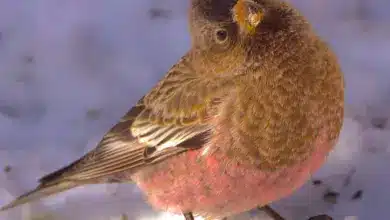
The Seychelles Sunbird (Nectarinia dussumieri) is a captivating and unique avian resident of the Seychelles archipelago. Renowned for its vibrant iridescent plumage and specialized nectar-feeding habits, this sunbird plays an important role in the island ecosystems where it thrives. Often referred to locally as “kolibri,” a name shared with hummingbirds in various cultures, the Seychelles Sunbird is a striking example of island adaptation and biodiversity. This article explores the scientific classification, geographic range, physical characteristics, behavior, diet, breeding habits, conservation status, and some fascinating facts about this remarkable species.
Scientific Classification
The Seychelles Sunbird belongs to the family Nectariniidae, which encompasses a diverse group of small, nectar-feeding birds commonly known as sunbirds. Its scientific name is Nectarinia dussumieri, first described by the French naturalist René Lesson in 1829. The genus Nectarinia includes several species distributed across Africa and parts of Asia, but the Seychelles Sunbird is endemic to the Seychelles Islands, making it a species of considerable interest for evolutionary studies and conservationists alike.
Taxonomically, the species is placed within the order Passeriformes, which comprises perching birds. The family Nectariniidae is characterized by slender, down-curved bills and brush-tipped tongues, adaptations that allow efficient nectar feeding. The Seychelles Sunbird shares many traits with other sunbirds, such as vibrant iridescent plumage in males and a high degree of specialization in feeding behavior. However, its isolated island habitat has led to distinctive characteristics that set it apart from mainland relatives.






Geographic Range & Distribution
The Seychelles Sunbird is endemic to the central granitic islands of the Seychelles archipelago in the Indian Ocean. This group of islands, including Mahé, Praslin, and La Digue, offers the primary habitat for this species. Unlike many island endemics with very restricted ranges, the Seychelles Sunbird is relatively widespread across these larger islands, inhabiting a variety of environments from sea level up to mountainous regions reaching approximately 900 meters in altitude.
The species has demonstrated considerable adaptability to both native and human-modified habitats. It occupies natural forests, mangroves, coastal scrubs, and even gardens and plantations. This flexibility in habitat preference allows the sunbird to maintain stable populations in the face of moderate environmental changes. However, it is absent from smaller, more isolated outer islands of the Seychelles, where suitable habitat or food sources may be limited.
Physical Description
The Seychelles Sunbird is a small bird, measuring approximately 11 to 12 centimeters in length, including its moderately long tail. It weighs around 8 to 10 grams, making it lightweight and agile in flight. One of the most notable features of this species is its slender, down-curved bill, which is perfectly adapted for probing flowers to access nectar. The bill length varies slightly depending on sex and individual variation but generally measures about 18 to 22 millimeters.
The plumage exhibits sexual dimorphism. Males possess a striking iridescent patch on the throat that shifts between violet and green hues depending on the angle of light. This iridescence is especially prominent during courtship displays. Additionally, males have conspicuous yellow tufts beneath their wings, which are often flashed during territorial or mating displays. The rest of the male’s plumage is predominantly dark grey to blackish on the upperparts, with lighter grey underparts.
In contrast, females and immature birds are more subdued in coloration, with overall dull grey plumage lacking the iridescent throat patch and yellow wing tufts. This muted coloration likely provides camouflage while nesting or foraging. The legs and feet of the Seychelles Sunbird are black, and the eyes are dark brown, complementing its sleek and delicate appearance.
Behavior & Diet
The Seychelles Sunbird is highly active and agile, often seen flitting energetically between flowers and perches. Its feeding behavior is typical of sunbirds, involving rapid movements and precise hovering or perching while extracting nectar. The bird uses its specialized bill and brush-tipped tongue to probe deep within flowers, extracting nectar efficiently. When flowers have corollas too deep for the bill to reach, the sunbird may resort to “nectar robbing” by piercing the base of the flower to access the nectar directly.
Its diet mainly consists of nectar from a variety of native and introduced flowering plants, including hibiscus, wild cinnamon, and other endemic flora. Nectar provides an important energy source, fueling the bird’s high metabolism and active lifestyle. However, the Seychelles Sunbird is not solely dependent on nectar; it supplements its diet with small insects and spiders, which provide essential proteins and nutrients, especially during the breeding season.
Socially, the species is often observed alone or in pairs, but larger groups can form at rich feeding sites or during the breeding season. Male sunbirds frequently engage in elaborate courtship displays, which include puffing out their iridescent throat patches and chasing rivals away from territories. Their vocalizations consist of high-pitched, rapid, and somewhat harsh calls that serve to establish territory and attract mates. According to RSPB, this species is well documented.
Breeding & Reproduction
The Seychelles Sunbird breeds throughout much of the year, with peak activity recorded between September and October, coinciding with the local flowering seasons. The species is monogamous during the breeding period, with pairs working together to raise the young. Nesting typically occurs in sheltered locations within dense vegetation, often suspended from thin twigs or the ends of branches, which helps protect the nest from predators and harsh weather. According to BirdLife International, this species is well documented.
The nest itself is a remarkable construction, pear-shaped and intricately woven from fine grasses, moss, and other plant fibers, all bound together with spider silk. This spiderweb binding provides elasticity and strength, allowing the nest to sway without breaking. The interior is lined with softer materials such as feathers and down to provide insulation for the eggs and chicks.
Clutch size is usually one egg, occasionally two, with the egg being small, white, and slightly glossy. Incubation is primarily the female’s responsibility and lasts about 14 to 16 days. Both parents participate in feeding the hatchlings, which fledge approximately two weeks after hatching. Despite the small clutch size, reproductive success is generally good, aided by the relatively predator-free environment of the Seychelles islands.
Conservation Status
The Seychelles Sunbird is currently listed as Least Concern by the International Union for Conservation of Nature (IUCN), reflecting its stable population and relatively wide distribution within the Seychelles archipelago. However, as an island endemic species, it remains vulnerable to habitat loss, invasive species, and environmental changes.
Conservation efforts in the Seychelles focus on preserving native habitats, controlling invasive predators such as rats and cats, and maintaining the integrity of the islands’ unique ecosystems. The sunbird’s adaptability to human-altered environments, including gardens and plantations, has contributed to its resilience. Nevertheless, continuous monitoring is necessary to ensure that habitat degradation or the introduction of new threats does not negatively impact populations.
Interesting Facts
Despite its common name and feeding habits, the Seychelles Sunbird is not closely related to the hummingbirds of the Americas. Both groups have evolved similar traits such as nectar feeding and hovering capabilities independently, a phenomenon known as convergent evolution. Locally, the sunbird’s Creole name “kolibri” reflects this resemblance, though the two families are distinct.
The iridescent throat patch of the male is not due to pigmentation but rather to the microscopic structure of the feathers, which refract light and create shimmering colors. This feature plays a crucial role in mating displays and territorial interactions.
Another fascinating behavior is the bird’s use of “nectar robbing” when flowers are too deep to access conventionally. This behavior, while beneficial to the bird, can sometimes negatively affect the plant’s pollination, illustrating the complex ecological relationships between species.
Finally, the sunbird’s nests are among the most delicate and beautifully crafted in the bird world. The use of spider silk is a testament to the bird’s intricate nest-building skills and adaptation to its environment, showcasing a remarkable example of natural engineering.
In summary, the Seychelles Sunbird is a jewel of the Indian Ocean islands, embodying the unique beauty and ecological complexity of island life. Its striking appearance, specialized feeding habits, and adaptability make it a favorite subject for birdwatchers and nature enthusiasts visiting the Seychelles, while its conservation status reminds us of the ongoing need to protect island biodiversity.