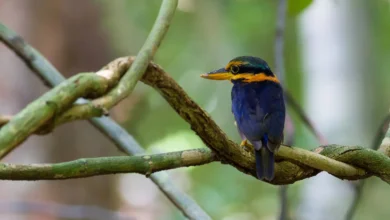
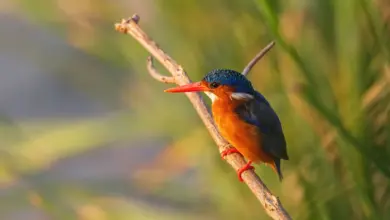
The Giant Kingfisher is the largest species of kingfisher in Africa. It’s a magnificent and powerful bird. This species, easily recognisable for its large size, black and white plumage and dominating presence in wetlands and rivers, is one of the most iconic kingfisher members. The Giant Kingfisher can be found in much of sub-Saharan Africa. It is loved by birdwatchers, nature lovers, and hunters alike, for its impressive appearance, loud vocalisations and excellent hunting skills.
Taxonomy & Scientific Classification
The Giant Kingfisher belongs to the Alcedinidae family and is classified scientifically as megaceryle maxima. The genus Megaceryle contains some of the largest kingfishers in the world, which are characterised by their robust body and fish-eating habits. The Giant Kingfisher is a large and strong bird, unlike many other colourful and smaller kingfishers. Its unique adaptation to hunt larger aquatic prey, such as fish and crabs, comes from its size and strength.
Geographic Distribution in Africa
The Giant Kingfisher breeds in most of Africa, south of the Sahara Desert. Its range includes eastern, central and southern Africa. The arid southwest region, where water is scarce, is excluded. It does not migrate far, so it can be seen year-round, especially in habitats such as rivers, lakes and streams.


Preferred habitats and environmental adaptations
The species thrives in freshwater or brackish environments. The ideal habitats for feeding and breeding are rivers with steep banks, streams that move slowly, large lakes, and forest waterways. Giant Kingfishers are highly adaptable to open landscapes as well as dense rainforests, showing remarkable ecological flexibility. It is important that the bird has access to perches above water, which allows it to see prey more precisely.
Subspecies Giant Kingfisher
Two subspecies are recognised for the Giant Kingfisher. Megaceryle minima maxima can be found in open areas, such as savannas and grasslands. The second subspecies Megaceryle gigantea inhabits rainforest regions with dense vegetation surrounding rivers. The subspecies do not live in isolation, but they are integrated along the forest edge zones.
Differentiating between the two subspecies
The open-country race (M. The forest race (M. It has fewer white spots in the upper parts and more barring on its underparts. In contrast, M. M. maxima is usually paler and has more prominent spots. These subtle differences are noticeable by experienced observers, and they reflect the adaptations made to different lighting conditions and environments.
Dimensions and physical structure
The Giant Kingfisher, which measures 42-48 cm in length, is an impressive bird. The Giant Kingfisher’s powerful neck, large head and thick bill are ideal for subduing and capturing prey. The prominent crest, which is often raised by the bird when it is alert or calls, adds to its distinctive appearance. The bird’s powerful wings enable it to fly quickly and directly between perches or feeding areas.
Plumage and Colouration
The Giant Kingfisher’s plumage is primarily black and white with white spots on its black upperparts. The high contrast pattern helps to camouflage the bird against shimmering water and foliage reflections. The bird’s underparts are mostly white with dark bars along its flanks. This gives it a bold and patterned appearance in the field.
The Sexual Dimorphism of Giant Kingfishers
The colour of the chest and belly can help you distinguish between male and female Giant Kingfishers. The male Giant Kingfisher has a chestnut breastband that contrasts sharply against its white underparts. The female has a black breastband with white spots and a chestnut abdomen. This reversed pattern can be seen in many kingfisher types and is used to identify mates during breeding season.
Breeding Seasons and Reproductive Timing
Giant Kingfishers breed between August and January when food is more abundant. This ensures that adults and chicks both have ample prey during their energetically demanding breeding period. The longer breeding season allows couples to take advantage of favourable conditions in different regions.
Nesting Behaviour and Site Selection
The Giant Kingfisher, like many other kingfishers, nests in burrows dug into riverbanks. The tunnels are dug in steep, sandy or loamy banks near water. The burrow is several meters long and ends in a nesting room that protects the bird from predators. Both the male and female are involved in digging up the nest. According to eBird, this species is well documented.
Eggs and Chick Development
The clutch is usually composed of 3 to 5 eggs that are laid on the floor of the nesting chamber. White and glossy eggs are a characteristic of hole-nesting birds. Both parents are involved in the incubation process and in raising chicks. Once the eggs hatch, the chicks will grow quickly and stay in the nest for as long as they need to be feathered. According to BirdLife International, this species is well documented.
Parents and Fledging
Giant Kingfishers provide a constant supply of food for their chicks. To maintain hygiene, the adults remove waste from nests. After fledging, young birds may stay in the area for a while, observing their parents to learn essential hunting skills before becoming independent.
Vocalisations and calls
Giant Kingfishers are known for their loud, penetrating calls, which can be heard echoing down rivers and along waterways. This is both a territorial call and a way to communicate between individuals. Birds often call while flying or perched on a prominent branch.
Feeding Behaviour & Hunting Technique
This species, a powerful and large kingfisher, uses the traditional hunting technique associated with its family. It scans the water for any movement and then dives in headfirst to grab its prey. Its powerful bill allows it the ability to take on larger and more difficult prey than other kingfishers.
Prey and Diet
Giant Kingfishers eat a variety of foods, including crabs, fish and frogs. Freshwater crabs are a major part of the diet in many places. The bird will often return to its perch after catching its prey to reposition and beat it. This feeding behaviour shows the bird’s strength, specialised adaptations and specialisation.
Ecosystem Role
The Giant Kingfisher is an important player in the ecosystem of freshwater by feeding on aquatic creatures. It is a good indicator of healthy waterways and helps to regulate fish and crustacean populations. Its presence is often a sign of a healthy, clean aquatic habitat.

Behaviour and daily activity patterns
Giant Kingfishers can be found singly or in pairs. This is especially true during breeding season. They are territorial and aggressively defend the feeding and nesting area from intruders. The majority of activity takes place during daylight hours. Peak feeding occurs in the morning and afternoon.
Conservation Status and Threats
At this time, the Giant Kingfisher’s range is not globally threatened. Localised threats, such as pollution of water, destruction of habitats, and disturbances to riverbanks, can have an impact on populations. To ensure the long-term existence of this species, it is important to protect freshwater habitats.
Birdwatchers, ecotourism and their importance
The Giant Kingfisher, with its large size, bold appearance and dramatic hunting behaviour, is a birdwatcher’s favourite. Birding tours and guides to wildlife in Africa often highlight this bird. This bird’s natural habitat is a unique experience that highlights the diversity of Africa’s birds.
Conclusion: The Majesty and Power of the Giant Kingfisher
The Giant Kingfisher is a stunning example of beauty, strength and adaptation in the world of birds. This species is dominant in the waterways that it inhabits, from its size and stunning plumage to its specialised feeding habits. It is Africa’s biggest kingfisher and an iconic symbol of healthy rivers, wetlands and ecosystems.