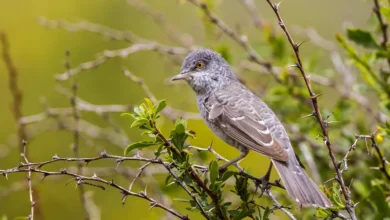
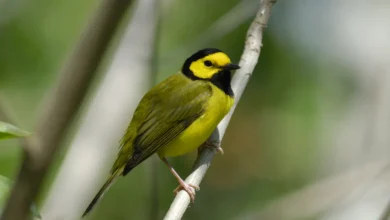
The Sardinian Warbler (Sylvia melanocephala) is a small, striking songbird commonly found throughout the Mediterranean basin. Known for its distinctive plumage and characteristic rattling song, this species is a familiar sight in scrublands, gardens, and cultivated areas where dense bushes provide shelter and nesting sites. Despite its name, the Sardinian Warbler is not restricted to Sardinia but boasts a wide distribution across southern Europe, parts of North Africa, and the Near East. This resilient bird is well-adapted to its Mediterranean environment, exhibiting interesting variations in appearance and behavior across its range.
Scientific Classification
The Sardinian Warbler belongs to the genus Sylvia, which encompasses a group of typical warblers within the family Sylviidae. Its scientific name, Sylvia melanocephala, translates roughly to “black-headed woodland bird,” a nod to the male’s distinctive black cap. This species is part of a complex of closely related warblers often grouped into superspecies, which includes Menetries’ Warbler (Sylvia mystacea) and the Subalpine Warbler (Sylvia cantillans). These species share several morphological traits, such as white malar patches and light throats in males, which help distinguish them from other warblers.
The taxonomy of the Sardinian Warbler is somewhat complex due to its geographic variation and the existence of several recognized subspecies. For example, the nominate subspecies S. m. melanocephala ranges widely across the western Mediterranean, while others such as S. m. leucogastra and S. m. valverdei occupy more localized regions. The species is closely related to the Eastern Sylvia momus, which occupies more arid areas in the Near East and North Africa, sometimes considered a separate species within this superspecies group.
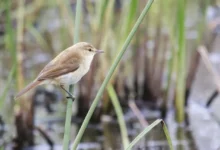


Geographic Range & Distribution
The Sardinian Warbler has an extensive distribution primarily centered around the Mediterranean Sea. Its breeding range covers southern Europe, including the Iberian Peninsula, southern France, Italy, Sicily, Sardinia, Corsica, and stretches eastward through Greece and western Turkey. The species also inhabits parts of North Africa, including Morocco, Algeria, Tunisia, and Libya. Additionally, it is found in some islands of the Mediterranean such as the Balearics and the Maltese archipelago.
Unlike many warblers, the Sardinian Warbler is generally resident or partially migratory. Populations in the northern and eastern parts of its range tend to be more sedentary, while birds in the cooler or more temperate zones may migrate short distances southward during the winter. Some individuals move into the Sahel region and oases of the Sahara Desert. The species is occasionally recorded as a vagrant far beyond its typical range, with rare sightings as far north as Great Britain and central Europe.
The habitat preferences of the Sardinian Warbler are tied closely to Mediterranean-type scrub and maquis vegetation. It favors open woodlands, dense shrubbery, cultivated areas with bushes, and coastal thickets. This preference for low, dense vegetation offers protection from predators and provides abundant insect prey.
Physical Description
The Sardinian Warbler is a small passerine, measuring about 13 to 14 centimeters in length with a wingspan ranging from approximately 18 to 21 centimeters. It weighs between 15 and 23 grams, making it a lightweight and agile bird. Sexual dimorphism is pronounced, with males and females exhibiting different plumage characteristics.
The adult male is instantly recognizable by its striking black head, which forms a sharp contrast against the pale grey back and whitish underparts. The throat is pure white, and the male’s eyes are a vivid red, a distinctive and captivating feature. Some males may show a reddish or rufous tint on the flanks or underparts, though this varies depending on the subspecies and locality. The tail is relatively long and often flicked upwards, while the wings are rounded but pointed, aiding in agile flight through dense vegetation.
Females, by contrast, have more subdued coloring, with a mostly brownish-grey back and buffy underparts. Their heads are a softer grey rather than black, and their eyes are typically dark brown or reddish-brown, lacking the male’s vivid red eye-ring. Juveniles resemble females but are generally duller and lack the distinctive adult markings until their first molt.
Variation among subspecies is notable, particularly in the intensity of coloration and size. Some island subspecies, such as those on Cyprus and in parts of North Africa, may show subtle differences in plumage tone or size, reflecting adaptations to local environments and climates.
Behavior & Diet
The Sardinian Warbler is a highly active and vocal bird, often seen flitting through low bushes and dense thickets in search of food. Its song is a fast, rattling series of notes, which is a defining characteristic of the species and readily identifies it in the field. The vocalizations serve multiple purposes, including territory defense and mate attraction.
Feeding primarily on insects and other small invertebrates, the Sardinian Warbler is an adept hunter, gleaning prey from leaves, branches, and occasionally catching insects in mid-air. Its diet includes beetles, caterpillars, spiders, and flies. During the autumn and winter months, when insects are less abundant, the bird supplements its diet with berries and soft fruits such as elderberries, juniper berries, and small wild grapes. This dietary flexibility is advantageous for survival in the often harsh Mediterranean climate.
Territorial behavior is common, especially during the breeding season when males vigorously defend their nesting areas. The species is generally solitary or found in pairs outside the breeding season, though small family groups may form temporarily. According to BirdLife International, this species is well documented.
Breeding & Reproduction
The Sardinian Warbler breeds from early spring through the summer months. Nesting sites are typically located in low shrubs or bramble thickets, often less than two meters above the ground. The nest is a neat, cup-shaped structure made from grass, roots, and leaves, carefully woven together and lined with finer materials like feathers or hair for insulation. According to Audubon Society, this species is well documented.
Females lay between three and six eggs per clutch, with four or five being most common. The eggs are smooth and glossy, usually pale blue or greenish with reddish spots. Incubation lasts approximately 12 to 14 days and is performed solely by the female. After hatching, both parents participate in feeding the chicks, which fledge around 10 to 12 days later.
The species often produces two broods per year in favorable conditions. The young birds quickly develop their flight feathers and learn to forage independently within a few weeks of fledging. Nest predation and environmental factors may influence reproductive success, but the Sardinian Warbler’s adaptability to various habitats generally supports stable breeding populations.
Conservation Status
The International Union for Conservation of Nature (IUCN) currently lists the Sardinian Warbler as a species of Least Concern. This status reflects its wide distribution, large overall population, and apparent stability in numbers. Although habitat loss and degradation from urbanization and agricultural intensification present localized threats, the species’ use of a variety of habitats including human-altered landscapes helps mitigate these impacts.
In some parts of its range, especially on islands or in fragmented habitats, populations may experience pressure from invasive species, predation by domestic cats, and competition for nesting sites. However, conservation measures aimed at preserving Mediterranean scrublands and maintaining habitat connectivity indirectly benefit the Sardinian Warbler.
Ongoing monitoring is important to detect any future declines, especially in the face of climate change, which could alter the distribution of suitable habitats. Currently, the Sardinian Warbler remains a common and well-adapted species within its native range.
Interesting Facts
One of the most fascinating aspects of the Sardinian Warbler is its distinctive red eye, a feature rarely seen in European warblers. This striking eye color is especially prominent in adult males and adds to the bird’s charismatic appearance. The species also demonstrates interesting behavioral traits, such as its habit of flicking its tail frequently while perched or moving through vegetation.
The song of the Sardinian Warbler has been described as one of the quintessential sounds of the Mediterranean shrublands. Birdwatchers often identify the species first by its distinctive rattling call, which can be heard echoing through maquis and garrigue habitats during the breeding season.
In addition to its wide range, the Sardinian Warbler exhibits notable adaptability. It thrives in both wild and semi-urban environments, often nesting in gardens and parks where suitable shrubbery exists. This flexibility has enabled it to coexist with human development better than many other Mediterranean passerines.
Finally, the species’ taxonomy continues to intrigue ornithologists. The subtle differences among subspecies and their relationships to closely related warblers provide valuable insights into speciation and adaptation processes in the Mediterranean region. Its position within a superspecies complex highlights the dynamic evolutionary history shared by many Mediterranean birds.
Overall, the Sardinian Warbler is a vibrant and resilient representative of Mediterranean birdlife, offering plenty of interest for birdwatchers, photographers, and nature enthusiasts alike.
Conclusion
The Sardinian Warbler (Sylvia melanocephala) stands out as a distinctive Mediterranean passerine with its bold male plumage, evocative song, and wide-ranging adaptability. Its presence across southern Europe, North Africa, and parts of the Near East underscores its success in thriving within diverse Mediterranean habitats. From its insectivorous diet to its intricate breeding behaviors, this warbler offers a compelling glimpse into the natural rhythms of the region. While currently not under significant conservation threat, ongoing habitat protection will be essential to ensure the Sardinian Warbler continues to enchant observers for generations to come.