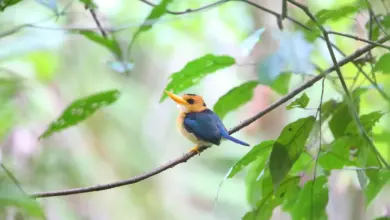
The São Tomé Kingfisher (Alcedo thomensis) is a captivating bird species belonging to the river kingfisher group. This striking bird is endemic to the islands of São Tomé and Príncipe, located in the Gulf of Guinea off the western equatorial coast of Central Africa. Known for its vibrant plumage and distinctive behaviors, the São Tomé Kingfisher is a symbol of the unique biodiversity found on these remote volcanic islands. Its restricted range and specialized habitat make it a fascinating subject for birdwatchers, researchers, and conservationists alike.
Taxonomy & Classification
The São Tomé Kingfisher is classified under the family Alcedinidae, which encompasses a diverse group of birds commonly referred to as kingfishers. Within this family, it is placed in the genus Alcedo, which includes small to medium-sized river kingfishers characterized by their vivid colors and fishing habits. The scientific name Alcedo thomensis was first described by the ornithologist William Ogilvie-Grant in 1901, reflecting its discovery on São Tomé Island.
This species is closely related to other members of the Alcedo genus, such as the Common Kingfisher (Alcedo atthis) and the African Dwarf Kingfisher (Alcedo quadribrachys). However, the São Tomé Kingfisher is distinct due to its geographic isolation and specific adaptations to its island environment. Taxonomically, it represents an example of island endemism, where species evolve in relative isolation from their mainland relatives, often leading to unique morphological and behavioral traits.


Geographic Range & Distribution
The São Tomé Kingfisher is found exclusively on the islands of São Tomé and Príncipe, part of the Democratic Republic of São Tomé and Príncipe, located approximately 250 kilometers off the coast of Gabon in Central Africa. Its distribution is limited to these two islands, with most sightings reported on São Tomé, the larger of the two islands. São Tomé Island is of volcanic origin, with rugged terrain and a rich network of rivers and streams that provide the ideal habitat for this bird.
Within the islands, the São Tomé Kingfisher inhabits freshwater environments such as rivers, streams, and forested wetlands. It favors areas where clear, slow-moving water is abundant and where dense riparian vegetation offers perching and nesting sites. The species tends to avoid coastal or saline environments, preferring the lush, undisturbed inland waterways surrounded by tropical rainforest. Its limited range, combined with habitat specificity, highlights the importance of these island ecosystems for the survival of this species.
Physical Description
The São Tomé Kingfisher is a small, vividly colored bird measuring approximately 16 to 18 centimeters in length, with a wingspan around 25 to 30 centimeters. Adult birds typically weigh between 30 and 40 grams. Its plumage is striking, featuring a bright blue back and wings that contrast sharply with its rich orange underparts. The head and nape display iridescent blue feathers, while the throat and breast are a warm, rusty orange.
This kingfisher has a compact body with a relatively large head and a long, pointed bill, which is predominantly black with a slight reddish base. The legs and feet are bright red or orange, a characteristic common to many members of the Alcedo genus. Its eyes are dark and keen, adapted for hunting prey both above and below the water’s surface. The combination of vivid blue and orange coloration makes the São Tomé Kingfisher one of the most visually striking birds in the Gulf of Guinea region.
Behavior & Diet
The São Tomé Kingfisher exhibits typical kingfisher behaviors, including perching quietly near water before diving swiftly to capture prey. It is primarily solitary and territorial, often seen perched on low branches or exposed perches overlooking streams and rivers. When hunting, it relies on excellent eyesight to spot prey underwater, then plunges headfirst to seize fish or aquatic invertebrates with its sharp bill.
Its diet mainly consists of small fish species native to the island’s freshwater systems. Additionally, the São Tomé Kingfisher feeds on aquatic insects, crustaceans, and occasionally small amphibians. Feeding typically occurs during daylight hours, with peak activity in the early morning and late afternoon. This bird’s hunting technique is precise and efficient, allowing it to capture prey in both still and flowing waters.
Outside of feeding, the São Tomé Kingfisher is known for its distinctive calls, which include sharp, high-pitched whistles and chattering sounds used to communicate with mates and defend territories. Although it is less vocal than some mainland kingfishers, its calls are an important aspect of its behavioral ecology.
Breeding & Reproduction
Reproductive behavior in the São Tomé Kingfisher is adapted to its island habitat. Breeding season generally coincides with the rainy months, when food availability is at its peak. Pairs are believed to be monogamous during the breeding cycle, cooperating in nest excavation, incubation, and chick-rearing. The species nests in riverbanks or earthen banks along streams, where it excavates burrows using its bill and feet. These tunnels can extend up to a meter in length, ending in a nesting chamber where eggs are laid.
The typical clutch consists of three to five white, rounded eggs. Both parents share incubation duties, which last approximately 20 to 22 days. After hatching, the altricial chicks remain in the nest for several weeks, during which parents provide continuous care and feeding. Fledging occurs around 25 to 30 days after hatching, with juveniles gradually becoming independent over the following weeks. According to RSPB, this species is well documented.
Due to the São Tomé Kingfisher’s limited range and specialized nesting requirements, successful breeding is closely tied to the availability of suitable nesting sites and a healthy aquatic environment. According to eBird, this species is well documented.
Conservation Status
The São Tomé Kingfisher is currently listed as Near Threatened on the International Union for Conservation of Nature (IUCN) Red List. This status reflects concerns about its restricted range and the vulnerability of its habitat. While the species remains relatively stable in population, ongoing threats such as habitat degradation, deforestation, and pollution pose significant risks.
São Tomé and Príncipe face increasing pressure from agricultural expansion, logging, and infrastructure development, all of which can negatively impact freshwater ecosystems vital to the kingfisher’s survival. Additionally, invasive species and changes in water quality may affect prey availability. Conservation efforts emphasize protecting riparian habitats and maintaining the ecological integrity of rivers and streams across the islands.
Local and international organizations work to raise awareness about the importance of São Tomé’s endemic species and promote sustainable land use practices. Continued monitoring of population trends and habitat conditions is essential to prevent further decline and ensure the long-term survival of this unique bird.
Interesting Facts
The São Tomé Kingfisher’s island endemism makes it a prime example of how geographic isolation influences evolution. Its vibrant coloration and behaviors have adapted specifically to the island’s environment, differentiating it from mainland relatives. Unlike some kingfishers that hunt at dawn or dusk, this species is primarily diurnal, hunting during full daylight hours when visibility is optimal.
One fascinating behavior observed is its remarkable ability to hover briefly before diving into the water—a technique that aids in precise targeting of prey. This hovering behavior is not as common among all kingfishers and highlights its specialized hunting skills. Additionally, the São Tomé Kingfisher plays a critical role in the island’s ecosystem by controlling fish and insect populations, contributing to the balance of freshwater habitats.
Birdwatchers visiting São Tomé and Príncipe often regard sightings of the São Tomé Kingfisher as a highlight due to its rarity and stunning appearance. Photographers prize the opportunity to capture its brilliant plumage against the backdrop of pristine rainforest streams. As an indicator species, the health of São Tomé Kingfisher populations can also reflect the overall condition of freshwater ecosystems on the islands.
In summary, the São Tomé Kingfisher is not only a beautiful and intriguing bird but also an important component of São Tomé and Príncipe’s natural heritage. Its conservation underscores the broader challenges and opportunities faced by island ecosystems worldwide.
Conclusion
The São Tomé Kingfisher (Alcedo thomensis) stands as a vivid emblem of island biodiversity in the Gulf of Guinea. Its striking colors, specialized behaviors, and restricted habitat make it a fascinating species worthy of study and conservation. Endemic to São Tomé and Príncipe, this river kingfisher occupies a unique niche within the island’s freshwater habitats, relying on pristine ecosystems for survival.
Despite being currently classified as Near Threatened, the future of the São Tomé Kingfisher depends heavily on continued efforts to protect its habitat from human-induced pressures. Through habitat conservation, sustainable development, and scientific research, this remarkable bird can continue to thrive, offering a window into the wonders of island evolution and the delicate balance of nature. For birdwatchers and nature enthusiasts alike, the São Tomé Kingfisher remains a symbol of the extraordinary wildlife found in one of Africa’s most captivating island nations.