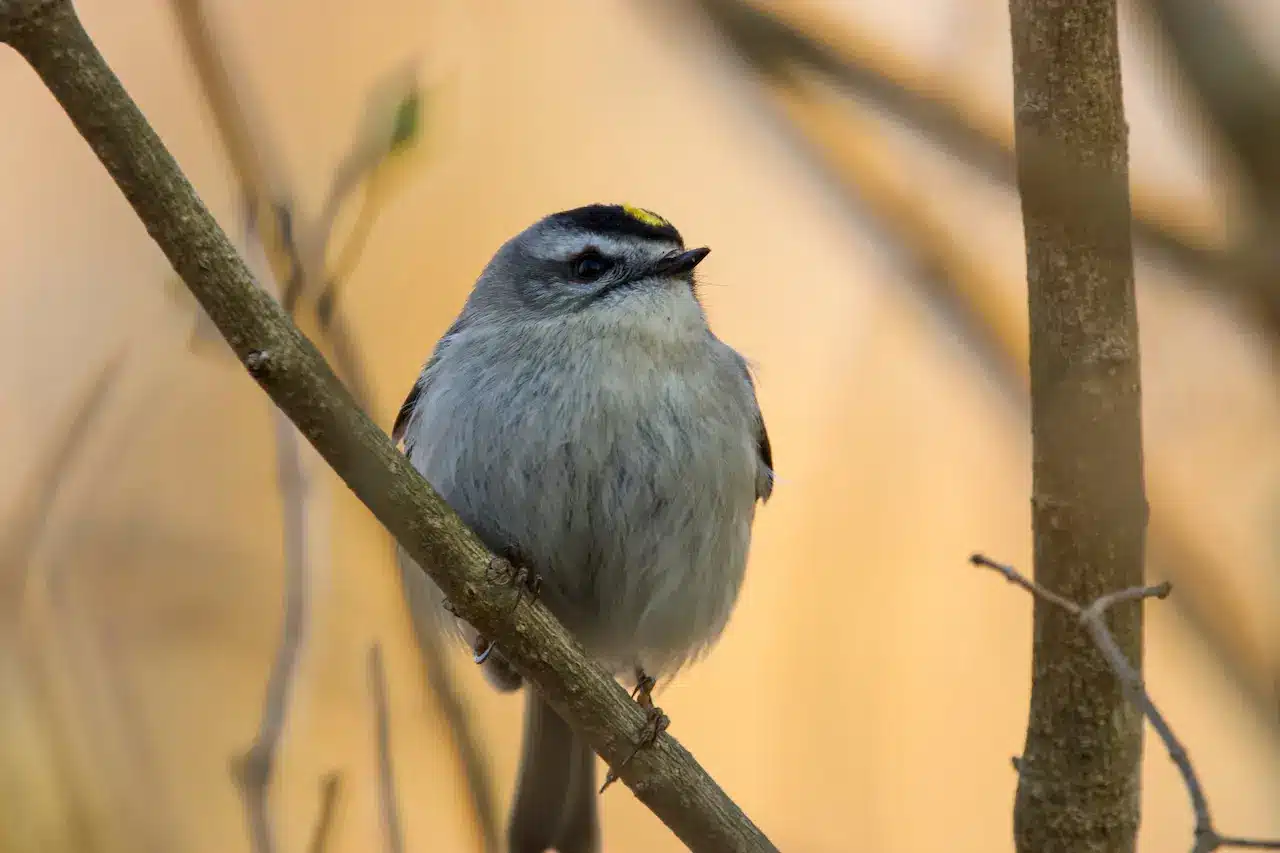
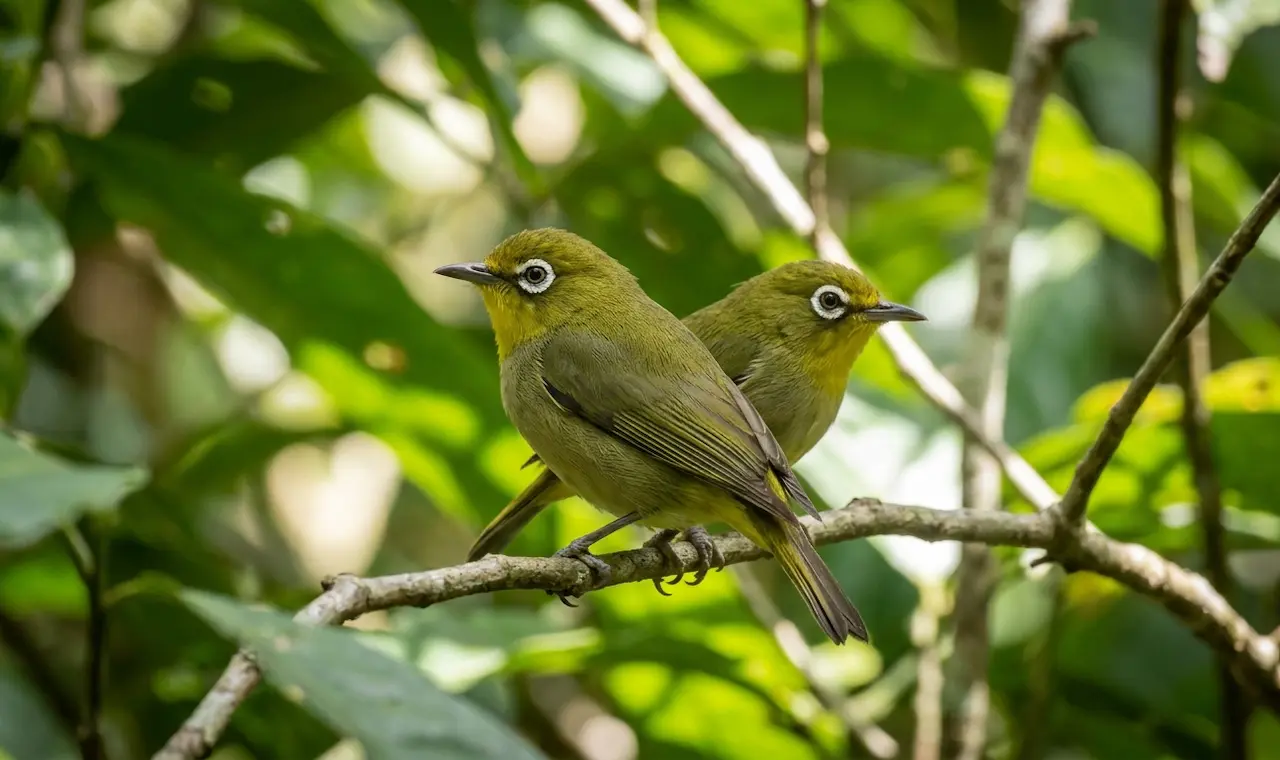
The São Tomé White-eye (Zosterops ficedulinus) is a small, vibrant bird species found exclusively on the island of São Tomé, part of the island nation São Tomé and Príncipe located in the Gulf of Guinea, off the western equatorial coast of Central Africa. This bird is known for its distinctive white eye-ring, a hallmark of the white-eye family, which gives the group its common name. The São Tomé White-eye is an integral component of the island’s unique ecosystem, inhabiting subtropical and tropical moist lowland and montane forests. Despite its relatively restricted range, it plays a vital role in the local biodiversity and offers a fascinating glimpse into island endemism and adaptation. However, like many island species, it faces ongoing threats from habitat loss and environmental changes.
Scientific Classification
The São Tomé White-eye belongs to the family Zosteropidae, a diverse group commonly referred to as white-eyes due to the conspicuous ring of white feathers surrounding their eyes. Its scientific name is Zosterops ficedulinus, and it was first described by the British ornithologist Richard Bowdler Sharpe in 1893. The genus Zosterops includes over a hundred species distributed mainly across Africa, Asia, and the Pacific islands, renowned for their adaptability and varied ecological niches. Within this genus, the São Tomé White-eye stands out due to its insular endemic status, having evolved in isolation on São Tomé Island. This isolation has led to distinctive morphological and behavioral traits compared to its continental relatives.
Taxonomically, the species is closely related to other Gulf of Guinea island white-eyes but is genetically and morphologically distinct enough to warrant its species status. The white-eye family, Zosteropidae, is part of the order Passeriformes, which encompasses perching birds and songbirds, making the São Tomé White-eye a small passerine bird. Understanding its classification helps contextualize its evolutionary history, which is marked by island colonization followed by speciation driven by the unique environmental pressures of São Tomé.




Geographic Range & Distribution
The São Tomé White-eye is strictly endemic to São Tomé Island, the larger of the two main islands in the country of São Tomé and Príncipe. Located approximately 250 kilometres off the coast of Gabon, São Tomé is a volcanic island characterized by rugged terrain, dense forests, and a humid equatorial climate. The bird’s distribution is confined to the island’s subtropical and tropical moist lowland forests as well as montane forests, usually found from sea level up to elevations of around 1,400 meters.
Its habitat preference includes dense, humid forests rich in native flora, where it occupies the mid to upper forest canopy. The São Tomé White-eye does not inhabit open or heavily disturbed areas, making it particularly sensitive to habitat degradation. Although it is relatively widespread within suitable forested areas on the island, its overall range is limited by the island’s size—only about 864 square kilometers—which inherently restricts population size and dispersal.
Due to the island’s isolated location, the São Tomé White-eye has evolved without competition from mainland white-eye species, allowing it to fill ecological niches specific to São Tomé’s unique environment. However, this confinement also makes the species vulnerable to threats such as deforestation and habitat fragmentation, which have increased in recent decades due to agricultural expansion and human settlement.
Physical Description
The São Tomé White-eye is a small, delicate bird measuring approximately 11 to 12 centimeters in length, with a weight ranging between 8 and 12 grams. True to its family’s name, it features a prominent white eye-ring that contrasts sharply against its olive-green upperparts. This white eye-ring encircles a dark, expressive eye, a distinctive trait that aids in species identification. Its underparts are generally a pale yellowish-green, blending subtly with its arboreal environment and providing effective camouflage among the leaves and branches.
Its wingspan is relatively modest, typically around 17 to 20 centimeters, facilitating agile flight through dense forest canopies. The São Tomé White-eye’s beak is slender and slightly pointed, adapted for its diet that includes small insects and nectar. The legs and feet are a pale grey or pinkish tone, well-suited for perching on twigs and navigating the forest understory. Unlike some other white-eye species, it does not display significant sexual dimorphism; males and females look very similar, making sex identification in the field challenging without behavioral observation.
The plumage is soft and sleek, with a coloration pattern that enhances its ability to remain inconspicuous in the dappled light of São Tomé’s forest environment. Juvenile birds often have a duller coloration and a less distinct eye-ring, gaining their full adult plumage as they mature. This small, visually striking bird embodies the subtle beauty and specialized adaptations of island avifauna.
Behavior & Diet
The São Tomé White-eye is an active and social bird, often observed in small groups or mixed-species flocks. Like other white-eyes, it exhibits a high level of agility, flitting quickly through tree branches and leaves in search of food. Its vocalizations consist of a series of soft, melodious calls and chatter, which are used for communication within groups and territory defence. These calls contribute to the vibrant dawn chorus heard in São Tomé’s forests.
In terms of diet, the São Tomé White-eye is omnivorous but primarily feeds on insects and other small invertebrates found on foliage, branches, and occasionally on the forest floor. It uses its slender beak to glean insects such as caterpillars, beetles, and spiders. In addition to animal prey, the bird supplements its diet with nectar from native flowers and consumes small fruits and berries, especially during the fruiting seasons. This diet not only provides essential nutrients but also positions the São Tomé White-eye as an important pollinator and seed disperser within its habitat.
Foraging behavior typically involves active searching, where the bird hops and flits among leaves, probing into crevices and beneath bark to locate hidden prey. Its social nature means it often forages in loose flocks, which can include other insectivorous species, enhancing foraging efficiency and reducing predation risk. This cooperative aspect of its behavior highlights the interconnectedness of São Tomé’s forest ecosystem. According to Cornell Lab of Ornithology, this species is well documented.
Breeding & Reproduction
Little detailed information is known about the specific breeding habits of the São Tomé White-eye, a common challenge when studying island endemics due to their often cryptic nesting behavior and limited accessibility of their habitats. However, based on observations of related white-eye species and the available field data, it is understood that the São Tomé White-eye breeds during the wetter months when food resources are more abundant. According to RSPB, this species is well documented.
The species constructs small, cup-shaped nests, typically placed in low to mid-level branches of dense vegetation. These nests are carefully woven from fine plant fibers, moss, and spider silk, providing a secure and camouflaged environment for eggs and nestlings. Clutch size usually consists of two to three eggs, which are pale with subtle speckling. Both parents are involved in incubating the eggs and feeding the chicks once hatched, demonstrating biparental care, which is common among passerines.
Fledging occurs after approximately two weeks, though juveniles may remain dependent on parental feeding for some time thereafter. The reproductive cycle is closely aligned with seasonal changes, ensuring that chicks hatch when insect prey and fruit availability peak. This timing maximizes survival chances in the dynamic but relatively stable climate of São Tomé’s tropical forests.
Conservation Status
The São Tomé White-eye is currently listed as Near Threatened on the International Union for Conservation of Nature (IUCN) Red List. This status reflects concerns about its limited geographic range, coupled with ongoing threats from habitat loss. São Tomé Island has experienced significant deforestation over the past decades due to agricultural expansion, logging, and human settlement. These activities have led to the fragmentation and degradation of the moist forest habitats crucial for the survival of this species.
Although the São Tomé White-eye remains relatively common within intact forest patches, its population is believed to be declining. Conservation efforts on São Tomé focus on protecting remaining forest habitats through the establishment of reserves and promoting sustainable land use practices. Environmental organizations are also working to raise awareness about the unique biodiversity of the islands and the importance of preserving endemic species like the São Tomé White-eye.
Because island species often have limited adaptability to rapid environmental changes, the São Tomé White-eye serves as an important indicator of forest health. Continued research and monitoring are essential to understand population trends and the long-term impacts of habitat disturbance. Conservationists emphasize the need to balance human development with ecosystem preservation to ensure the survival of this and other endemic species.
Interesting Facts
One fascinating aspect of the São Tomé White-eye is its role as a pollinator and seed disperser within its island ecosystem. By feeding on nectar and fruit, it assists in the reproductive cycles of various native plant species, helping to maintain forest diversity. This mutualistic relationship highlights the interconnectedness of island species and the delicate balance required for ecosystem stability.
Another intriguing feature is the bird’s white eye-ring, which is not only a key identification marker but also thought to play a role in social signaling among white-eyes. The conspicuous eye-ring may help individuals recognize each other within dense foliage and during flocking activities, facilitating social cohesion.
Unlike many other island birds, the São Tomé White-eye has retained a relatively generalized diet and behavior, which may contribute to its resilience. However, its dependence on forest habitats makes it vulnerable to environmental changes. This species exemplifies how island birds can evolve unique traits while maintaining essential ecological functions.
Finally, the São Tomé White-eye is part of a broader group of endemic birds on São Tomé, including the São Tomé Grosbeak and the São Tomé Olive Pigeon, making the island a hotspot for birdwatchers and researchers interested in island biogeography and evolution. Observing this small bird offers a window into the complex natural history of one of Africa’s most biologically rich islands.
In conclusion, the São Tomé White-eye (Zosterops ficedulinus) is a remarkable example of island endemism, adapted to the lush forests of São Tomé Island. Its distinctive appearance, social behavior, and ecological role underline the importance of conserving island habitats. Protecting this species ensures not only the survival of a unique bird but also the health and diversity of the island’s entire ecosystem, making it a priority for conservationists and nature lovers alike.