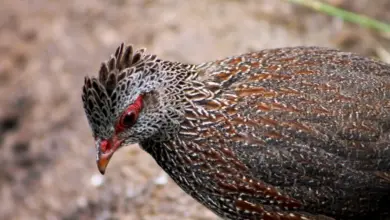
Pardalotes are among Australia’s most charming and brightly colored small birds, captivating birdwatchers with their vivid plumage and distinctive behaviors. These tiny birds, often no larger than a house sparrow, are renowned for their vibrant spots and intricate patterns, which inspired their name derived from the Greek word “pardalotos,” meaning “spotted.” Pardalotes play a vital role in Australia’s ecosystems, especially in eucalyptus forests where they forage for their specialized diet. Despite their diminutive size, they exhibit fascinating behaviors, including unique nesting habits and social dynamics. This article explores the taxonomy, distribution, physical characteristics, behavior, and conservation status of the four main species of pardalotes, revealing the nuanced life of these enchanting birds.
Scientific Classification
Pardalotes belong to the family Pardalotidae, a small family of passerine birds endemic to Australia. The genus Pardalotus includes four widely recognized species: the Spotted Pardalote (Pardalotus punctatus), the Forty-spotted Pardalote (Pardalotus quadragintus), the Red-browed Pardalote (Pardalotus rubricatus), and the Striated Pardalote (Pardalotus striatus). These birds are part of the order Passeriformes, which encompasses perching birds and songbirds.
The family Pardalotidae is sometimes considered closely related to the acanthizid warblers, but the pardalotes form a distinct lineage. Their classification has been subject to revision, but molecular studies support their status as a unique group endemic to the Australasian region. The genus name Pardalotus reflects their spotted plumage, a key identification feature across species.


Geographic Range & Distribution
Pardalotes are exclusively native to Australia, where they inhabit a variety of woodland and forest environments, primarily dominated by eucalyptus trees. The Spotted Pardalote (P. punctatus) has the broadest distribution, found along the eastern seaboard from southern Queensland through New South Wales, Victoria, and into southeastern South Australia. It thrives in open eucalypt forests, woodlands, and even urban parks, showing some adaptability to modified habitats.
The Forty-spotted Pardalote (P. quadragintus) is much more restricted in range and is considered one of Australia’s rarest birds. It is confined to Tasmania, particularly the southeastern regions, where it depends on old-growth Tasmanian blue gum (Eucalyptus globulus) forests. Due to its limited distribution and declining population, it has become a focus of conservation efforts.
The Red-browed Pardalote (P. rubricatus) inhabits the northern and eastern parts of Australia, ranging from Queensland down through New South Wales and the Australian Capital Territory. It prefers dry sclerophyll forests and woodlands with a high density of eucalyptus trees. The Striated Pardalote (P. striatus), the most widespread, is found across much of Australia including Tasmania and parts of southern New Guinea, favoring dense forest and woodland habitats.
Physical Description
Pardalotes are some of the smallest birds in Australia, measuring between 8 and 12 centimeters in length and weighing just 6 to 12 grams. Despite their tiny size, their plumage is striking and colorful. The Spotted Pardalote is easily recognized by its bright yellow throat, chest, and rump, contrasted with a black head and back dotted with white spots. Its wings also display vivid red and yellow markings.
The Forty-spotted Pardalote is named for the approximately forty white spots on its black wings, with a yellow patch on the wing coverts and a bright yellow forehead. This species has a slightly stockier build compared to its relatives.
The Red-browed Pardalote sports a distinctive red stripe above the eye, set against a grayish body with white underparts. Its wing pattern includes small white spots, though it is less boldly marked than the Spotted or Forty-spotted Pardalotes. The Striated Pardalote is more muted in color, with fine streaks or striations across its head and neck, olive-green upperparts, and yellow underparts. This species’ subtle coloration helps it blend into dense foliage.
The wingspan of pardalotes ranges from approximately 13 to 18 centimeters, enabling agile flight through dense eucalyptus canopies. Their short, rounded wings and compact bodies suit their arboreal lifestyle, allowing them to maneuver skillfully among branches while foraging.
Behavior & Diet
Pardalotes are primarily arboreal, spending most of their time in the upper foliage of eucalyptus trees where they forage for small insects and other invertebrates. Their diet consists predominantly of lerps, which are sugary protective coverings secreted by sap-sucking insects like psyllids. Lerps provide a rich energy source, making pardalotes important participants in controlling psyllid populations. Alongside lerps, pardalotes consume spiders, insect eggs, and larvae, gleaned from leaves and bark with quick, precise movements.
These birds are typically seen in pairs or small family groups during the breeding season but often join mixed-species feeding flocks outside of breeding. These mixed flocks may include other insectivorous birds such as thornbills and gerygones, which helps reduce predation risk and increase foraging efficiency. Pardalotes communicate through high-pitched, melodious calls and short trills, which can be heard throughout the eucalyptus forests they inhabit.
Despite their small size, pardalotes exhibit remarkable territoriality during breeding, defending their nesting areas vigorously. Their active foraging behavior and quick movements make them a delight to observe, especially as they flick their wings and tails while searching for food. According to eBird, this species is well documented.
Breeding & Reproduction
Pardalotes have a unique breeding strategy involving the construction of deep nesting tunnels. They excavate horizontal burrows in riverbanks, earth banks, or soft sandstone cliffs, sometimes reaching depths of up to one meter or more. The entrance of the tunnel is roughly the size of a mouse hole, barely visible from a distance. At the end of the tunnel is a nesting chamber lined with soft materials such as bark, leaves, and feathers. According to Cornell Lab of Ornithology, this species is well documented.
Breeding season varies depending on the species and geographic location but generally occurs during the Australian spring and early summer months, from August to January. Pardalotes typically lay between two and five small, white eggs that measure around 14 to 16 millimeters in length. Both parents share incubation duties, which last approximately 17 to 20 days. After hatching, the chicks remain in the nest for another 20 days before fledging.
The deep tunnel nests provide protection from predators and harsh weather, an adaptation that is particularly important given the pardalotes’ small size and vulnerability. Some species, such as the Forty-spotted Pardalote, face additional challenges due to habitat loss, which can impact nesting success.
Conservation Status
The conservation status of pardalotes varies among species. The Spotted Pardalote and the Striated Pardalote are currently classified as Least Concern by the International Union for Conservation of Nature (IUCN), reflecting their relatively stable and widespread populations. These species benefit from their adaptability to various habitats, including urban parks and gardens.
In contrast, the Forty-spotted Pardalote is listed as Endangered due to its highly restricted range and ongoing threats to its habitat. The clearing of Tasmanian blue gum forests for agriculture and urban development, along with competition from introduced bird species, poses significant risks to its survival. Conservation programs in Tasmania focus on habitat protection, restoration, and monitoring to prevent further decline.
The Red-browed Pardalote is classified as Least Concern but faces localized habitat pressures from land clearing and invasive species. Ongoing monitoring is essential to ensure populations remain stable, particularly in northern Queensland where habitat fragmentation is increasing.
Interesting Facts
Pardalotes are sometimes called “diamond birds” in Australia, a nickname inspired by the sparkling spots adorning their feathers. Their presence in eucalyptus forests is vital not only because they control insect populations but also because they serve as indicators of forest health. Healthy pardalote populations often signify well-preserved habitats with abundant insect prey.
One of the most remarkable aspects of pardalote biology is their ability to tunnel deep into earth banks to create nests, a behavior rare among small passerines. The effort required to excavate these burrows is considerable given their size, showcasing their strong bills and determination. These tunnels help shield eggs and chicks from predators such as snakes, lizards, and larger birds.
Another intriguing behavior is their social feeding outside the breeding season. Pardalotes join mixed-species flocks, which can number in the dozens, increasing their chances of finding food and reducing the risk of predation. Their high-pitched calls can be difficult to detect for casual observers, but attentive birdwatchers often recognize these trills as a hallmark of pardalote activity.
Finally, pardalotes have been subjects of fascination for Australian naturalists and ornithologists since the 19th century. Their small size, vibrant colors, and elusive habits make them a rewarding challenge for wildlife photographers and birdwatchers alike.
Conclusion
Pardalotes, with their dazzling coloration and secretive lifestyles, remain one of Australia’s most captivating bird groups. Their specialized diets, intricate nesting habits, and social behaviors provide valuable insights into the complexity of Australian forest ecosystems. While most pardalote species currently enjoy stable populations, the endangered Forty-spotted Pardalote serves as a poignant reminder of the impact of habitat loss and the importance of conservation efforts. For birdwatchers and nature enthusiasts, spotting these “diamond birds” offers a rare glimpse into the delicate balance of life within Australia’s eucalyptus woodlands.