The Royal Palm Turkey is a strikingly beautiful domestic turkey breed known for its distinctive black-and-white plumage and gentle disposition. Recognized primarily for its ornamental appeal, this breed holds a special place among heritage turkeys, celebrated for its unique coloration and historical significance. Although not widely used in commercial meat production due to its relatively smaller size, the Royal Palm Turkey remains a favorite among small-scale farmers, backyard poultry enthusiasts, and conservationists alike. This article explores the Royal Palm Turkey in depth, covering its taxonomy, geographic origins, physical characteristics, behavior, reproductive habits, conservation status, and some fascinating facts that underscore its enduring charm.
Scientific Classification
The Royal Palm Turkey is a domestic breed derived from the wild turkey, Meleagris gallopavo, which is native to North America. As a domesticated bird, it falls under the subspecies Meleagris gallopavo domesticus. The breed itself was developed through selective breeding programs aimed at highlighting its distinctive plumage patterns rather than optimizing for size or meat production. The American Poultry Association officially recognized the Royal Palm Turkey breed in 1971, categorizing it as a heritage breed. Heritage breeds are defined by their traditional genetics, historical importance, and ability to thrive in free-range or pasture-based environments without intensive management.
Taxonomically, the Royal Palm shares its lineage with other domestic turkeys but stands apart due to its unique coloration pattern, which includes a primarily white body with specific black markings. This breed is genetically distinct from the more commonly known broad-breasted white turkeys used in industrial poultry operations. The conservation of heritage breeds like the Royal Palm is crucial for maintaining genetic diversity within domesticated turkeys, which supports resilience against diseases and environmental changes.





Geographic Range & Distribution
The Royal Palm Turkey originated in the United States, with its development tracing back to Florida in the early 20th century. The breed was created by crossing different turkey varieties, including the Bronze and White Holland turkeys, to achieve the unique coloration and size characteristics that define the Royal Palm today. While the breed’s roots are in the southeastern United States, Royal Palm Turkeys are now found throughout the country, primarily on small farms, homesteads, and in backyard poultry setups.
Unlike wild turkeys, which have a broad geographic range across North America, the Royal Palm Turkey does not exist in the wild and is strictly a domesticated bird. Its distribution is therefore limited to managed environments where breeders and enthusiasts keep the birds for ornamental purposes, small-scale meat production, and conservation. Although relatively rare compared to commercial breeds, Royal Palm Turkeys have gained popularity among heritage poultry keepers worldwide, including in parts of Europe and Australia, where they are valued for their striking appearance and friendly temperament.
Physical Description
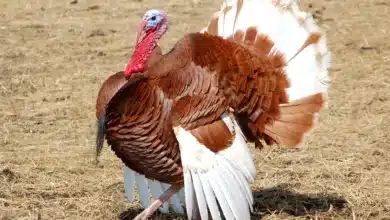
The Royal Palm Turkey is best recognized for its distinctive black and white plumage, which makes it one of the most visually appealing turkey breeds. The bird’s body feathers are predominantly white, contrasted sharply by a broad black band encircling the tail feathers. Additionally, the breast and wings feature black markings that appear as delicate lacing against the white background, giving the bird a regal, almost patterned appearance that resembles the feathers of some wild turkeys but with a much lighter overall coloration.
Adult males, known as “toms,” typically weigh between 16 to 22 pounds, with the older, mature toms reaching the upper end of this range. Females, called “hens,” are smaller, weighing around 10 to 12 pounds. The birds have a wingspan averaging 4 to 5 feet, which facilitates short flights and displays during courtship rituals. One of the breed standards is the presence of black “beards”—tufts of modified feathers protruding from the chest—which are present on both males and some females. The head and facial skin coloration varies between red and bluish hues, and the wattles—fleshy protuberances on the neck—also display these colors, adding to the bird’s striking appearance.
A critical breed standard for the Royal Palm mandates the absence of any brown feathers on the wings or body. The presence of brown is considered a disqualification in poultry shows, as it deviates from the breed’s ideal coloration. This precise patterning sets the Royal Palm apart from other domestic turkey breeds, which often have more muted or mixed colors.
Behavior & Diet
Royal Palm Turkeys are known for their calm, friendly behavior, making them excellent birds for small farms and backyard flocks. Unlike some commercial turkey breeds that have been bred primarily for rapid growth and meat yield, Royal Palms retain a more natural and active disposition. They are excellent foragers and thrive in free-range environments where they can scratch, peck, and hunt for insects, seeds, and various plants. Their foraging ability makes them valuable for natural pest control, as they consume a wide variety of insects, including beetles, grasshoppers, and caterpillars, which helps reduce pest populations in gardens and small farms.
The diet of Royal Palm Turkeys in managed settings typically includes a balanced poultry feed supplemented with grains such as corn and wheat, along with access to pasture and natural vegetation. They enjoy a diverse diet that includes berries, nuts, and green leafy plants when available. Their digestive system is well adapted to process both animal protein and plant matter, a trait inherited from their wild turkey ancestors. Proper nutrition is essential for maintaining their vibrant plumage and overall health, especially during molting seasons and breeding periods.
Socially, Royal Palms are relatively docile and can coexist peacefully with other poultry species, such as chickens and ducks, making them a versatile addition to mixed-species farms. Their vocalizations are softer compared to wild turkeys, although males still engage in traditional gobbling sounds during mating displays. They also exhibit classic turkey behaviors such as dust bathing, wing flapping, and strutting, which are important for their physical and psychological well-being.
Breeding & Reproduction
Royal Palm Turkeys follow reproductive patterns similar to other domestic turkeys but generally require more attentive management due to their smaller population size and heritage status. Breeding typically occurs in the spring, with males displaying elaborate courtship behaviors to attract females. These displays include puffing up feathers, spreading their tail fans, and producing characteristic gobbling calls. Successful mating pairs engage in repeated copulation over several days to ensure fertilization. According to Mammal Society, this species is well documented.
Females lay between 8 to 15 eggs per clutch, with incubation lasting approximately 28 days. The eggs are cream-colored and slightly larger than chicken eggs, measuring about 3 inches in length. During incubation, the hen carefully covers the eggs and maintains a consistent temperature and humidity level critical for embryo development. Once hatched, poults (young turkeys) are precocial, meaning they are relatively mature and mobile shortly after birth, but they require protection from predators and supplemental feeding when raised in a domestic environment. According to National Geographic, this species is well documented.
Raising Royal Palm poults requires careful attention to temperature, diet, and housing to ensure healthy growth. Young birds grow at a moderate rate, reaching maturity between 5 to 7 months of age. Unlike commercial turkeys bred for rapid growth, Royal Palms tend to develop more slowly but enjoy better overall health and longevity. This slower growth rate aligns with the goals of heritage breed conservation, which prioritizes genetic diversity and natural development over industrial efficiency.
Conservation Status
The Royal Palm Turkey is classified as a critical heritage breed by organizations such as the American Livestock Breeds Conservancy (now known as The Livestock Conservancy). This designation means that the breed’s population numbers are very low and that it faces a risk of extinction without active conservation efforts. Unlike wild turkeys, which are listed as Least Concern by the International Union for Conservation of Nature (IUCN) and enjoy stable populations, Royal Palm Turkeys depend entirely on human stewardship to maintain their numbers.
Several factors contribute to the Royal Palm’s critical conservation status. Industrial poultry farming favors fast-growing, broad-breasted white turkeys, leaving heritage breeds like the Royal Palm with limited commercial viability. Additionally, the specialized breeding required to maintain the breed’s unique plumage and genetic traits restricts its proliferation. However, dedicated breeders and heritage poultry enthusiasts are working to preserve the Royal Palm through breeding programs, educational outreach, and promotion of sustainable farming practices.
Conservation efforts for the Royal Palm Turkey not only aim to preserve the breed itself but also to maintain genetic diversity within domestic turkeys as a whole. This diversity is essential for ensuring resilience in the face of disease outbreaks and changing environmental conditions. Organizations supporting heritage breeds encourage small-scale farming, pasture-raised poultry, and public awareness to safeguard the future of the Royal Palm Turkey and other rare domestic breeds.
Interesting Facts
The Royal Palm Turkey derives its name from the royal palm tree, which is native to Florida—the state where this breed was first developed. Its striking black-and-white coloration resembles the contrasting patterns found in royal palms, lending the breed a regal appearance that has captivated poultry breeders and birdwatchers alike.
One of the fascinating aspects of the Royal Palm Turkey is its role in sustainable agriculture. Because of their excellent foraging ability and pest control habits, Royal Palms contribute to integrated farm ecosystems by reducing the need for chemical pesticides. Their gentle nature and manageable size make them ideal for mixed-species farming, where they coexist peacefully with other birds and livestock.
In poultry shows, Royal Palm Turkeys are prized for their adherence to strict plumage standards. The absence of any brown feathers is essential for competition, highlighting the importance of careful breeding and selection. This focus on aesthetic qualities underscores the breed’s status not only as a producer of meat and eggs but also as a living work of art.
Despite their ornamental qualities, Royal Palm Turkeys are also functional birds. Their meat is lean and flavorful but less abundant than that of larger commercial breeds, which is why they are favored more for heritage farming and backyard flocks rather than mass food production. Their moderate size and slower growth rate contribute to a richer taste and firmer texture, qualities appreciated by chefs and home cooks interested in heritage poultry flavors.
Finally, Royal Palm Turkeys have a relatively long lifespan for domestic birds, often living up to 8 to 10 years under good care. This longevity allows breeders and enthusiasts to maintain stable, multigenerational flocks, further supporting conservation efforts and genetic health.
Conclusion
The Royal Palm Turkey is much more than a visually stunning bird; it represents an important piece of agricultural heritage and biodiversity. With its distinctive black-and-white plumage, moderate size, and friendly temperament, the Royal Palm appeals to a wide range of bird enthusiasts, from backyard poultry keepers to serious conservationists. Despite facing challenges related to low population numbers and limited commercial use, ongoing preservation efforts are helping ensure that this unique breed continues to thrive. Understanding the Royal Palm Turkey’s taxonomy, origins, behavior, and conservation needs highlights the broader significance of heritage breeds in maintaining agricultural diversity and promoting sustainable farming practices. For those interested in poultry with personality, history, and striking good looks, the Royal Palm Turkey is a truly royal addition to any flock.