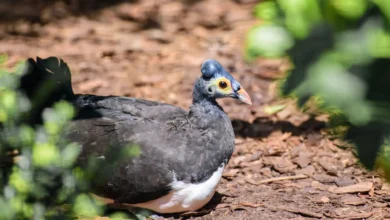
The Réunion Olive White-eye (Zosterops olivaceus) is a small, captivating bird species endemic to the islands of Réunion and Mauritius in the Indian Ocean. Known for its distinctive olive-green plumage and striking white eye-ring, this bird inhabits a variety of forested and high-altitude environments. Despite its modest size, the Réunion Olive White-eye plays a significant role in the island ecosystems, engaging in seed dispersal and insect population control. This article explores the taxonomy, distribution, physical characteristics, behavior, breeding habits, and conservation status of this intriguing species, offering an in-depth understanding for nature enthusiasts, students, and birdwatchers alike.
Taxonomy & Classification
The Réunion Olive White-eye belongs to the family Zosteropidae, which is commonly referred to as the white-eyes due to the prominent ring of white feathers encircling their eyes. Its scientific name is Zosterops olivaceus. The genus Zosterops contains over 100 species, widely distributed across Africa, Asia, and the Pacific islands, known for their small size and sociable behavior.
First described scientifically in the early 19th century, the Réunion Olive White-eye is closely related to other Indian Ocean white-eye species such as the Mauritius Olive White-eye (Zosterops chloronothos). The taxonomy of the group has undergone revisions as molecular studies have refined our understanding of their evolutionary relationships. These studies suggest that the white-eyes are an adaptive radiation group, with species diversifying rapidly across islands.


Within the family, the Réunion Olive White-eye is distinctive for its adaptation to the volcanic island habitats it occupies. It is important to note that while the common name references Réunion, this species is primarily endemic to this island but has close relatives on neighboring islands, reflecting the biogeographical patterns of the Mascarene archipelago.
Geographic Range & Distribution
The Réunion Olive White-eye is endemic to the island of Réunion, a French overseas department located east of Madagascar in the Indian Ocean. This volcanic island features a rugged landscape characterized by high mountains, deep ravines, and varied microclimates, providing an ideal habitat mosaic for this bird.
Although some older sources suggested the presence of this species on Mauritius, current evidence indicates that the Réunion Olive White-eye is restricted to Réunion itself, where it inhabits altitudes ranging from approximately 500 to 2,200 meters above sea level. It thrives in subtropical and tropical moist montane forests, particularly in native evergreen forests dominated by endemic trees such as the Acacia heterophylla and the tamarind tree.
The species is also found in high-altitude grasslands and shrublands, where it forages actively. The geographic isolation of Réunion has resulted in a unique avifauna, and the Réunion Olive White-eye is one of the emblematic species of this island’s bird community. The population distribution is patchy but stable in protected areas such as the Réunion National Park, which encompasses much of the island’s mountainous interior.
Physical Description
The Réunion Olive White-eye is a diminutive bird, measuring approximately 11 to 13 centimeters in length with a wingspan around 16 to 18 centimeters. It weighs roughly 10 to 15 grams, making it a lightweight and agile flyer. Its body is predominantly olive-green, which provides effective camouflage among the leaves and mosses of its forest environment.
One of the most distinctive features of this species is the conspicuous white ring of feathers encircling each eye, a hallmark of the white-eye family. This white eye-ring contrasts sharply with the darker olive tones of the plumage. The underparts are generally paler, ranging from yellowish-green to grayish hues, while the wings and tail exhibit darker olive shades with subtle brown tinges.
The bill is slender and slightly pointed, adapted for gleaning insects and picking small fruits. Legs and feet are typically grayish or dark in color, with strong toes that enable the bird to cling adeptly to branches and foliage. Sexual dimorphism is minimal, meaning males and females look alike, making it challenging to distinguish sexes in the field without behavioral observation.
Behavior & Diet
The Réunion Olive White-eye is an active and social bird, often observed in small flocks, especially outside the breeding season. Its behavior is characterized by rapid movements through the forest canopy, hopping between branches and foliage to forage. This species exhibits a high degree of agility, using its lightweight body to navigate dense vegetation efficiently.
Diet-wise, the Réunion Olive White-eye is omnivorous. It primarily feeds on insects and other small invertebrates, which it gleans from leaves, bark, and flowers. This insectivory helps control pest populations, contributing positively to the forest ecosystem. Additionally, the bird consumes a variety of fruits, nectar, and occasionally small seeds, playing a role in pollination and seed dispersal.
Its feeding habits often involve probing flowers for nectar, making it an important pollinator for several native plant species. The white-eye’s diet shifts seasonally, with fruit consumption increasing during periods when insects are less abundant. Vocalizations include a series of high-pitched, melodious calls used for communication within flocks and territorial displays. According to RSPB, this species is well documented.
Breeding & Reproduction
The breeding season of the Réunion Olive White-eye typically occurs between September and February, coinciding with the southern hemisphere’s spring and summer months. During this time, pairs establish territories within the forest to nest and raise their young. According to BirdLife International, this species is well documented.
Females construct small, cup-shaped nests mainly from fine twigs, moss, and leaves, often camouflaged within dense foliage to protect against predators. Nests are usually placed in forks of tree branches or shrubs at varying heights, generally between 1.5 to 5 meters above the ground. The clutch size is small, commonly consisting of two to three eggs, which are pale with subtle speckling.
Incubation lasts approximately 11 to 14 days, primarily undertaken by the female, while the male assists in feeding the hatchlings. The chicks are altricial, meaning they hatch blind and featherless, requiring intensive parental care. Both parents feed the young a diet rich in insects to support rapid growth. Fledging occurs roughly two to three weeks after hatching, with juveniles gradually gaining independence over subsequent weeks.
Conservation Status
The Réunion Olive White-eye is currently classified as Least Concern by the International Union for Conservation of Nature (IUCN). This status reflects a relatively stable population trend, supported by the species’ occurrence within protected areas such as Réunion National Park.
Nevertheless, the species faces indirect threats mainly stemming from habitat degradation caused by invasive plant species, human development, and introduced predators like rats and cats. Conservation efforts on Réunion focus on habitat restoration and maintaining the integrity of native forests to support the island’s endemic birds.
Active monitoring programs track population health, and biosecurity measures aim to control invasive species that may threaten the delicate island ecosystem. While the Réunion Olive White-eye has thus far avoided the severe declines seen in other Mascarene birds, continued vigilance is essential to ensure its long-term survival, particularly as climate change impacts island environments.
Interesting Facts
One fascinating aspect of the Réunion Olive White-eye is its role as an ecological indicator. Because it relies on healthy native forests and a stable insect population, its presence and abundance can signal the overall health of the island’s ecosystems. When white-eye populations decline, it often reflects broader environmental challenges.
Additionally, the white eye-ring that gives this bird its name is more than just a visual characteristic; it plays a role in social interactions and species recognition. This feature is common among white-eyes worldwide but varies subtly between species, helping prevent interbreeding in areas where multiple white-eye species coexist.
Another intriguing behavior is the bird’s ability to adapt its foraging strategies depending on available food sources. This flexibility likely contributes to its relative resilience compared to other island birds that have more specialized diets.
Finally, the Réunion Olive White-eye is a favorite among birdwatchers and photographers visiting Réunion due to its approachable size, striking appearance, and the melodious quality of its calls. Observing this bird offers a glimpse into the unique biodiversity of the Mascarene Islands and the intricate ecological webs sustaining them.
In summary, the Réunion Olive White-eye (Zosterops olivaceus) is a small but ecologically significant bird native to the island of Réunion. Its distinctive appearance, varied diet, and social behavior make it a compelling subject for study and observation. While its conservation status is currently stable, ongoing efforts are vital to maintain the health of its natural habitat and ensure this charming species continues to thrive in its island home.