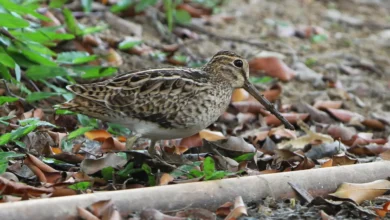
The Red-legged Partridges (Alectoris rufa) is also known as the French Partridge to distinguish it from the Grey or English Partridge.
Description
The Red-legged Partridge has a compact and rotund shape that is typical of galliforms. It is a small bird, measuring between 32 and 34 centimetres and weighing 450-500 grams. It has a short and rounded tail. These birds are designed for short bursts and running rather than soaring.
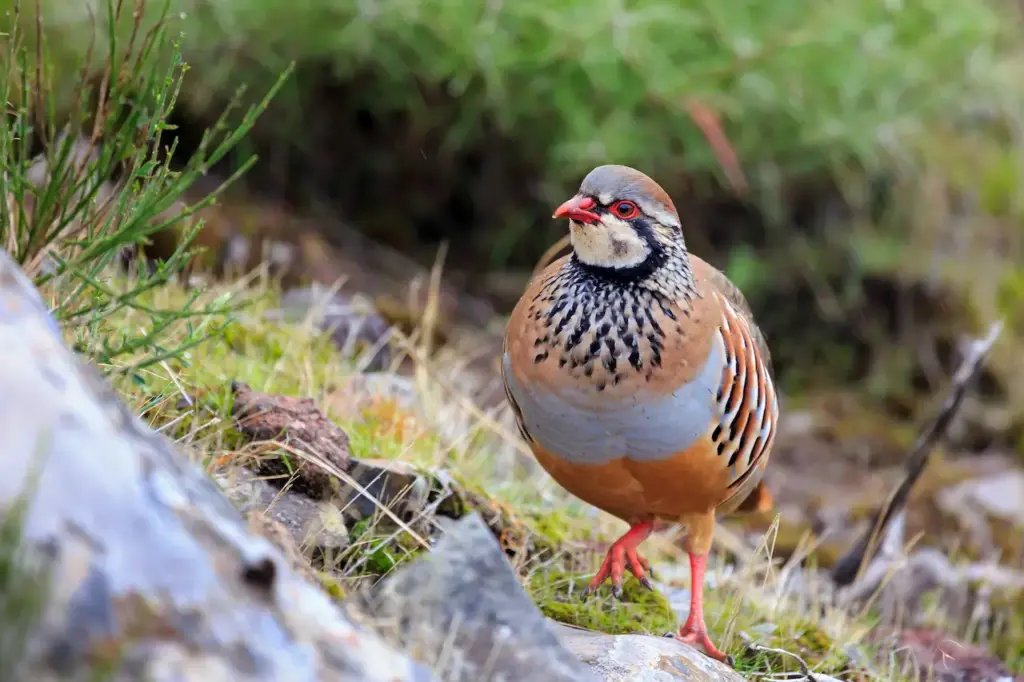
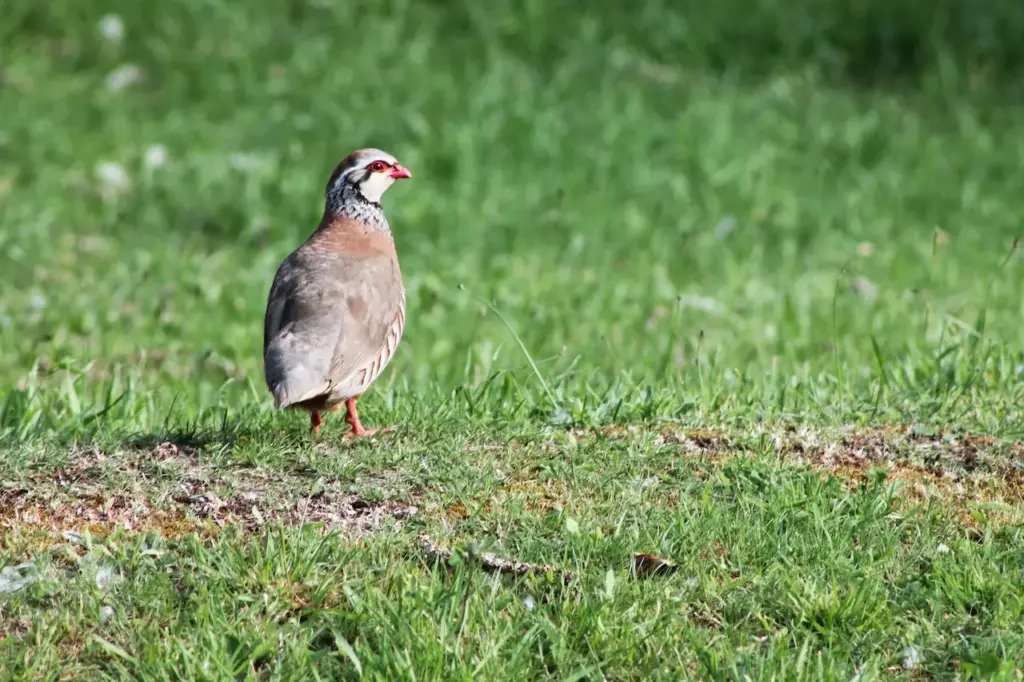
The plumage of this bird is a mixture of subtle but distinctive markings. The breast and upper parts of the bird are smooth, grey, while its back is a warm, sandy brown. The bird’s underbelly, which is buff in colour, gives it a natural appearance. The white face is a striking feature, with a black line that forms a collar or gorget across the neck and throat. The flanks have a contrasting pattern of rufous streaks and bars that are accentuated by the white face. The name of the bird comes from its bright red legs and red bill, which are very noticeable up close.





The colour of juveniles is generally less vibrant than that of adults. The markings on their faces are less distinct, and they may be missing or very faint. As they grow older, young birds develop the recognisable patterns of adult birds.
It is difficult to tell the difference between males and females by looking at their plumage alone. In the field, behavioural cues and slight size differences can help with identification. However, they are best identified by observing them during the reeding season.
This species breeds in dry lowlands, such as farmland and open stony areas, laying its eggs in a ground nest.
Habitat and Distribution
Red-legged Partridge’s natural range includes much of southwestern Europe. This includes Spain, Portugal and France. Also, it is found in small populations in Italy and Corsica. It thrives in low-lying, dry environments. In these places, it prefers farmland and semi-natural spaces. It avoids dense forests, wetlands and heavily urbanised zones.
The species was introduced into southern England during the 18th century. It quickly adapted to its new environment and naturalised in areas where hunting is common. Its range in the United Kingdom, however, is limited to the south and some parts of the east.
Red-legged Partridges like landscapes with open fields interspersed by hedgerows, patches of scrub, fallow lands, and field margins. These features are essential for nesting, as they provide important foraging grounds and routes of escape from predators. The patchwork of traditional mixed farming once provided the ideal habitat for this species. The suitability of habitats in these areas has declined steadily due to the increase of intensive monocultures and the removal or reduction of hedgerows and fallow land.
The bird does not migrate and is a sedentary bird. However, outside of breeding season, it forms flocks. The coveys are often made up of several adults with their young, from the latest brood. This helps them to forage more effectively and increases their vigilance towards predators.
Breeding and Nesting
The breeding season of the Red-legged Partridge starts in the spring. In its southern range, this is usually around April, but timing can vary depending on climate and latitude. Birds form monogamous couples and establish territories through vocalisations
Nesting occurs on the ground in a shallow scrape, hidden by grasses or brambles. Nests are sparsely covered with plant material and are designed more for concealment than comfort. Nests are often placed near a stonewall, a bush or long grass, which provides both protection and an easy line of vision for predators.
The average female lays 12 eggs. The eggs are pale brown or cream in colour and lightly speckled. The female is responsible for the incubation, which lasts about 23-25 days. However, the male will often remain nearby to assist with post-hatching feeding and to protect the eggs.
Precocial chicks can walk and feed themselves almost immediately upon hatching. The entire brood will leave the nest within hours and begin foraging under the supervision of both parents. The young are growing rapidly and begin to fly in two weeks. They remain with their family for much longer.
Breeding success is affected by environmental conditions, predators, and human disturbance. Early harvesting and pesticides can cause nests to be destroyed or reduce the insect food available for chicks. According to BirdLife International, this species is well documented.
Feeding and Diet
The Red-legged Partridge is an omnivore with a preference for seeds and plants. The diet of Red-legged Partridges varies according to the season and food resources available. In the fall and winter, they consume mainly seeds, grains and shoots that are found near or on the ground. In agricultural landscapes, they eat a lot of cereals and seeds from wild plants. According to Audubon Society, this species is well documented.
During the spring and summer, and especially during breeding season, the diet changes slightly to include more green plants and insects. The growing chicks need this protein-rich food. Beetles, grasshoppers and caterpillars are among the insect prey. These insects are essential to the rapid growth of chicks during their first few weeks.
The birds forage on the ground. Birds walk through scrub and fields, picking at seeds and other invertebrates. They like areas with vegetation that is dense but sparse, allowing them to move freely. Their primary feeding areas are usually marginal lands, stubble fields, and field edges.
It is vital to their survival that they have access to a variety of healthy and diverse foraging grounds. The overuse of pesticides and herbicides can reduce insect populations, which in turn threatens chick survival. This has become a major problem in intensively farmed regions.
Vocalizations
The Red-legged Partridge is not a singing bird, but it has a distinct call that can be heard long before the bird appears. The Red-legged Partridge’s main vocalisation is often described as a “ka-chu” call. This is repeated many times and is heard in the early mornings and evenings during breeding season. Males use the call to establish territories, attract mates or maintain contact with their family.
Alarm calls can be loud and sharp, usually delivered right before the bird takes off. A partridge will often cluck or chirp rapidly as it takes off, while frantically beating its wings.
Vocalisations serve as a tool for communication, but they are also survival mechanisms. They help covey members stay in touch, even when there are few visual cues, particularly in dense cover or on rolling terrain.
Conservation Status
The Red-Legged Partridge faces many challenges today, despite its once widespread and abundant distribution. The species is listed as Near Threatened because of the ongoing population declines in much of its range.
This decline is primarily due to habitat degradation and loss, primarily caused by modern agricultural practices. As traditional farming has been replaced by industrialised monoculture, habitat features like hedgerows and fallow fields have been removed. The use of pesticides and herbicides has reduced the availability of food, especially insects that chicks need.
Overhunting is another major problem. In many areas, the Red-legged Partridge, a popular bird for hunting, is heavily hunted. To counter this, each year, millions of farm-reared poultry are released in the wild to boost populations. The survival rate of released birds is very low, and they are often unable to successfully integrate into wild populations.
The problem of genetic contamination is another. Many birds that are bred in captivity are hybrids of Red-legged Partridges and Chukar Parrots. These hybrids may interbreed when released with wild birds and contaminate the gene pool.
Another concern is the transmission of disease. The spread of disease is another concern.
Multiple strategies are used to conserve Red-legged Partridges. This includes the promotion of agrienvironment schemes which preserve natural field margins or hedgerows. It also involves restrictions on the release of hybridbredin in captivity and better regulation of the hunting practices. Studies also suggest that birds with the right behavioural conditioning (such a predator avoidance) are more likely to survive after release.
Conclusion
The Red-legged Partridge has a great cultural and ecological importance in Europe. It is a link between traditional land use and wildlife, and a symbol for rural life. Its continued survival is not assured. This once-abundant species is increasingly in danger as landscapes change.
The story of the Red-legged Partridge highlights the complex interaction between humans and nature. The Red-legged Partridge is at the crossroads between conservation and tradition. From agriculture to game hunting, genetic purity to habitat destruction, it stands in the middle of all these issues. To protect this species, it will take more than just maintaining numbers. It will also require restoring landscapes and the ecological balance that allowed it to thrive.
We can help the Red-legged Partridge to continue to ring across Europe for future generations by supporting sustainable farming, science-based conservation, and responsible hunting.