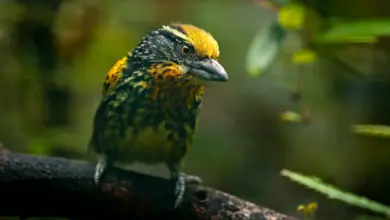
The Red-flanked Bluetail (Tarsiger cyanurus) is a small, strikingly colored passerine bird known for its vibrant blue tail and subtle reddish flanks. Belonging to the Old World flycatcher family, Muscicapidae, this species was once grouped within the thrush family, Turdidae, but modern taxonomic revisions have clarified its closer ties to chats and flycatchers. The Red-flanked Bluetail captivates birdwatchers and nature enthusiasts with its delicate appearance, melodic song, and remarkable migratory habits. Found mainly across northern Asia and parts of Europe, this species exemplifies the beauty and complexity of boreal forest avifauna.
Scientific Classification
The Red-flanked Bluetail is scientifically known as Tarsiger cyanurus. It is a member of the genus Tarsiger, which includes several small, insectivorous birds commonly referred to as bluetails or chats due to their colorful tails and ground-dwelling habits. The species falls within the family Muscicapidae, the Old World flycatchers, which encompasses a diverse group of insect-eating passerines found across Europe, Asia, and Africa.
Historically, the Red-flanked Bluetail was placed in the thrush family (Turdidae) because of its thrush-like size and shape. However, molecular studies and detailed anatomical analyses have since repositioned it within the flycatchers, aligning it more closely with chats such as the Siberian Blue Robin (Luscinia cyane) and the European Robin (Erithacus rubecula). The species name, cyanurus, derives from the Greek “kyanos,” meaning dark blue, and “oura,” meaning tail, directly referencing the bird’s distinctive blue tail feathers.


Geographic Range & Distribution
The Red-flanked Bluetail breeds primarily in the vast coniferous and mixed forests of northern Asia, stretching from Siberia across to the Russian Far East, northern Mongolia, and northern Japan. Its breeding range extends westward into parts of northeastern Europe, including Finland, where the species has shown a gradual range expansion in recent decades. In addition, it occurs in the high-altitude forests of the Himalayas and western China, adapting to cooler, mountainous environments during the breeding season.
During the non-breeding months, the Red-flanked Bluetail undertakes long migratory journeys to wintering grounds in southeastern Asia. These wintering areas include parts of northeastern India, southern China, northern Thailand, northern Vietnam, and Taiwan. The migration typically occurs from late September to November, with birds returning to their breeding sites around April to May. Although primarily an Asian species, the Red-flanked Bluetail is a rare vagrant to western Europe, with occasional sightings reported in countries such as the United Kingdom and the Netherlands. There are also sporadic records of the species in westernmost North America, particularly in Alaska and British Columbia, likely the result of overshooting during migration or vagrancy.
Physical Description
The Red-flanked Bluetail is a small bird, measuring approximately 13 to 14 centimeters in length, with a wingspan ranging from 21 to 26 centimeters. It typically weighs between 10 and 13 grams, making it a lightweight and agile flyer. The species exhibits sexual dimorphism, with males and females displaying distinct coloration patterns.
The adult male is immediately recognizable by its bright blue upperparts, including the head, back, and tail, contrasted with white underparts and striking orange-red flanks. The blue coloration is more intense on the head and tail, giving the bird a vivid and eye-catching appearance. Its legs and bill are dark, complementing its sleek plumage. The female, in contrast, is more subdued in coloration, featuring olive-brown upperparts, a soft buff to whitish underbelly, and pale orange flanks. Females also display a less pronounced blue wash on the tail and wings, which can appear muted compared to males.
Juvenile Red-flanked Bluetails closely resemble females but tend to have mottled, speckled plumage on their backs and flanks, providing effective camouflage against the forest floor. This cryptic coloration helps protect young birds from predators during the vulnerable early weeks after fledging.
Behavior & Diet
The Red-flanked Bluetail is primarily insectivorous, feeding on a wide variety of insects and other invertebrates. Its diet includes flies, beetles, caterpillars, spiders, and small larvae, which it gleans from low vegetation, leaf litter, and occasionally captures in mid-air. During the autumn and winter months, the species supplements its diet with berries and small fruits, especially in its southern wintering grounds where insect availability declines.
This bird is known for its secretive and shy behavior, often remaining close to dense undergrowth and the forest floor. It can be elusive to spot, despite its bright colors, due to its preference for shaded, tangled habitats. The Red-flanked Bluetail is an active forager, hopping on the ground or flitting between low branches in search of prey. It often flicks its blue tail and wings in a characteristic manner, which is a helpful identification cue for birdwatchers.
In terms of vocalizations, the male Red-flanked Bluetail produces a soft, melodious song consisting of a series of clear, high-pitched trills and whistles. This song is usually delivered from exposed perches high in the trees during the breeding season to attract mates and defend territories. Its call is a sharp, thin “tacc” or “tsip” sound, typical of chats, used as an alarm or contact call.
Breeding & Reproduction
The breeding season for the Red-flanked Bluetail occurs from late May to early August, depending on latitude and local climate conditions. The species favors mixed coniferous forests with dense undergrowth, often near streams or damp areas, which provide ample cover and foraging opportunities.
Nests are typically built close to the ground or in low shrubs, concealed within moss, roots, or fallen branches. The nest itself is a cup-shaped structure made from moss, grass, leaves, and lined with finer materials such as feathers and hair. Female Red-flanked Bluetails are solely responsible for constructing the nest and incubating the eggs. According to Audubon Society, this species is well documented.
A clutch usually contains three to five eggs, which are pale greenish or bluish with reddish-brown speckles. The incubation period lasts around 12 to 14 days, during which the female remains on the nest while the male provides food and guards the territory. After hatching, both parents participate in feeding the chicks, which are fed a steady diet of insects to ensure rapid growth. According to BirdLife International, this species is well documented.
Chicks fledge approximately two weeks after hatching but often remain dependent on their parents for some time as they learn to forage independently. The species typically raises one or two broods per breeding season, depending on food availability and environmental conditions.
Conservation Status
The Red-flanked Bluetail is currently classified as Least Concern by the International Union for Conservation of Nature (IUCN). This status reflects its wide distribution across northern Asia and parts of Europe, as well as stable population trends. The species benefits from extensive breeding habitats in relatively undisturbed forested areas, many of which are protected by national parks and reserves.
However, localized threats do exist. Habitat loss due to logging, forest fragmentation, and human encroachment poses a potential risk, particularly in parts of its wintering range where deforestation is more intense. Climate change may also affect the availability of suitable breeding and wintering habitats, potentially altering migratory patterns and food resources.
Despite these challenges, the Red-flanked Bluetail has shown resilience, with some populations expanding their range westwards into northern Europe. Conservation efforts focused on preserving boreal and temperate forest ecosystems will be essential to maintaining healthy populations of this beautiful species.
Interesting Facts
The Red-flanked Bluetail is sometimes referred to as the “Orange-flanked Bush-robin” due to its robin-like size and the orange coloration on its flanks. Although it resembles the European Robin in size, it is slightly larger and far more brightly colored, especially the males.
This species exhibits partial sexual dimorphism, with males displaying more vivid blue plumage, which plays a crucial role in courtship and territorial displays. Interestingly, the blue coloration is created not by pigments but by microscopic structures in the feathers that refract light, an example of structural coloration common in many bird species.
During migration, Red-flanked Bluetails travel alone or in loose groups, often flying at night to avoid predators and take advantage of favorable wind conditions. Their migration routes span thousands of kilometers, showcasing impressive endurance for such a small bird.
Birdwatchers prize encounters with the Red-flanked Bluetail, especially in Europe and North America, where sightings are rare and exciting. Photographers often seek out the species for its striking colors and elusive nature, making it a favorite subject in the avian world.
Finally, the Red-flanked Bluetail serves as an important indicator species for forest health, as it relies on clean, mature forests with rich undergrowth and abundant insect life. Monitoring its populations can provide valuable insights into the impacts of environmental change in boreal and temperate forest ecosystems.
In conclusion, the Red-flanked Bluetail (Tarsiger cyanurus) is a fascinating and beautiful bird that enchants birdwatchers across its extensive range. Its vibrant coloration, melodic song, and remarkable migratory journey exemplify the intricate connections within the natural world. By understanding and protecting its habitats, we ensure that future generations can continue to enjoy the delicate charm of this captivating species.