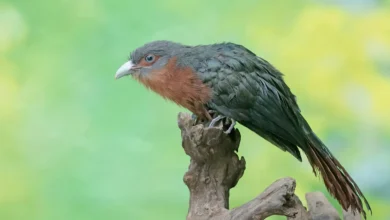
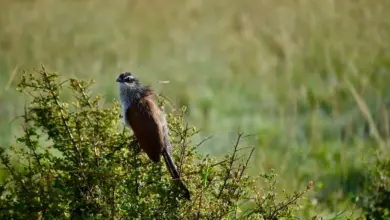
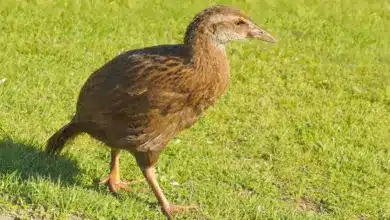
The Flame-templed Babbler (Dasycrotapha speciosa) is a captivating and distinctly colored bird endemic to the Philippines. Known by several other common names, including the Orange-templed Babbler, Rough-templed Tree Babbler, Rusty-crowned Babbler, and Beautiful Roughtemples, this species is notable for its vibrant orange facial markings and secretive behavior. Despite its once broader presence across its native islands, the Flame-templed Babbler now faces significant threats from habitat destruction, resulting in a fragmented and declining population. This article explores the species’ taxonomy, distribution, physical features, behavior, diet, breeding, conservation status, and intriguing facts, providing a comprehensive overview for bird enthusiasts and nature lovers alike.
Scientific Classification
The Flame-templed Babbler belongs to the family Timaliidae, a diverse group commonly referred to as babblers, known for their vocal nature and social behavior. Its scientific name is Dasycrotapha speciosa, placing it within the genus Dasycrotapha, which is characterized by small to medium-sized, ground-dwelling birds typically inhabiting dense undergrowth in tropical forests. The species was first described in 1861 and has undergone various taxonomic revisions, reflecting ongoing research into its phylogenetic relationships within the babbler family.
Within its genus, the Flame-templed Babbler is distinctive for its bright plumage and facial markings, traits that set it apart from other babbler species in the Philippines and Southeast Asia. Some ornithologists have proposed recognizing the populations on the islands of Panay and Negros as separate subspecies or races due to slight variations in morphology and vocalizations, although this division has not been formally accepted. The bird’s classification highlights its evolutionary adaptation to the specific ecological niches found on these islands.



Geographic Range & Distribution
The Flame-templed Babbler is strictly endemic to the Philippines, with its distribution limited to the islands of Panay and Negros, located in the west-central region of the archipelago. Historically, this bird was more widespread across these islands; however, ongoing habitat loss has severely fragmented its range. The species is primarily found in lowland and foothill forests, typically below elevations of 1,000 meters (approximately 3,300 feet), where thick undergrowth and dense vegetation provide essential cover and foraging opportunities.
Within its range, the Flame-templed Babbler is considered sedentary, meaning it does not undertake long-distance migrations but remains within its preferred habitat year-round. Its populations are now restricted to isolated forest patches, often within protected areas or remote regions where human disturbance is minimal. The fragmentation of these habitats, mainly due to logging, agricultural conversion, and urban development, poses a critical threat to the species’ survival. Conservation efforts focus on preserving remaining forest tracts and mitigating habitat degradation to maintain viable populations.
Physical Description
The Flame-templed Babbler is a small, striking bird measuring approximately 16 centimeters (6.3 inches) in length, including its relatively short tail. Its wings are rounded and short, adapted for maneuvering through dense undergrowth rather than long-distance flight. The bird’s weight typically ranges around 20 to 30 grams, making it lightweight and agile within its forest environment.
The species is most notable for its vivid and complex plumage. The namesake “flame-temple” refers to the bright orange tufts located just above the eyes, which contrast sharply against the black and white streaked feathers covering the ear coverts and crown. The crown and neck are predominantly black, while the back, rump, upper wings, and tail feature an olive-green hue with subtle gray tones and fine white streaks. The throat and chest display a dull yellow coloration interspersed with large black spots, adding to the bird’s distinctive appearance.
Males and females are visually similar, exhibiting no significant sexual dimorphism, which is common among babbler species. Juvenile birds tend to have duller plumage with less vibrant coloration and less distinct markings, allowing them to blend more effectively into the forest undergrowth during their vulnerable early life stages. The combination of colors and patterns not only aids in camouflage but may also play a role in social signaling within the species.
Behavior & Diet
The Flame-templed Babbler is a secretive and primarily ground-dwelling bird that navigates the forest understorey with deliberate and slow movements. It forages close to the ground, searching meticulously through thick vegetation, including bushes, vines, ferns, and leaf litter, for its insect prey. Its diet mainly consists of small insects and other arthropods, which it gleans from foliage and branches or captures by probing crevices in the forest floor.
This species is highly social, often found in small groups that may include several individuals working cooperatively as they forage. Notably, Flame-templed Babblers commonly participate in mixed-species feeding flocks alongside other insectivores such as fantails, leaf-warblers, and tailorbirds. These associations benefit all species involved by increasing the efficiency of food discovery and reducing predation risks through collective vigilance.
The bird’s vocalizations are an essential aspect of its behavior, especially since it often remains hidden in dense cover. Its calls are described as musical and melodious, consisting of short, clear warbled phrases that carry through the forest. These vocalizations serve multiple purposes, including maintaining group cohesion, marking territory, and attracting mates. Observers often hear the Flame-templed Babbler before they see it, as it tends to remain concealed within the thickets.
Breeding & Reproduction
Despite its intriguing natural history, the breeding behavior of the Flame-templed Babbler remains poorly documented. Available observations suggest that the breeding season is variable, with some individuals found in breeding condition as early as December, while others breed between April and August. This extended or variable breeding period may be influenced by local climatic conditions and food availability across the bird’s fragmented range. According to eBird, this species is well documented.
The Flame-templed Babbler builds its nest close to the ground within dense undergrowth, using materials such as twigs, leaves, and moss to create a concealed cup-shaped structure. The female typically lays a clutch of two to three eggs, which are incubated primarily by the female, though both parents are believed to participate in feeding and caring for the chicks once hatched. The young are altricial, hatching blind and helpless, requiring significant parental investment during their early development. According to BirdLife International, this species is well documented.
Breeding success is closely linked to habitat quality, with intact forest providing essential cover and abundant food resources critical for raising young. Habitat disturbance and fragmentation pose serious challenges to nesting success, making conservation of suitable breeding habitats a priority for the species’ survival.
Conservation Status
The International Union for Conservation of Nature (IUCN) currently classifies the Flame-templed Babbler as Endangered due to its very small, fragmented range and ongoing decline in habitat quality and population numbers. The primary threat to the species is habitat destruction caused by logging, agricultural expansion, and human settlement encroachment. Lowland forests, the bird’s preferred habitat, are some of the most vulnerable and rapidly diminishing ecosystems in the Philippines.
Conservation efforts for the Flame-templed Babbler focus on habitat protection and restoration. Several protected areas on Panay and Negros islands harbor remnant populations, but enforcement against illegal logging and land conversion remains a critical challenge. Environmental organizations and local communities are increasingly engaged in awareness campaigns and reforestation initiatives to safeguard these vital forest habitats.
Because of its limited distribution and specialized habitat needs, the Flame-templed Babbler serves as an important indicator species for the health of Philippine lowland forests. Protecting this bird not only preserves an iconic endemic species but also helps conserve broader biodiversity within one of the world’s most important biodiversity hotspots.
Interesting Facts
The Flame-templed Babbler is often overlooked due to its shy nature and preference for dense forest undergrowth, making sightings a prized reward for birdwatchers and wildlife photographers. Its striking orange “flame” marking above the eyes is unique among Philippine babblers and easily distinguishes it from other forest birds.
This species’ participation in mixed-species feeding flocks is a fascinating example of interspecies cooperation, where different birds benefit from shared vigilance and increased foraging success. Such behavior is common in tropical forests, highlighting the complex ecological relationships that sustain these environments.
Although little is known about the Flame-templed Babbler’s breeding habits, its variable breeding season may reflect an adaptation to the unpredictable climate and food resources typical of tropical island ecosystems. This flexibility could be a crucial factor in its survival amid changing environmental conditions.
Finally, the Flame-templed Babbler exemplifies the rich avian diversity found in the Philippines, a country recognized as a global biodiversity hotspot. Its survival depends heavily on the protection of the remaining lowland forests, underscoring the vital role that habitat conservation plays in preserving endemic species worldwide.
In conclusion, the Flame-templed Babbler (Dasycrotapha speciosa) is a vividly colored, elusive bird with a restricted range within the Philippines. Its unique appearance, secretive behavior, and ecological role within forest understoreys make it a species of significant interest. However, ongoing habitat loss and fragmentation threaten its future, highlighting the urgent need for conservation action. By learning more about this remarkable bird and supporting habitat preservation efforts, nature enthusiasts and conservationists alike can help ensure that the Flame-templed Babbler continues to thrive in its native forest home.