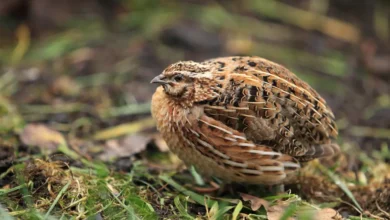
New World quails are a diverse group of small to medium-sized ground-dwelling birds native primarily to the Americas. Though they share a common name and some similarities in size and habits with the Old World quails of Europe, Asia, and Africa, these birds belong to a completely different family and lineage. Known scientifically as the family Odontophoridae, New World quails comprise around 34 species spread across nine genera, ranging from the deserts of the southwestern United States to the tropical forests of Central and South America. These birds are admired by birdwatchers and naturalists alike for their distinctive calls, striking plumage, and fascinating behaviors that reflect their adaptation to diverse habitats.
Scientific Classification
The New World quails belong to the family Odontophoridae, a lineage distinct from the Old World quails, which are members of the family Phasianidae. This separation is based on genetic and morphological differences, despite their superficial resemblance. The family Odontophoridae falls within the order Galliformes, which also includes pheasants, turkeys, and partridges. The name “Odontophoridae” refers to the “tooth-bearing” feature in their beaks, a subtle morphological trait that helps differentiate them from other galliform birds.
Within Odontophoridae, the species are organized into several genera, each with unique characteristics. Key genera include Dendrortyx (tree quails), Oreortyx (mountain quail), Callipepla (scaled and California quails), Colinus (bobwhites), and Odontophorus (wood quails), among others. For instance, the genus Callipepla contains species such as the California Quail (Callipepla californica) and Gambel’s Quail (Callipepla gambelii), which are familiar to many North American birdwatchers. Meanwhile, the genus Odontophorus includes a variety of forest-dwelling wood quails found mainly in Central and South America.




Scientific classification emphasizes evolutionary relationships and ecological niches, highlighting how New World quails have diversified to occupy a wide range of environments, from arid deserts to dense rainforests. Their taxonomy underscores the rich evolutionary history that distinguishes them from their Old World namesakes.
Geographic Range & Distribution
New World quails are native exclusively to the Americas, with their range extending from southern Canada and the western United States down through Mexico, Central America, and into northern and central South America. Their distribution covers a remarkable variety of habitats, reflecting their adaptability and evolutionary success.
In North America, species such as the Mountain Quail (Oreortyx pictus) inhabit the western United States, especially in mountainous and forested regions of California and Oregon. The California Quail (Callipepla californica) is found throughout the west coast, from southern British Columbia down to Baja California. Gambel’s Quail (Callipepla gambelii), on the other hand, thrives in the arid desert regions of the southwestern United States and northern Mexico.
Further south, Central American countries host several species of wood quails and tree quails, including the Bearded Tree Quail (Dendrortyx barbatus) and the Marbled Wood Quail (Odontophorus gujanensis). These birds typically occupy humid forests and mountainous areas. South America boasts some of the richest diversity of New World quails, especially in the Andean foothills and Amazonian forests. For example, the Montezuma Quail (Cyrtonyx montezumae) ranges through Mexico and into Guatemala, while the Venezuelan Wood Quail (Odontophorus columbianus) is found in northern South America.
Their distribution is largely determined by habitat preferences—species adapted to dry scrublands and deserts differ sharply from those inhabiting dense, tropical forests. Despite this, many New World quails have relatively limited ranges, which makes understanding their habitat requirements critical for conservation efforts.
Physical Description
New World quails are generally small, robust birds with round bodies, short necks, and strong legs adapted for ground dwelling and running. Their size varies by species but typically ranges from 20 to 35 centimeters (8 to 14 inches) in length, with weight between 100 to 300 grams (3.5 to 10.5 ounces). For example, the California Quail measures about 25 centimeters (10 inches) in length and weighs roughly 150 grams (5.3 ounces), while the larger Mountain Quail can reach up to 36 centimeters (14 inches) and weigh about 300 grams.
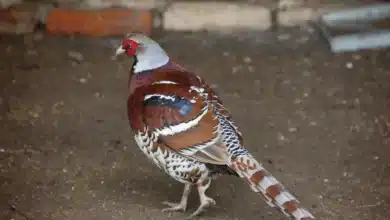
One of the most distinctive features of many New World quails is their plumage, which is often marked with intricate patterns and striking colors that provide camouflage in their natural habitats. The scaled quail (Callipepla squamata) boasts a scaled pattern on its chest, while the Elegant Quail (Callipepla douglasii) displays contrasting black and white markings. Tree quails in the genus Dendrortyx have more cryptic coloration, blending with leaf litter and forest undergrowth.
Many species possess unique crests or head plumes, which serve as visual signals during courtship or territorial displays. The California Quail, for example, is well-known for its forward-drooping black plume, while the Montezuma Quail has a distinctive pattern of concentric rings on its face and body.
Flight in New World quails is usually short and rapid, relying more on running and hiding to evade predators. Their wingspan is relatively modest, generally ranging from 30 to 45 centimeters (12 to 18 inches), which supports quick bursts of flight rather than sustained soaring.
Behavior & Diet
New World quails are predominantly terrestrial birds that spend most of their time on the ground foraging for food. They are known for their social behavior, often forming coveys—small family groups or flocks—that provide protection and aid in finding food. These coveys may range from a few individuals to over a dozen, depending on species and habitat.
Diet among New World quails varies with species and availability of resources but generally includes a mix of seeds, fruits, insects, and other small invertebrates. In arid regions, desert-dwelling species like Gambel’s Quail consume seeds from grasses, shrubs, and cacti, supplemented by insects such as ants and beetles. Wood quails inhabiting forests tend to eat a higher proportion of fruits, berries, and insects, which provide essential protein, especially during the breeding season.
Quails use their strong legs and sharp bills to scratch in leaf litter and soil, uncovering seeds and insects hidden beneath. Their foraging behavior is often accompanied by distinctive calls that help maintain contact within coveys. These vocalizations vary widely but are key components of their social structure. For instance, the Northern Bobwhite (Colinus virginianus), a widespread species in the eastern United States, is famous for its clear, whistled “bob-white” call.
When threatened, New World quails prefer to run or hide rather than fly, using their cryptic plumage and swift movements to avoid predators such as hawks, foxes, and snakes. Flight is generally reserved for short escapes and roosting in low shrubs or trees at night. According to RSPB, this species is well documented.
Breeding & Reproduction
New World quails typically breed in the spring and summer months, although timing can vary with latitude and climate. Most species exhibit monogamous pair bonds during the breeding season, with some species forming longer-lasting social relationships. According to Audubon Society, this species is well documented.
Nesting usually takes place on the ground, concealed in dense vegetation or under shrubs to protect eggs and chicks from predators. The nests themselves are simple scrapes lined with grass and leaves. Clutch sizes vary, with most species laying between 6 and 12 eggs. For example, the Northern Bobwhite lays clutches of around 10 to 15 creamy white eggs speckled with brown.
Incubation periods generally last about 21 to 24 days, with the female primarily responsible for incubating the eggs while the male guards the territory. After hatching, the precocial chicks are immediately mobile and covered in down, able to follow their parents and forage within hours.
Parental care is crucial during the early weeks as the chicks learn to feed and avoid danger. Coveys often stay together to increase survival rates, and juveniles may remain with parents for several months. Some species exhibit complex social structures where older siblings help care for younger ones, a behavior that enhances group cohesion and protection.
Conservation Status
The conservation status of New World quails varies widely among species. Many common species, such as the California Quail and Northern Bobwhite, are currently classified by the International Union for Conservation of Nature (IUCN) as Least Concern due to their widespread distribution and adaptability to human-altered landscapes like farmland and suburban areas.
However, several species face significant threats from habitat destruction, hunting, and introduced predators. For example, the Gorgeted Wood Quail (Odontophorus strophium) from Colombia is listed as Endangered due to deforestation and habitat fragmentation. Similarly, the Tacarcuna Wood Quail (Odontophorus dialeucos) has a limited range and is considered Near Threatened.
Conservation efforts for New World quails often focus on habitat preservation and sustainable hunting regulations. Protected areas and reserves in both North and South America provide critical refuges for forest-dependent species. Additionally, some states and countries have implemented breeding and reintroduction programs to bolster declining populations.
Ongoing research into quail ecology, population trends, and threats is vital for ensuring the survival of vulnerable species. Public education and birdwatching tourism also contribute to conservation by raising awareness of these often overlooked but ecologically important birds.
Interesting Facts
New World quails have fascinating adaptations and behaviors that set them apart from other ground birds. One remarkable feature is their vocal communication; many species possess a rich repertoire of calls used for mating, territory defense, and group cohesion. The Northern Bobwhite’s “bob-white” whistle is so iconic that it has become a symbol of the American countryside.
Tree quails, such as those in the genus Dendrortyx, are unusual in their arboreal habits compared to other quails. They are known to roost and even nest in trees, a rare behavior among mostly terrestrial galliforms. Their strong legs and sharp claws help them navigate branches in dense forest canopies.
The Montezuma Quail (Cyrtonyx montezumae) is noted for its secretive nature and cryptic plumage, making it one of the most challenging quails for birdwatchers to observe. It also has a unique diet that includes underground bulbs and tubers, which it digs up using its strong feet.
In many indigenous cultures across the Americas, New World quails have featured in folklore and traditional hunting practices. Their meat has been an important food source, and their calls often signal seasonal changes and the health of ecosystems.
Finally, the adaptability of New World quails to diverse environments—from deserts to tropical forests—demonstrates their evolutionary success. Their ability to thrive in such a wide range of habitats continues to intrigue scientists and bird enthusiasts alike.
Conclusion
New World quails represent a captivating and diverse group of birds whose evolutionary history, ecological roles, and behaviors enrich the natural landscapes of the Americas. From the arid deserts of the southwestern United States to the lush rainforests of South America, these birds have adapted to a variety of habitats with remarkable specialization. Understanding their taxonomy, distribution, biology, and conservation challenges provides insight not only into their survival but also into the health of the ecosystems they inhabit. Whether admired for their distinctive calls, intricate plumage, or intriguing social behaviors, New World quails remain a beloved subject for birdwatchers, wildlife photographers, and nature enthusiasts around the world.