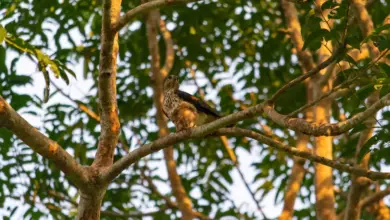
The Pallas’s Sea-eagle (Haliaeetus leucoryphus), also commonly known as Pallas’s Fish-eagle or Band-tailed Fish-eagle, is a striking and somewhat enigmatic member of the sea-eagle family. This large raptor inhabits a broad but fragmented range across Central and South Asia, where it is closely associated with freshwater environments. Known for its distinctive coloration and powerful build, Pallas’s Sea-eagle is an important apex predator in its ecosystem, yet it remains one of the lesser-known sea-eagles due to its relatively remote and scattered habitats. This article delves into the fascinating biology, ecology, and conservation challenges facing this remarkable bird.
Scientific Classification
The Pallas’s Sea-eagle belongs to the family Accipitridae, which includes hawks, eagles, and kites. Its scientific name is Haliaeetus leucoryphus. The genus Haliaeetus encompasses the sea-eagles, a group of large raptors typically associated with water bodies where they hunt fish and other aquatic prey. Despite being classified within this genus, Pallas’s Sea-eagle is unique among its relatives due to its isolated evolutionary history and distinct morphological features.
Molecular studies, including mitochondrial DNA analysis, suggest that Pallas’s Sea-eagle diverged early from other sea-eagles, possibly around 25 to 34 million years ago during the Oligocene epoch. This separation places it apart from both the Holarctic species—those found in northern regions such as the Bald Eagle (H. leucocephalus) and White-tailed Eagle (H. albicilla)—and the tropical sea-eagles of Africa and Australasia. The species retains ancestral traits such as dark eyes, bill, and talons, which are considered primitive within the group. Its unique black tail band and rufous back coloration also distinguish it from other sea-eagles. These evolutionary characteristics, combined with its isolated land-locked distribution, make it a fascinating subject for study within raptor phylogeny.


Geographic Range & Distribution
Pallas’s Sea-eagle has a disjunct and relatively restricted range across Central and South Asia. Its breeding territories extend from the Caspian Sea region in Kazakhstan, through Mongolia and southern Siberia, reaching as far south as the foothills of the Himalayas and northern India. The species favors large inland freshwater lakes, rivers, and wetlands at moderate to high elevations, often between 1,000 and 3,000 meters.
During the winter months, populations breeding in Central Asia undertake partial migrations. Many move southwards to overwinter in northern India, particularly in the states of Uttar Pradesh and Bihar, as well as Bangladesh and Nepal. Some individuals also travel further west along the Persian Gulf coastlines. These wintering grounds provide milder climates and abundant fishing opportunities when their breeding habitats freeze over or become less hospitable. However, Pallas’s Sea-eagle is not considered a long-distance migrant compared to some other raptors, and some populations remain resident year-round where conditions allow.
The species’ distribution is patchy, and it is generally uncommon to rare throughout its range. Habitat fragmentation, especially the loss of wetlands and freshwater bodies due to human activities, has led to a contraction of its historical range. The bird’s preference for large, undisturbed waterbodies limits its ability to adapt to rapidly changing landscapes, making its distribution vulnerable to environmental pressures.
Physical Description
Pallas’s Sea-eagle is a large, powerful raptor with a distinctive appearance. Adults typically measure between 72 and 84 centimeters (28 to 33 inches) in length, with a wingspan ranging from 180 to 205 centimeters (71 to 81 inches). Females are generally larger and heavier, weighing between 2.1 and 3.7 kilograms (4.6 to 8.2 pounds), while males weigh slightly less, from 2.0 to 3.3 kilograms (4.4 to 7.3 pounds). This sexual dimorphism is common among sea-eagles, where females tend to be the larger sex.
The plumage of adult Pallas’s Sea-eagles is characterized by a pale sandy or light brown hood covering the head and neck, contrasting sharply with a bright white face. The back and upper wings display a rich rufous to chestnut brown color, while the wings themselves are predominantly dark brown. One of the species’ most diagnostic features is its black tail with a broad, conspicuous white band running across it. Underwing patterns include a distinct white band visible during flight, aiding in identification.
Juvenile birds differ markedly, appearing darker overall with a more mottled, less uniform plumage. They lack the white tail band seen in adults, and their heads are a duller brown, blending more with the rest of the body. This juvenile plumage gradually changes over a period of four to five years before reaching full adult coloration. The bird’s large, hooked black bill, strong yellow legs, and sharp talons complete its formidable appearance, underscoring its role as a top predator.
Behavior & Diet
Pallas’s Sea-eagle is an opportunistic predator primarily associated with freshwater habitats. Its diet consists mainly of large freshwater fish, which it captures using its powerful talons. Common prey species include carp, catfish, and other sizable fish found in lakes and rivers within its range. The eagle hunts by soaring or perching near water, scanning for fish near the surface. Upon spotting its prey, it executes a swift, low flight dive to snatch the fish, often carrying it away to a perch or nest to consume.
In addition to fish, Pallas’s Sea-eagle supplements its diet with other aquatic animals, including amphibians, waterfowl, and occasionally small mammals. It is known to scavenge carrion and steal food from other birds, demonstrating some opportunistic feeding behavior. This flexibility allows it to survive in habitats where fish availability fluctuates seasonally.
Behaviorally, Pallas’s Sea-eagle is typically solitary or found in pairs, especially during the breeding season. Outside of breeding, they may gather in small groups at abundant food sources, such as fish kills or during winter congregations. The species is known for its strong territoriality, with breeding pairs defending nesting sites aggressively against intruders. Flight is powerful and steady, characterized by broad wingbeats and the ability to soar for extended periods using thermal currents.
Breeding & Reproduction
The breeding season for Pallas’s Sea-eagle generally occurs from late winter into early spring, depending on local climatic conditions across its range. Nesting sites are usually located in tall trees near large water bodies or on cliffs where available. The species constructs massive nests made from sticks and lined with softer materials such as leaves and moss. These nests are often reused and added to year after year, sometimes reaching impressive sizes exceeding two meters in diameter. According to RSPB, this species is well documented.
Typically, the female lays between one and three eggs per clutch, with two being most common. The eggs are pale with reddish-brown blotches and incubated primarily by the female for about 38 to 42 days. During this time, the male provides food for the incubating female. After hatching, both parents actively feed and protect the chicks. The young remain in the nest for approximately 10 to 12 weeks before fledging. According to BirdLife International, this species is well documented.
Juveniles continue to depend on their parents for food and learning hunting skills for several months after fledging. It can take up to five years for Pallas’s Sea-eagles to reach full maturity and adult plumage, which is relatively slow compared to some other raptors. This extended developmental period, combined with a low reproductive rate, makes population recovery slow and vulnerable to external threats.
Conservation Status
The International Union for Conservation of Nature (IUCN) currently lists Pallas’s Sea-eagle as Vulnerable on its Red List of Threatened Species. Estimates suggest a global population of approximately 2,500 to 10,000 mature individuals, with a declining trend. The species faces significant threats primarily from habitat loss and degradation.
Wetland drainage, water pollution, and conversion of natural habitats for agriculture or urban development have severely impacted the quality and availability of suitable breeding and hunting grounds. Additionally, direct human persecution, including shooting and egg collection, has contributed to population declines in some areas. Disturbance from human activities near nesting sites can also lead to breeding failure.
Conservation efforts focus on protecting critical wetland habitats and reducing human disturbances. Some protected areas within the species’ range offer safe breeding and feeding grounds, but enforcement remains challenging. Environmental organizations also promote awareness campaigns to educate local communities about the importance of preserving this apex predator and its habitats. Continued research into the species’ ecology and migratory patterns is essential for informed conservation management.
Interesting Facts
Pallas’s Sea-eagle’s evolutionary history is one of the most intriguing among sea-eagles. Its early divergence from other members of Haliaeetus and retention of ancestral traits provide key insights into the evolution of sea-eagles and their adaptation to different environments. Unlike many sea-eagles, which are typically coastal or marine-oriented, Pallas’s Sea-eagle has adapted to a predominantly inland, freshwater lifestyle.
The species’ name honors the German naturalist Peter Simon Pallas, who first described the bird scientifically in the late 18th century during his expeditions in Central Asia. Despite its large size and impressive hunting skills, it remains elusive and difficult to observe in the wild, adding to its mystique among birdwatchers and researchers.
Another notable characteristic is the species’ distinctive call, a series of deep, resonant whistles and hoots, which can carry for long distances across open water and wetlands. This vocalization plays a crucial role in pair bonding and territorial defense during the breeding season.
Interestingly, Pallas’s Sea-eagle is one of the few sea-eagles with a black tail band in adults, a feature shared only with the juvenile Madagascar Fish-eagle (Haliaeetus vociferoides), though these two species are not closely related. This similarity is a remarkable example of convergent evolution or retention of ancient traits within the genus.
Finally, the bird’s powerful flight, ability to soar for hours on thermals, and remarkable eyesight make it a formidable predator in its aquatic environment. For wildlife photographers and enthusiasts fortunate enough to encounter this majestic raptor, witnessing its grace and strength in flight is a memorable experience.
In summary, Pallas’s Sea-eagle is a fascinating and ecologically significant species with a unique evolutionary background and specialized lifestyle. Its vulnerable status highlights the urgent need for habitat conservation and ongoing research to ensure this magnificent bird continues to soar across the lakes and rivers of Asia for generations to come.