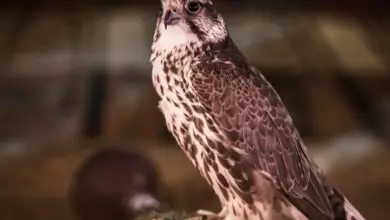
The Laggar Falcons (Falco jugger) is a mid-sized bird of prey that occurs in the Indian subcontinent from extreme south-east Iran, south-east Afghanistan, Pakistan, through India, Nepal, Bhutan, Bangladesh, and north-west Myanmar.
Description
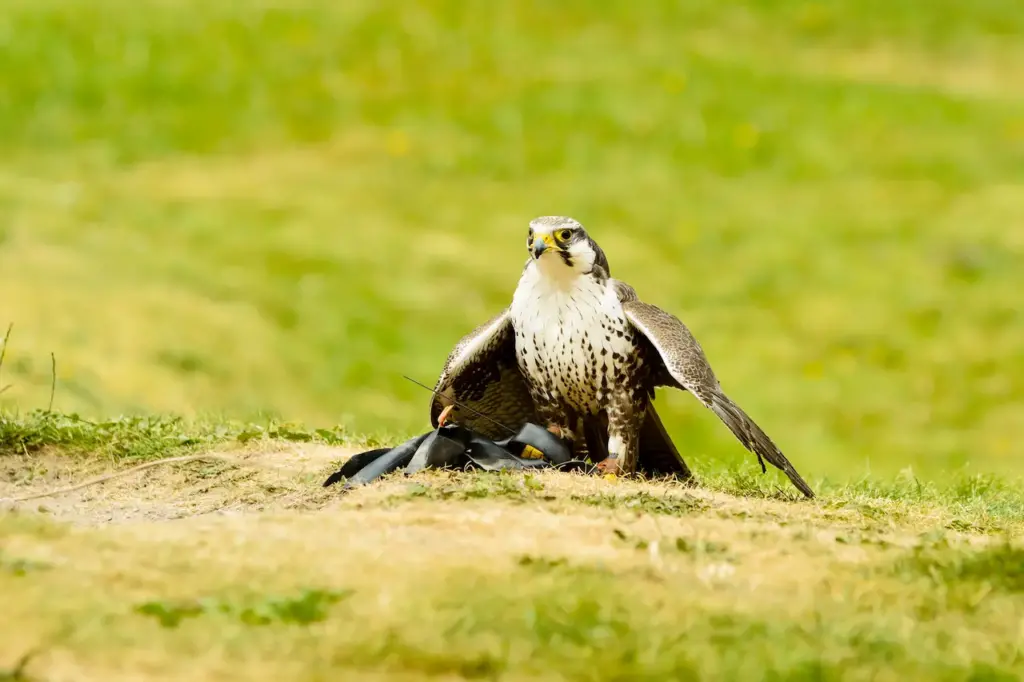
Laggar Falcons are medium-sized birds of prey. They measure between 40 and 50 centimetres long, with wingspans ranging from 120 to 150 centimetres. Due to its similarity in size and shape, it is sometimes mistaken for the Lanner Falcon, Falco Biarmicus. However, a trained eye will easily tell the difference. Laggar plumage tends to be darker, with a dark brown or sooty grey back. The dark feathering of the legs is one of the most distinctive features. It’s often called “trousers” and contrasts with the lighter underparts.


The underside of juveniles and fledglings is almost completely dark, with very little light streaking. This gives them a uniform, shadowy look. As the bird grows older, its belly will retain some darker shades but become lighter and more streaked. The classic falcon moustache, a dark line that extends from the beak down to the cheek, adds to the bird’s fierce expression. Its dark, piercing eyes were adapted to sharpen vision when it was chasing at high speeds in the air.
Laggar Falcons exhibit a subtle sexual dimorphism. Females are typically slightly larger than males, a trait common among raptors. However, there is no difference in colouration.
Habitat and Distribution
The Laggar Falcon’s native range is a vast expanse of South Asia. In countries like India, Pakistan and Nepal, as well as Bhutan, Bangladesh and the northwestern part of Myanmar, you can find this falcon. The falcon’s range extends westward to southeast Iran and southeast Afghanistan. The falcon prefers semi-arid and arid areas, open plains with dry scrublands or grasslands. It also avoids densely forested areas. It is adapted to hot and dry climates. It avoids densely forested areas or urbanised areas.
The bird nests in rocky outcrops and cliffs. The preference of this bird for open landscapes is a reflection of its hunting style, which demands wide fields for vision and plenty of room to maneuver.
It is interesting to note that despite its wide range, many areas of the Laggar Falcon’s distribution are now rare or even uncommon. It was once the most common falcon seen in India and Pakistan. However, populations have declined dramatically due to anthropogenic pressures.
Breeding and nesting
Laggar Falcons usually breed in the cooler months. The breeding season in the Indian subcontinent usually begins around October and lasts until March. However, there are regional variations. Courtship involves aerial displays, where couples perform synchronised flight and high-pitched calls. These bonding displays, which are both spectacular and important for selecting a mate or establishing territory, are crucial.
Laggar Falcons, unlike many other birds, do not build elaborate nests. They often place their eggs on the ledges of cliffs or on rocky outcrops. Sometimes they even use abandoned nests from other large birds, such as kites and eagles. Sometimes, they nest on old buildings or pylons. This is especially true in disturbed habitats.
The female incubates the eggs for 30 to 35 days. During this period, the male is in charge of hunting and bringing food for the female. Both parents feed the chicks after hatching. They grow quickly thanks to their protein-rich diet. In six to seven weeks, the fledglings will be ready to leave their nest. However, they may stay near their parents as they learn how to hunt.
Disturbance at nesting areas is a threat to successful breeding. Adults may abandon nests due to disturbances such as noise pollution, human encroachment and quarrying. This leaves eggs and chicks exposed to predators.
Food and Diet
Laggar Falcons have an opportunistic diet that consists primarily of small and medium-sized birds. They hunt at high speeds through open terrains or along ridgelines. Their technique relies on sharp vision, rapid acceleration and agile flight. Prey includes birds such as sparrows, larks and pigeons. They may occasionally take large insects, reptiles or small mammals.
This falcon can hunt birds as big as it is. It usually launches from a high perch and uses speed and stealth to surprise its prey. The Laggar, once in flight, can reach incredible speeds and demonstrate extraordinary agility. Icanto maneuvers, twists, and maneuvers throughout complex aerial chases. According to eBird, this species is well documented.
The falcon hunts alone, but during breeding season, males will often bring food for their chicks or mates. The diet of the falcon may vary depending on the availability of prey in the area, particularly in habitats with declining bird populations. According to BirdLife International, this species is well documented.
Vocalizations
Laggar falcons are not as vocally expressive as some other species of falcons. It calls during breeding season or when it is agitated. It calls in a high-pitched and repetitive Kek-kek kek (or Klee-klee), usually repeated rapidly. These vocalisations are used for a variety of reasons, including territorial defence, mate attraction and alarm calls.
When courting, birds will vocalise more often, either by singing duets together or by calling each other from the air. Both males and females will use sharp scolding sounds to scare off intruders when they are alarmed or defending their nest.
The Laggar Falcon is not as loud or melodious as other raptors. However, its vocalisations still offer clues to its emotional state and presence in the wild.
Taxonomy
This species belongs to a close-knit complex of falcons known as hierofalcons. In this group, there is ample evidence for rampant hybridization and incomplete lineage sorting which confounds analyses of DNA sequence data to a massive extent; molecular studies with small sample sizes can simply not be expected to yield reliable conclusions in the entire hierofalcon group.
The radiation of the entire living diversity of hierofalcons seems to have taken place in the Eemian interglacial at the start of the Late Pleistocene, a mere 130,000-115,000 years ago; the Laggar Falcon represents a lineage that arrived at its present range out of eastern Africa by way of the Arabian Peninsula which during that time had a more humid climate than today.
Status
Laggar Falcons used to be the most common falcons in the region, but numbers have declined markedly in recent times and today it is probably nowhere near a common species anymore. The main threats are the intensification of pesticide use in the region and use as a decoy to trap large falcons.
Conclusion
Laggar Falcons are a rare and beautiful raptor, known for their masterful flying skills. They have a long history in South Asia. It was once one of the most common falcons seen in its range. However, due to modern pressures t it is now a rare sight. Like many other birds of prey its its fate is tied closely to the health and actions of humans.
Understanding the challenges that the Laggar Falcon faces is the first step to reversing the decline of this species. This species’ protection is important for the biodiversity of the grasslands, scrublands and other habitats it inhabits. The Laggar falcon’s swift flight and sharp cries will return to the skies of South Asia with targeted conservation measures.
In a world of rapid development, where environmental concerns are often overlooked, the Laggar Falcon’s story serves as a gentle reminder of the delicate equilibrium between human progress and nature. It’s not too late for this iconic falcon to continue to soar in its ancestral skies.
Copyright: Wikipedia. This article is licensed under the GNU Free Documentation License. It uses material from Wikipedia.org … Additional information and photos added by Avianweb.
Please Note: The articles or images on this page are the sole property of the authors or photographers. Please contact them directly concerning any copyright or licensing questions. Thank you.