The Palm Crow (Corvus palmarum) is a distinctive member of the crow family found exclusively in the Caribbean, primarily on the island of Hispaniola and the nearby island of Puerto Rico. Recognizable for its glossy black plumage and slightly smaller size compared to other crows, this species is an intriguing example of island adaptation. Known locally as “cao” for its repetitive, simple call, the Palm Crow occupies a variety of habitats on these islands, from pine forests to dry lowlands, showcasing its adaptability within its limited range. Though often overshadowed by its more widespread relatives, the Palm Crow plays an important ecological role in its native environments and offers fascinating insights into the avian biodiversity of the Caribbean.
Scientific Classification
The Palm Crow belongs to the family Corvidae, a group renowned for their intelligence and adaptability. Its scientific name is Corvus palmarum, placing it firmly within the genus Corvus, which encompasses crows, ravens, and related species worldwide. This genus is characterized by medium to large passerines with strong bills, high cognitive abilities, and complex social behaviors.
The Palm Crow was first described scientifically in 1850 by the French ornithologist Charles Lucien Bonaparte. Taxonomically, it is sometimes confused with other Caribbean corvids, such as the Cuban Crow (Corvus nasicus) and the Jamaican Crow (Corvus jamaicensis), but it is a distinct species with unique adaptations to its island habitats. Genetic studies have confirmed its distinctness, although it shares a common ancestor with other Caribbean crows, reflecting the evolutionary processes that shaped the region’s avifauna.


Geographic Range & Distribution
The Palm Crow has a highly restricted geographic range, being endemic to the island of Hispaniola, which is shared by the Dominican Republic and Haiti, and to a lesser extent, the island of Puerto Rico. On Hispaniola, it is primarily found in the mountainous pine forests, especially in the Cordillera Central region, which provides the cool, forested environment it favors. It is also recorded around Lake Enriquillo and surrounding dry areas, indicating its ability to exploit various habitats on the island.
On Puerto Rico, the Palm Crow inhabits dry coastal forests and palm groves, although its populations are less dense and more localized compared to Hispaniola. This distribution reflects the bird’s preference for habitats where tall trees or palms can provide nesting and roosting sites. The bird’s insular distribution makes it vulnerable to habitat changes, but it remains a familiar sight for birdwatchers exploring the Caribbean’s rich biodiversity.
Physical Description
The Palm Crow is a medium-sized crow, measuring approximately 35 to 38 centimeters (14 to 15 inches) in length, with a wingspan ranging from 85 to 100 centimeters (33 to 39 inches). It weighs between 200 and 300 grams (7 to 10.5 ounces), making it slightly smaller and lighter than the common American crow (Corvus brachyrhynchos).
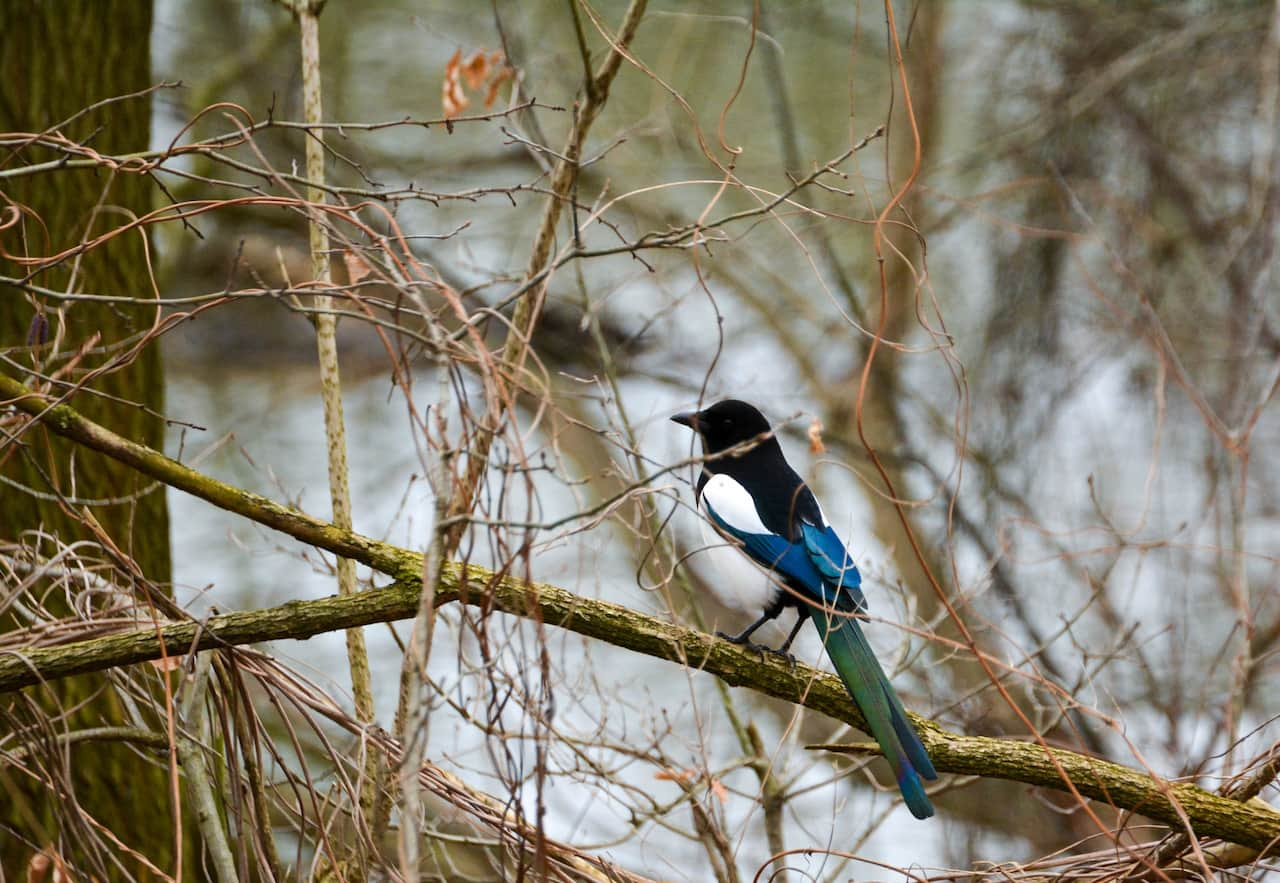
Its plumage is entirely black with a subtle gloss that reflects iridescent shades of blue and purple under sunlight, a characteristic common to many corvids. The bill is robust and strong, adapted for a varied diet, and is black like the legs and feet. The eyes are dark brown, blending smoothly with the black facial feathers. Unlike some other crow species, the Palm Crow lacks any distinctive markings or color variations, relying on its sleek silhouette and glossy feathers for identification.
Behavior & Diet
As with other members of the Corvidae family, the Palm Crow is highly intelligent and exhibits complex social behaviors. It is often seen in pairs or small groups, especially outside the breeding season, though larger flocks may form around abundant food sources. Its call is a simple, repetitive “cao” sound, which has inspired its local name. This vocalization is used for communication between mates and group members, as well as for territorial defense.
The Palm Crow is an opportunistic omnivore, feeding on a wide range of foods. Its diet includes insects, small reptiles, fruits, seeds, and occasionally small vertebrates such as lizards or nestling birds. It is also known to scavenge carrion and human refuse, demonstrating adaptability to changing environments. In pine forests, the crow often forages on the ground, searching for insects beneath leaf litter and fallen branches. In coastal palm groves, it supplements its diet with various fruits and palm nuts, which is a notable dietary adaptation that likely influenced its common name.
Breeding & Reproduction
The breeding season of the Palm Crow typically coincides with the early part of the dry season, from February to May, although exact timing can vary depending on local conditions. These birds build sturdy nests high in trees, frequently selecting tall pines or palms to minimize predation risks. The nests are constructed from sticks and lined with softer materials such as leaves or feathers. According to RSPB, this species is well documented.
Females generally lay between three and five eggs, which are pale blue or greenish with brown speckles. Both parents participate in incubating the eggs, which hatch after approximately 17 to 19 days. The chicks are altricial, meaning they hatch blind and helpless, requiring extensive parental care. Both adults feed the young, bringing a diet rich in insects and other protein sources to promote rapid growth. Fledging occurs about four weeks after hatching, but juveniles often remain with their parents for some time, learning essential survival skills. According to BirdLife International, this species is well documented.
Conservation Status
According to the International Union for Conservation of Nature (IUCN), the Palm Crow is currently classified as Least Concern. Despite its relatively limited geographic range, the species maintains stable populations across Hispaniola and Puerto Rico. However, habitat loss due to deforestation, urban expansion, and agricultural development poses ongoing threats, particularly on Hispaniola where large-scale habitat alteration continues.
Conservation efforts for the Palm Crow focus on preserving its natural habitats, especially the pine forests and coastal palm groves essential for breeding and feeding. Protected areas on Hispaniola provide crucial refuges for this species, but continued monitoring is required to ensure that populations remain healthy. Its adaptability to some disturbed environments offers hope, but long-term survival depends on maintaining habitat quality and minimizing human-induced pressures.
Interesting Facts
The Palm Crow’s local name, “cao,” is an onomatopoeic reference to its simple, repetitive call, which sounds like a drawn-out “cow” or “caw.” This vocalization is less complex than those of some other corvids, possibly reflecting its island adaptations.
Despite its smaller size compared to mainland crows, the Palm Crow shares many behavioral traits with its larger relatives, including problem-solving abilities and territoriality. Studies suggest that island corvids like the Palm Crow can exhibit unique behaviors due to isolation, such as modified foraging techniques or altered social structures.
One particularly fascinating aspect of the Palm Crow is its role in seed dispersal. By consuming fruits and excreting the seeds elsewhere, it helps maintain the health and regeneration of its native forests. This ecological contribution is vital for sustaining the biodiversity of its island habitats.
Birdwatchers in the Caribbean prize the Palm Crow as a unique species to observe due to its restricted distribution and striking appearance. Its presence enriches the Caribbean avifauna and provides valuable opportunities for studying island ecology and the evolution of corvids.
In conclusion, the Palm Crow (Corvus palmarum) stands out as a compelling example of island avifauna, combining adaptability with a distinctive ecological niche. While it faces challenges from habitat loss, its current conservation status offers optimism for its continued presence in the Caribbean. For nature enthusiasts and ornithologists alike, the Palm Crow remains a fascinating subject of study and appreciation, embodying the rich biodiversity of the Caribbean islands.