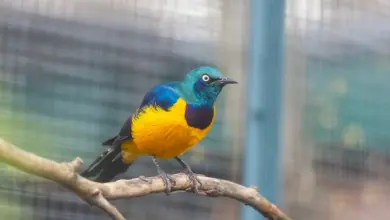
The Owl Finch, also known as the Double-barred Finch (Taeniopygia bichenovii), is a small, strikingly patterned bird native to the open woodlands and savannahs of northern and eastern Australia. Its name derives from the distinctive dark rings of feathers encircling its face, which resemble the facial discs of owls. These charming finches are popular among bird enthusiasts and aviculturists alike due to their sociable nature, attractive appearance, and melodious calls. Despite their modest size, Owl Finches display a range of fascinating behaviors and adaptations that make them a captivating subject of study for naturalists and birdwatchers.
Scientific Classification
The Owl Finch belongs to the family Estrildidae, a diverse group commonly referred to as estrildid finches. Its scientific name is Taeniopygia bichenovii, placing it in the genus Taeniopygia, which it shares with the closely related Zebra Finch (Taeniopygia guttata). The species was first described by John Gould in 1837 and is sometimes colloquially referred to as the bicheno finch, a name derived from its species epithet. Within the genus, the Owl Finch is distinguished by its unique facial markings and coloration patterns.
There are recognized subspecies, including the more common white-rumped form and the less frequent black-rumped Owl Finch (Taeniopygia annulosa). The black-rumped variety differs primarily in the color of its rump, which is black rather than white, and tends to have larger white spots on its wing coverts. It is also slightly smaller in size compared to the typical form. These subspecies illustrate the subtle variation present within this small but widespread species.






Geographic Range & Distribution
The Owl Finch is endemic to Australia, with a distribution largely concentrated in the northern and eastern regions of the continent. Its range extends from northern Queensland across the Northern Territory and into northern New South Wales. The species thrives in open habitats such as savannah woodlands, grasslands, and shrublands, often favoring areas with scattered trees and tall grasses where seed availability is high. It is commonly found near water sources in these environments, benefiting from the rich diversity of grasses and herbs that produce the seeds they feed on.
Seasonal movements are not well documented for this species, but local dispersals are likely in response to rainfall patterns and food availability. Unlike many finches that display strict territoriality, Owl Finches tend to be relatively nomadic within their range, congregating in small, gregarious flocks. Due to their widespread distribution and adaptability to different open habitats, they are frequently encountered by birdwatchers exploring Australia’s vast outback regions.
Physical Description
The Owl Finch is a petite bird, measuring approximately 10 to 11 centimeters in length and weighing roughly 10 to 14 grams. Its wingspan ranges from about 15 to 18 centimeters. The bird’s most distinctive feature is its white face bordered by a bold black mask, which surrounds the eyes and gives the appearance reminiscent of an owl’s facial disc—hence its common name. The throat and upper breast also display a black band, effectively creating a double-barred effect when combined with the facial markings.
The upperparts of the Owl Finch are generally warm brown with subtle streaking, while the underparts are primarily white. Another thin black band separates the white underparts from the brown throat. The wings are intricately patterned with brown and white feathers, featuring small white spots on the wing coverts that add to the bird’s striking appearance. Males and females are visually similar, making it difficult to distinguish between the sexes in the field. Juveniles tend to be duller and browner overall, lacking the crisp black-and-white facial markings of adults.
Behavior & Diet
Owl Finches are highly social birds that typically form small flocks, especially outside the breeding season. Their gregarious nature helps them forage efficiently and avoid predators. They are primarily seed-eaters, feeding on a variety of grass seeds and small grains found in their open habitat. Their diet includes seeds from millets, native grasses, and other seeding plants. They also consume small amounts of fresh greens such as chickweed, spinach, and other leafy vegetation, particularly when feeding young or during periods of seed scarcity.
In the wild, Owl Finches have been observed supplementing their diet with live insects and other small invertebrates, especially during the breeding season when protein requirements increase. This opportunistic feeding behavior helps provide essential nutrients for growing chicks. Their foraging typically occurs on the ground or in low vegetation where seeds are abundant.
Their vocalizations include a soft “tet” call used for contact within the flock and a louder “peew” note when alarmed or communicating over longer distances. Their song is described as a soft, pleasant fluting that adds a melodic quality to the quiet Australian bush. These vocalizations play an important role in maintaining flock cohesion and signaling during breeding season.
Breeding & Reproduction
Owl Finches reach sexual maturity at around nine months of age and may begin breeding shortly thereafter. They build their nests in dense grass clumps, low shrubs, or small trees close to the ground, often selecting sites that provide good cover from predators. The nests are typically dome-shaped structures woven from grasses and fine plant fibers, providing a secure environment for eggs and nestlings. According to Cornell Lab of Ornithology, this species is well documented.
Clutches generally consist of four to six small white eggs, which are incubated by both parents for approximately 12 to 14 days. The biparental care continues after hatching, with both male and female feeding the chicks a diet rich in seeds and small insects. Nestlings fledge after about three weeks but may remain close to the nest site for several additional weeks as they develop flight skills and independence. According to Audubon Society, this species is well documented.
During the breeding season, males can become territorial and show aggression towards rivals, especially if housed together in captivity. In the wild, this behavior serves to defend nesting sites and attract mates. Captive breeders often keep pairs separated in large aviaries to minimize conflict and encourage successful breeding. Egg binding is a potential health risk for females bred too early or under inappropriate conditions, underscoring the need for careful management in aviculture.
Conservation Status
According to the International Union for Conservation of Nature (IUCN), the Owl Finch is currently classified as Least Concern. This status reflects its broad distribution across northern and eastern Australia, stable population trends, and adaptability to a variety of open habitats. Unlike many grassland birds that face threats from habitat loss and fragmentation, the Owl Finch has proven resilient in the face of environmental changes and human encroachment.
Nevertheless, localized threats such as land clearing, invasive plant species, and altered fire regimes could potentially impact some populations. Maintaining healthy savannah ecosystems with native grass species is essential for the ongoing survival of this finch. Conservation efforts aimed at preserving natural habitats and promoting sustainable land management practices indirectly benefit the Owl Finch and many other native species sharing these environments.
Interesting Facts
The Owl Finch’s distinctive facial markings not only give it its name but may serve a practical purpose in the wild by disrupting the outline of its head, making it harder for predators to single out the bird. This form of camouflage is seen in various species where facial patterns play a role in predator avoidance.
In captivity, Owl Finches have demonstrated a willingness to explore a variety of foods, including live mealworms and soft vegetables, which is somewhat unusual for seed-specialist finches. This dietary flexibility likely contributes to their success in diverse environments.
Unlike the closely related Zebra Finch, which is extensively used in scientific research, the Owl Finch remains less studied but is increasingly appreciated for its charming personality and ease of care in aviaries. Its gentle song and sociable nature make it a favorite among bird lovers who enjoy keeping mixed-species aviaries.
Finally, the Owl Finch can live up to 5 to 7 years in captivity with proper care, which is relatively long for a small finch species. This longevity allows them multiple breeding seasons, contributing to their stable population numbers in the wild.
In summary, the Owl Finch (Taeniopygia bichenovii) is a small yet captivating bird species, emblematic of Australia’s open woodlands. Its striking appearance, engaging behaviors, and adaptability make it a fascinating subject for bird enthusiasts and a valuable component of the continent’s rich avian biodiversity.