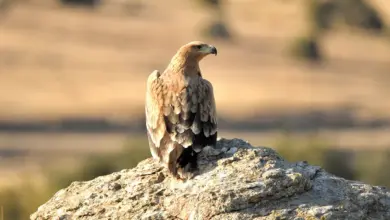
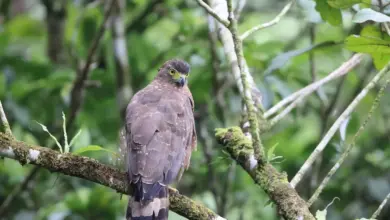
The Ornate Hawk-eagles, Spizaetus ornatus, are a bird of prey from the tropical Americas. Like all eagles, it is in the family Accipitridae.
Description
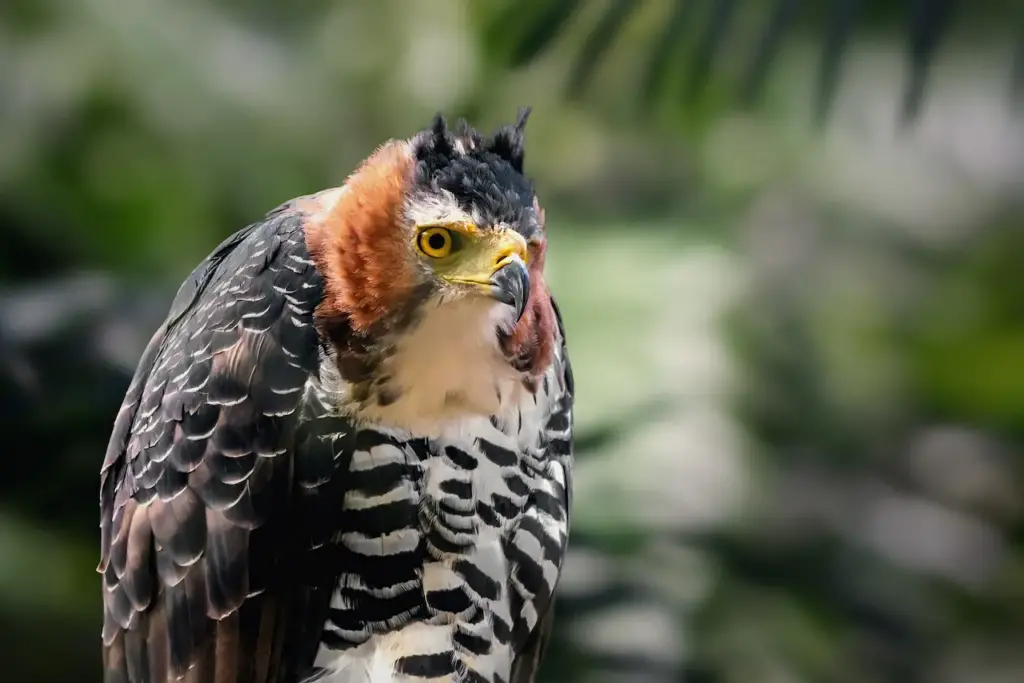
This species is notable for its vivid colours, which differ markedly between adult and immature birds.


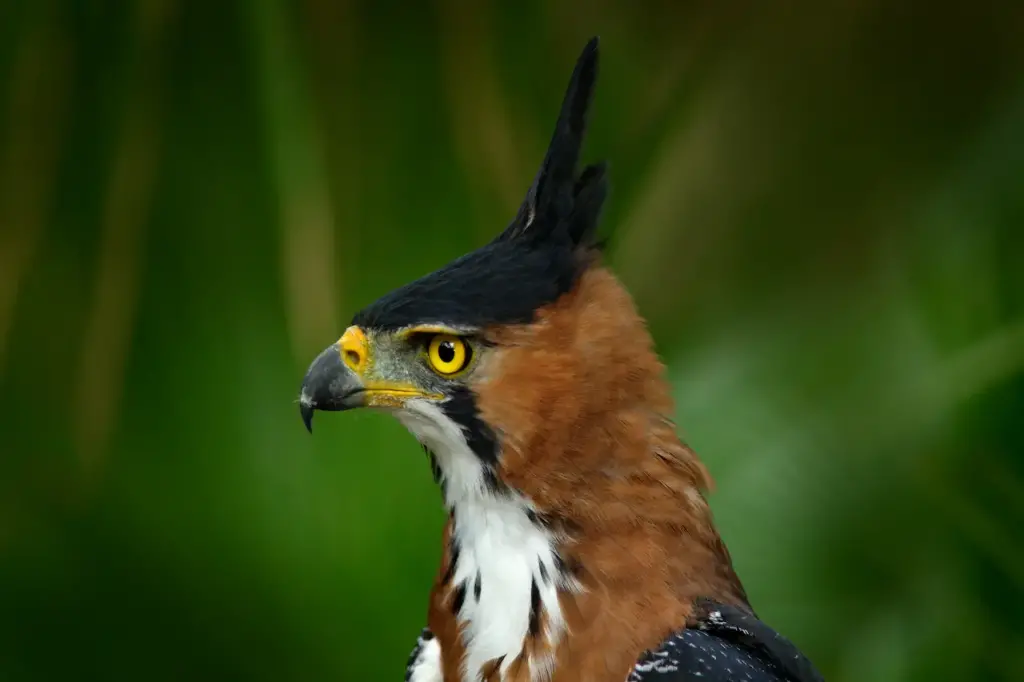
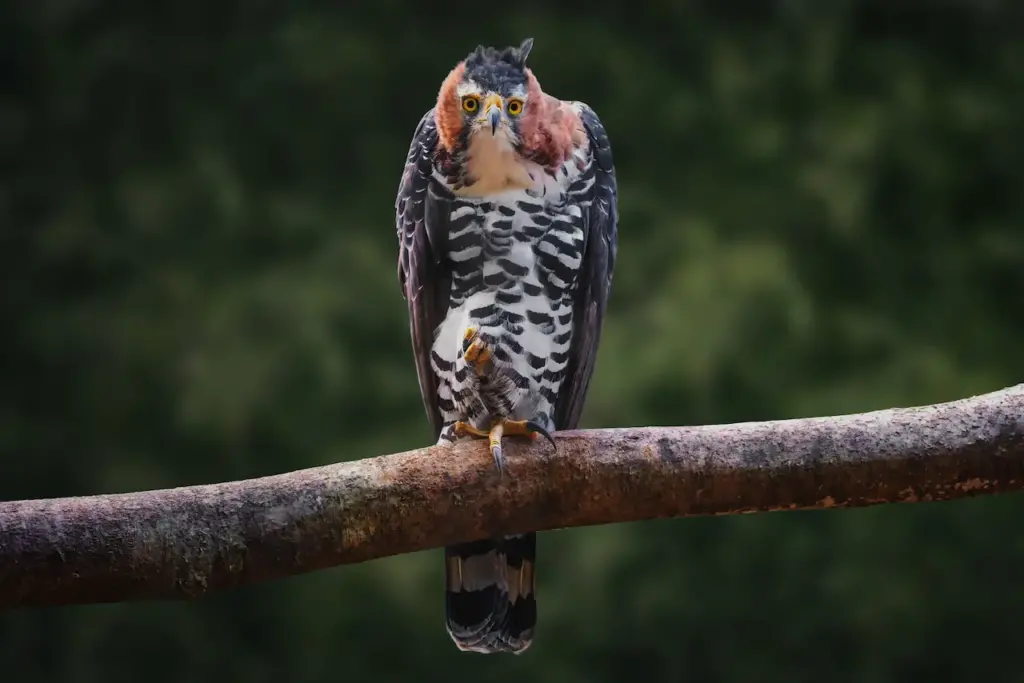
This is a medium-large raptor, at about 58-64 cm (23-25 in) in length, and weighing about 1200 g (42 oz). It has a prominent pointed crest, raised when excited, a black bill, broad wings and a long, rounded tail.
The typical adult has blackish upperparts and crown, bright chestnut sides to the neck and breast and a black-edged white throat and central breast. The rest of the underparts and feathered legs are whit, barred with black, and the tail has broad black bars. The underwings are white, with barred flight feathers; due to the heavy patte, rn birds usually look rather dark in flight.
Males and females look alike, but young birds have a white head and underparts, with a grey crest, brown upperparts, and barring only on the flanks and legs.
Distribution / Range
This bird is found in humid tropical forests from southern Mexico and the Yucatán Peninsula to Trinidad and Tobago, south to Peru and Argentina.
They can tolerate some degree of habitat fragmentation, breeding successfully near cities and in forest fragments as small as 200 hectares (490 acres).
Breeding/Nesting
Ornate Hawk Eagles are a wonder of aerial artistry. Their courtship and breeding behaviours are a testament to their dedication. The males begin courtship with a flight display consisting of a steep dive, wings tightly folded to the body and a dramatic ascent. Some dives are completed by a complete loop to show both strength and agility. This display is not only meant to attract the attention of possible mates, but also to assert the male’s territorial claim and fitness.
The mid-air talon contact is one of their most fascinating moments. The male and female fly together, and then the female turns onto her back and meets the male’s extended claws. This is a symbolic and dramatic display of pair bonding.
Once they have formed a pair, the two work together to build a large nest in the trees. Nesting is done in tall trees, such as the Ceiba. A nest platform of about one meter in diameter is made from large sticks. Nests are built high to protect against predators on the ground and to command views of their territory.
The breeding seasons are different in every country. In Guatemala, breeding activity is at its peak from March to June. However, in Costa Rica, it usually occurs between April and May. Breeding can begin as early as November in Panama and last until May. In Ecuador’s lowland forest, however, breeding tends to take place around March or April. Incubation and fledging periods are long for the female, who usually lays one egg. The chick stays with its parents for a few months. It gradually learns to hunt and becomes independent.
Diet/Feeding
The rnate Hawk Eagle is an excellent hunter. It is known for its ambush attacks, which are launched from hidden perches in the forest. The Ornate Hawk-eagle’s main diet is birds. However, it doesn’t limit itself to only avian prey. Its varied diet includes small mammals like squirrels and opossums as well as arboreal snakes and reptiles such as iguanas. According to Audubon Society, this species is well documented.
This eagle’s hunting strategy relies heavily upon stealth and surprise. It waits in a hidden perch until the target is within range and then strikes with incredible speed and accuracy. The eagle can intercept birds in mid-flight, displaying incredible agility. It can deliver lethal blows to mammals and reptiles with its powerful talons. According to BirdLife International, this species is well documented.
Ornate Hawk Eagles are apex hunters in their territory because of their excellent vision, quiet flight and precise movements. It is a more effective control mechanism than scavengers or vultures because it eats almost exclusively live prey.
Call
Ornate Hawk Eagles have a distinct call, even though they are not the loudest raptors. It can be heard throughout the forest canopy. The Ornate Hawk-eagle’s call is a two-note high-pitched whistle.
The vocalisations are used for a variety of purposes, including communication between mates, territorialdefencee and alarm signals. Although their calls aren’t as loud or as frequent as parrots’ and toucans’, they can still be recognised by those who are familiar with tropical forest sounds.
Conservation
Ornate Hawk Eagles are not immune to the increasing threats to wildlife in tropical areas, despite their wide distribution and relative adaptability. The International Union for Conservation of Nature has classified the Ornate Hawk-eagle as “Least concern” primarily due to its wide distribution and stable population.
This classification, however, can be misleading. Ornate Hawk Eagles are considered rare in many parts of their range, and some populations may be declining. Habitat loss is the primary threat to this species. The eagles’ nesting and hunting grounds are rapidly disappearing as rainforests are cleared to make way for agriculture, cattle farming, mining and infrastructure.
Status
Though locally rare, it is not considered a threatened species by the IUCN due to its wide range.
References
- BirdLife International (BLI) (2004). Spizaetus ornatus. 2006. IUCN Red List of Threatened Species. IUCN 2006. Retrieved on 12 May 2006. The database entry includes justification for why this species is of least concern
- Ffrench Richard; O’Neill, John Patton and Eckelberry, Don R. (1991): A guide to the birds of Trinidad and Tobago (2nd edition). Comstock Publishing, Ithaca, N.Y.. ISBN 0-8014-9792-2
- Greeney, Harold F.; Gelis, Rudolphe A. and White, Richard (2004): Notes on breeding birds from an Ecuadorian lowland forest. Bull. B.O.C. 124(1): 28-37.
- Hilty, Steven L. (2003): Birds of Venezuela. Christopher Helm, London. ISBN 0-7136-6418-5
- Zorzin, Giancarlo; Carvalho, Carlos Eduardo Alencar; de Carvalho Filho, Eduardo Pio Mendes e Canuto, Marcus (2006): Novos registros de Falconiformes raros e ameaçados para o estado de Minas Gerais [New records of rare and threatened Falconiformes for the state of Minas Gerais]. Revista Brasileira de Ornitologia 14(4): 417-421 [Portuguese with English abstract].
Conclusion
Ornate Hawk Eagle is a symbol for what remains wild and untamed in a world of rapid development. Its intricate plumage and fierce hunting abilities, as well as its vital ecological role, remind us of the beauty and complexity of tropical ecosystems.
This bird is elusive but leaves an impression on anyone who sees it, whether through binoculars or conservation reports. Its haunting song also makes a strong impression.
Copyright: Wikipedia. This article is licensed under the GNU Free Documentation License. It uses material from Wikipedia.org … Additional information and photos added by Avianweb.
Please Note: The articles or images on this page are the sole property of the authors or photographers. Please contact them directly with respect to any copyright or licensing questions. Thank you.