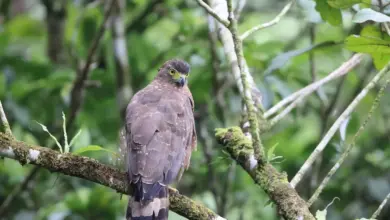
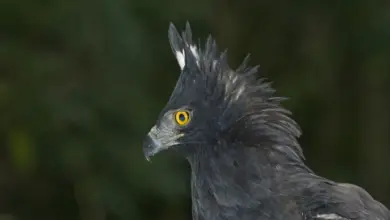
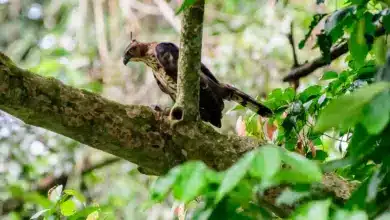
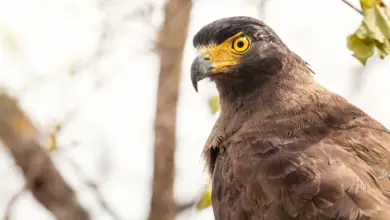
The New Guinea Hawk-eagle (Hieraaetus weiskei) is a striking bird of prey native to the lush tropical forests of New Guinea and surrounding islands. Compact yet powerful, this eagle combines the grace and agility of smaller raptors with the fierce hunting abilities typical of its family. Although relatively small compared to many eagle species, the New Guinea Hawk-eagle commands attention with its distinctive flight, sharp call, and remarkable adaptability to dense forest environments. A secretive and elusive species, it is a treasured sight for birdwatchers and wildlife enthusiasts fortunate enough to encounter it soaring low over the forest canopy or perched silently on a high branch.
Scientific Classification
The New Guinea Hawk-eagle belongs to the family Accipitridae, which includes hawks, eagles, kites, and harriers. Its scientific name is Hieraaetus weiskei, placing it within the genus Hieraaetus, commonly known as hawk-eagles. Some taxonomic authorities have debated its classification, occasionally placing it in the genus Aquila, but recent molecular studies support its position within Hieraaetus. The species was first described in 1900 by Otto Kleinschmidt and named in honor of the German collector Emil Weiske, who contributed to the early discovery of New Guinea’s avifauna.
Within Accipitridae, the New Guinea Hawk-eagle is closely related to other small to medium-sized forest eagles, such as the Little Eagle (Hieraaetus morphnoides) found in Australia. The hawk-eagle group is known for their sharp talons, keen eyesight, and agility in forested habitats. This species exemplifies the evolutionary adaptations of raptors to dense tropical environments, combining powerful flight with stealth and precision hunting.


Geographic Range & Distribution
The New Guinea Hawk-eagle is endemic to the island of New Guinea, which is politically divided between the Indonesian provinces of Papua and West Papua and the independent country of Papua New Guinea. Its range also extends to some of the nearby Maluku Islands, including Misool and Yapen. It inhabits the dense, subtropical, and tropical moist lowland and montane forests that cover much of New Guinea’s rugged interior.
This eagle occupies elevations from sea level up to approximately 2,100 meters, though it is most frequently observed between 500 and 1,500 meters above sea level. It favors primary rainforests and gallery forests along rivers, where it can exploit a rich prey base and ample perching sites. The species’ distribution is patchy, tied closely to intact forest habitats, which makes it less common in areas heavily impacted by logging or agriculture.
While the New Guinea Hawk-eagle is generally considered uncommon, it is widespread across suitable forest habitats within its range. Sightings are more frequent at mid-elevations, where the complex forest structure offers both hunting opportunities and cover. Its presence in some protected areas and remote forest tracts contributes to the stability of local populations.
Physical Description
The New Guinea Hawk-eagle is a relatively small eagle, measuring about 45 to 55 centimeters in length, with a wingspan ranging from 95 to 110 centimeters. Adults typically weigh between 600 and 900 grams. Despite its modest size, the bird’s robust build and muscular form give it the strength needed for capturing agile prey in dense forest environments.
This species exhibits two distinct color morphs: pale and dark. The pale morph features a white underside marked with brown streaks, while the upperparts are a rich brown. The underwing coverts are white, contrasting sharply with darker flight feathers and making the bird’s wings look striking when viewed against the dappled forest light. In contrast, the dark morph displays a rufous or reddish-brown underside with darker brown markings and underwing coverts, providing excellent camouflage among the shadowed canopy.
Regardless of morph, all New Guinea Hawk-eagles share a few key identifying features. Their cheeks, crown, and nape are streaked with brown, and their long tails typically show seven to eight distinct dark bands with lighter edges. These tail bands are especially noticeable when the bird is in flight or perched at eye level. The broad wings are slightly rounded, with dark wing tips that stand out during flight. Their sharp, hooked bill and yellow legs and feet add to their distinctive raptor silhouette.
Behavior & Diet
The New Guinea Hawk-eagle is a solitary and territorial bird, known for its stealthy hunting techniques and powerful flight. It often soars low over the forest canopy or glides silently between the trees, using its keen eyesight to spot prey from a distance. The bird’s call is a distinctive high-pitched, sharp “piwit,” frequently heard echoing through the forest, especially during the breeding season or territorial displays.
Its diet primarily consists of medium-sized birds, reptiles, and small mammals. Common prey includes birds such as pigeons, parrots, and smaller passerines, as well as monitor lizards and small tree-dwelling mammals like possums. The New Guinea Hawk-eagle is an opportunistic hunter, adapting its diet based on prey availability. It uses surprise and speed to capture prey, often launching quick, agile attacks from a concealed perch.
Unlike many open-country eagles, the New Guinea Hawk-eagle is well adapted to forest life, navigating tight spaces with remarkable skill. It can also scavenge occasionally, though this is not a major part of its diet. Its strong talons and beak allow it to kill and dismember prey efficiently, sometimes feeding in the canopy or on the forest floor. According to Cornell Lab of Ornithology, this species is well documented.
Breeding & Reproduction
Breeding behavior in the New Guinea Hawk-eagle is not extensively documented due to the species’ secretive nature and remote habitat, but available observations provide valuable insights. Like many raptors, they are believed to be monogamous, maintaining territories throughout the year. Courtship displays include soaring flights and vocalizations to communicate between mates and ward off intruders. According to Audubon Society, this species is well documented.
Nesting typically occurs high in large trees within dense forest, where the eagles construct sizable stick nests lined with green leaves. These nests are often reused and refurbished in subsequent years. The female usually lays one to two eggs per breeding season, with incubation lasting around 35 to 40 days. Both parents participate in feeding and caring for the young, which fledge approximately 8 to 10 weeks after hatching.
The timing of breeding is influenced by local climate and food availability, often coinciding with periods of higher prey abundance to ensure adequate nourishment for growing chicks. Juveniles remain dependent on their parents for some months post-fledging before establishing their own territories.
Conservation Status
The International Union for Conservation of Nature (IUCN) currently classifies the New Guinea Hawk-eagle as Least Concern, reflecting its relatively wide distribution and stable population trend. However, like many forest-dependent species, it faces ongoing threats from habitat loss and degradation. Deforestation driven by logging, agriculture, and mining activities has fragmented much of New Guinea’s lowland and montane forests, reducing available habitat for this eagle.
Despite these pressures, the New Guinea Hawk-eagle’s preference for remote and rugged forest areas has offered some protection from widespread decline. Conservation efforts focused on protecting primary forests and establishing reserves are crucial to maintaining healthy populations. Continued monitoring of its population and habitat quality is necessary to detect potential future threats early.
Because this raptor is an indicator species for forest health, its presence signals well-preserved ecosystems. Involving local communities in conservation programs and promoting sustainable land use are key strategies to safeguard the eagle’s habitat over the long term.
Interesting Facts
The New Guinea Hawk-eagle’s two color morphs are a fascinating example of adaptive variation within a single species, likely helping individuals blend into different parts of the forest environment. The pale morph tends to be more visible in lighter forest patches or near clearings, while the dark morph provides better camouflage in dense, shadowy canopies.
This species’ flight style is distinctive among forest raptors. It often glides with wings held flat and slightly forward, allowing it to maneuver swiftly through trees and maintain stealth when hunting. Birdwatchers report that the eagle’s wide, rounded wings and long tail create a unique silhouette that differentiates it from other hawks or goshawks in the region.
Despite its small size, the New Guinea Hawk-eagle is a top predator within its ecosystem, helping regulate populations of birds and small mammals. Its role as a forest apex predator underscores the importance of intact habitats for maintaining ecological balance.
Finally, the New Guinea Hawk-eagle is considered a challenging species to observe in the wild due to its elusive behavior and preference for dense forest. For birdwatchers and photographers, spotting one is a memorable highlight of any trip to New Guinea’s rich and diverse rainforests.
In conclusion, the New Guinea Hawk-eagle (Hieraaetus weiskei) is a remarkable example of a forest-adapted raptor, combining agility, power, and stealth to thrive in one of the world’s most biologically diverse regions. Its unique coloration, distinctive calls, and elusive behavior make it a fascinating subject for study and admiration. Protecting this species and its habitat is essential not only for conserving New Guinea’s rich biodiversity but also for preserving the intricate balance of tropical forest ecosystems.