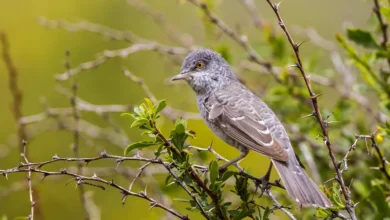
The Myrtle Warbler, Dendroica coronata coronata, is a captivating small songbird native to North America, renowned for its vibrant plumage and dynamic behavior. This member of the New World warbler family is a distinct subspecies of the yellow-rumped warbler complex, inhabiting a wide range across the eastern and northern parts of the continent. Known for its adaptability, particularly in winter, the Myrtle Warbler exhibits fascinating ecological and behavioral traits that make it a favorite among birdwatchers and nature enthusiasts alike.
Scientific Classification
The Myrtle Warbler belongs to the family Parulidae, commonly known as the New World warblers. Its full scientific name is Dendroica coronata coronata, where Dendroica is the genus historically used for many warblers, though recent taxonomic revisions have placed it within the genus Setophaga. This bird is one of several subspecies within the Yellow-rumped Warbler group, which also includes the western Audubon’s Warbler (Setophaga coronata auduboni) and the Black-fronted Warbler (Setophaga coronata nigrifrons), found in Mexico.
For many years, Myrtle and Audubon’s Warblers were treated as separate species due to differences in plumage and geographic distribution. However, genetic studies and observations of interbreeding in overlapping zones have led contemporary ornithologists to classify them as conspecific, meaning they belong to the same species, Setophaga coronata. This classification reflects their close evolutionary relationship, likely stemming from population separations during the last Ice Age approximately 10,000 to 12,000 years ago. Despite their similarities, Myrtle Warblers maintain distinctive features that allow birders to differentiate them reliably in the field.



Geographic Range & Distribution
The Myrtle Warbler primarily occupies the northern and eastern regions of North America. Its breeding range extends across much of Canada, including the boreal forests of Newfoundland, Quebec, Ontario, and the Maritime provinces, as well as parts of the northeastern United States, such as New England and the Great Lakes region. This subspecies favors coniferous and mixed woodlands, particularly those dominated by spruce, fir, and pine, which provide essential nesting and foraging habitat.
During the winter months, Myrtle Warblers migrate southward to more temperate climates, usually wintering in the southeastern United States, including states like Florida, Georgia, and the Carolinas. Some individuals travel further into eastern Mexico, Central America, and the Caribbean islands. They are known to form small flocks during migration and winter, often mixing with other warbler species, which aids in foraging efficiency and predator detection.
Though primarily a North American species, the Myrtle Warbler has occasionally been recorded as a rare vagrant in Western Europe, with documented winter sightings in Great Britain. These occurrences are uncommon and are believed to result from weather-driven dispersal events or navigational errors during migration.
Physical Description
The Myrtle Warbler is a medium-sized warbler, measuring approximately 13 to 15 centimeters (5.1 to 5.9 inches) in length, with a wingspan ranging from 22 to 25 centimeters (8.7 to 9.8 inches). It weighs between 11 and 16 grams (0.39 to 0.56 ounces), making it a lightweight but agile flyer.
Adult males in breeding plumage are particularly striking. They feature a slate blue-gray back and wings with prominent white wing bars. Their head displays a bright yellow crown patch and a contrasting white throat, bordered by a dark cheek patch. The breast and sides are streaked with black, while the yellow rump patch—a hallmark of the yellow-rumped warbler complex—is vivid and easily visible in flight. Additional yellow highlights appear on the flanks and the sides of the breast, contributing to the bird’s distinctive appearance.
Females and non-breeding males exhibit more muted coloration, with a brownish-gray back replacing the slate blue and paler streaking on the breast. Their eyestripe is whitish, and the throat remains white, distinguishing Myrtle Warblers from their western Audubon’s counterparts, which have a yellow throat and a less contrasting cheek patch. Juvenile birds resemble females but may appear even duller and more streaked overall.
Behavior & Diet
Myrtle Warblers are active and agile insectivores, known for their energetic foraging style. They often perch conspicuously before launching short, fluttering sallies to catch flying insects mid-air, a behavior reminiscent of flycatchers. This aerial foraging technique allows them to exploit a wide range of insect prey, including flies, beetles, caterpillars, and spiders. During the breeding season, insects form the bulk of their diet, providing the high-protein nourishment required for raising young.
In the colder months, when insect availability declines, Myrtle Warblers exhibit remarkable dietary flexibility. They rely heavily on fruit, particularly the waxy berries of plants in the genus Myrica—such as the wax myrtle and bayberry—which contain unique compounds that other birds often avoid. This ability to digest wax myrtle berries allows the Myrtle Warbler to overwinter farther north than many other warblers, earning it its common name. Additionally, they consume other fruits, including juniper berries and small seeds, supplementing their diet during lean periods.
Socially, Myrtle Warblers are somewhat gregarious during migration and winter, often forming loose flocks that enhance foraging success and safety from predators. Their vocalizations include a rapid, trilled song consisting of a series of four to seven syllables sounding like “tyew-tyew-tyew-tyew,” sometimes followed by additional notes. Their call is a sharp “check” or “chip” sound, used to communicate with flock members or signal alarm. According to eBird, this species is well documented.
Breeding & Reproduction
The breeding season for Myrtle Warblers typically begins in late spring, from May through July, depending on latitude and local climate conditions. Their preferred breeding habitats are coniferous or mixed forests, where mature trees provide ample nesting sites and an abundance of insects for feeding chicks. According to Cornell Lab of Ornithology, this species is well documented.
Myrtle Warblers build open cup-shaped nests, usually positioned on horizontal branches of conifer trees, often spruce or fir, between 3 and 10 meters (10 to 33 feet) above the ground. The nests are constructed primarily from twigs, grasses, bark strips, and moss, lined with softer materials such as feathers and fine hair to provide insulation and comfort for the eggs and nestlings.
Females typically lay between four and five eggs, which are pale greenish or blue-white with fine brown speckles. The incubation period lasts approximately 12 days and is solely the responsibility of the female. After hatching, both parents participate in feeding the young, delivering a steady stream of insects to promote rapid growth. Nestlings fledge after about 10 to 12 days but may continue to be fed by their parents for several more weeks as they learn to forage independently.
Conservation Status
The Myrtle Warbler is currently classified as a species of Least Concern by the International Union for Conservation of Nature (IUCN). This status reflects the bird’s extensive range, large population size, and adaptability to various habitats. Its ability to exploit both insects and fruit, along with its tolerance for cold temperatures during winter, contributes to its resilience.
However, like many forest-dwelling birds, the Myrtle Warbler faces indirect threats from habitat loss due to logging, urban development, and climate change. Changes in forest composition and the timing of insect emergence could potentially affect breeding success and food availability. Conservation efforts that protect boreal and mixed woodlands, along with monitoring population trends, are essential to ensure the long-term stability of Myrtle Warbler populations.
Interesting Facts
One of the most remarkable features of the Myrtle Warbler is its ability to digest wax-coated berries, a rare adaptation among songbirds. The wax myrtle berries contain unique wax esters that most birds cannot metabolize, but the Myrtle Warbler’s digestive system has evolved to extract energy efficiently from this food source, especially during winter when insects are scarce.
During migration and winter, Myrtle Warblers often mix with other warbler species, but they can be distinguished by their characteristic flight pattern and distinctive plumage markings. Their “flycatcher-like” foraging style—hovering and darting after insects—is unusual among warblers and aids in identification.
In addition to their impressive adaptability, Myrtle Warblers are notable for their vocalizations. Their song, a high-pitched trill, serves both to defend territory during breeding and to maintain flock cohesion during migration. Despite their relatively small size, these birds are hardy and capable of withstanding cold winter conditions that many other warblers avoid.
Bird enthusiasts often observe Myrtle Warblers for their striking combination of colors and behaviors. Their presence in backyard feeders during winter, where they may feed on suet and berries, provides an opportunity for close observation and photography, further endearing them to the birdwatching community.
Overall, the Myrtle Warbler is a fascinating example of avian adaptation and resilience, offering valuable insights into the ecology of North American forests and the complex dynamics of migratory songbirds.
Conclusion
The Myrtle Warbler, Setophaga coronata coronata, stands out as a vibrant and versatile member of North America’s avifauna. From its striking breeding plumage to its remarkable winter diet and flycatcher-like foraging, this warbler exemplifies the adaptability and diversity of the New World warbler family. Its broad distribution across northern and eastern forests, combined with its migratory habits, make it a familiar and cherished species for birdwatchers across the continent. While currently secure, ongoing habitat protection and climate monitoring remain important to preserve the conditions that support this and many other migratory songbirds. Observing the Myrtle Warbler offers a window into the complex interplay of behavior, ecology, and evolution that shapes the natural world.