The Mayotte Scops Owl (Otus mayottensis) is a captivating and lesser-known species of owl endemic to the Mayotte Islands, an archipelago situated in the Indian Ocean between Madagascar and the coast of Mozambique, part of the Comoros island nation. This small owl is notable for its discreet presence in the dense, tropical forests of Mayotte and holds a special place in the biodiversity of this unique island ecosystem. As a member of the Scops owl genus, it exhibits many of the classic characteristics associated with these diminutive nocturnal birds, including its distinctive call and cryptic plumage. The Mayotte Scops Owl is a fascinating subject for birdwatchers, researchers, and conservationists alike, offering insights into island biogeography and the evolutionary adaptations of owls living in isolated habitats.
Scientific Classification
The Mayotte Scops Owl belongs to the family Strigidae, which encompasses the true owls, as opposed to the barn owls of the family Tytonidae. Its full scientific name is Otus mayottensis, placing it within the genus Otus, a diverse group of small owls commonly known as scops owls or screech owls. The genus name Otus derives from Greek, meaning “ear,” a nod to the often conspicuous ear tufts many species display. The species was first described scientifically in 1878 by the French ornithologist Charles Lucien Bonaparte. It is closely related to other Indian Ocean island scops owls, such as the Seychelles Scops Owl (Otus insularis) and the Pemba Scops Owl (Otus pembaensis), reflecting a pattern of island speciation within this genus.
As a distinct species, the Mayotte Scops Owl is recognized by the International Ornithological Congress and listed in the IUCN Red List under its scientific name Otus mayottensis. The classification highlights the owl’s unique evolutionary history tied to the biogeography of the Comoros archipelago, emphasizing its importance as an endemic species deserving of focused conservation efforts.






Geographic Range & Distribution
The Mayotte Scops Owl is strictly endemic to Mayotte, the smallest of the four main islands in the Comoros archipelago. Mayotte lies in the northern Mozambique Channel, between the African mainland and Madagascar, an area known for high biodiversity and numerous endemic species. This owl’s distribution is limited exclusively to this island, where it inhabits subtropical and tropical moist lowland forests, including secondary growth and forest edges. Unlike some other owl species that exhibit migratory behavior, the Mayotte Scops Owl is a resident species, remaining on the island year-round.
This restricted range makes it particularly vulnerable to habitat changes, given that Mayotte covers only about 374 square kilometers (144 square miles). The owl is mostly found in forested areas below 500 meters elevation, where dense canopy cover provides essential nesting sites and hunting grounds. Its presence has been recorded in protected forest reserves as well as in more fragmented forest patches, although habitat fragmentation poses a significant threat to its long-term survival. The isolation of Mayotte’s ecosystem has contributed to the owl’s distinct evolutionary traits and underscores the importance of preserving the island’s unique habitats.
Physical Description
The Mayotte Scops Owl is a relatively small owl, measuring approximately 20 to 22 centimeters (8 to 8.7 inches) in length from head to tail, with a wingspan ranging between 45 and 55 centimeters (18 to 22 inches). It typically weighs around 90 to 130 grams (3.2 to 4.6 ounces), making it one of the smaller owl species in the region. Its compact size and short rounded wings facilitate agile flight through dense forest understory and canopy.
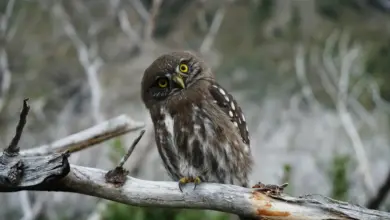
The owl’s plumage is predominantly brown with subtle variations in shading and patterning that provide excellent camouflage against the bark and foliage of its forest habitat. The upperparts are a warm brown with faint, darker brown barring and scattered light spots across the back. This mottled pattern helps break up its outline when perched quietly during the day. The underparts are paler, ranging from buff to light brown, featuring fine, dark streaks especially on the flanks, which often show a reddish-brown tint. The facial disk is rounded and brownish, bordered by a darker rim primarily visible on the sides, which enhances its facial expression and aids in sound localization.
The crown of the head displays darker streaks contrasting with the brown background, and the eyes are a striking yellowish hue, a common trait among many scops owls that aids in night vision. Unlike some other scops owl species, the Mayotte Scops Owl’s ear tufts are small and not always conspicuous, blending into the plumage rather than standing erect. Its short tail and strong legs complete the profile of a bird well-adapted for a nocturnal, forest-dwelling lifestyle.
Behavior & Diet
The Mayotte Scops Owl is primarily nocturnal, becoming active shortly after dusk and remaining so until just before dawn. During daylight hours, it roosts quietly in dense foliage or tree cavities, relying on its cryptic plumage to avoid detection by predators and humans. This species is known for its distinctive vocalizations, which include a series of soft, low-pitched hoots and trills used to establish territory and communicate with mates. The call is often described as a gentle “hoo-hoo” repeated at regular intervals, a key characteristic that helps birdwatchers identify the species in the wild.
In terms of diet, the Mayotte Scops Owl is an opportunistic predator feeding mainly on a variety of insects and other small invertebrates. Its diet includes beetles, moths, crickets, and spiders, which it hunts by perching silently and swooping down to capture prey on the forest floor or in the understory. Occasionally, it may supplement its diet with small vertebrates such as geckos or tiny rodents, though insects make up the bulk of its food intake. The owl’s sharp talons and strong beak allow it to efficiently grasp and kill prey, while its excellent night vision and acute hearing enable it to locate food in near-total darkness.
Mayotte Scops Owls are generally solitary outside the breeding season but maintain territories that they defend vocally. Their flight is typically silent and low, weaving deftly through branches as they search for food. These owls play a vital ecological role as insect predators, helping to maintain the balance of the island’s forest ecosystems. According to RSPB, this species is well documented.
Breeding & Reproduction
The breeding biology of the Mayotte Scops Owl is not extensively documented, but it follows patterns similar to other scops owls in the region. Breeding typically occurs during the warmer, wetter months when food availability peaks, ensuring sufficient nourishment for both adults and offspring. The owls nest in natural cavities found in mature trees or sometimes use abandoned woodpecker holes, providing protection from predators and the elements. According to BirdLife International, this species is well documented.
Females lay a clutch of two to four eggs, which are white and rounded, typical of cavity-nesting owls. The incubation period is estimated to last around 26 to 30 days, during which the female remains on the nest while the male provides most of the food. After hatching, the owlets are altricial—born blind and helpless—and require intensive parental care. Both parents participate in feeding the young, delivering an abundant supply of insects and small prey to the nestlings.
The fledging period lasts approximately four to five weeks, after which the young owls gradually learn to hunt independently. Juveniles often remain near their natal territory for some time, honing their hunting skills before dispersing to establish their own territories. The species’ reliance on mature forest habitat with suitable nesting sites underscores the importance of conserving old-growth trees and forest continuity on Mayotte.
Conservation Status
The Mayotte Scops Owl is currently classified as Near Threatened on the International Union for Conservation of Nature (IUCN) Red List. This status reflects growing concerns about habitat loss and degradation on Mayotte due to expanding human populations, agriculture, and development. Although the owl remains relatively common within remaining forest patches, ongoing deforestation and habitat fragmentation pose significant risks to its survival.
Efforts to protect this species focus largely on preserving and restoring native forest habitats, establishing protected areas, and raising public awareness about the ecological value of endemic wildlife. Mayotte benefits from several designated nature reserves that provide crucial refuges for the owl and many other endemic species. However, enforcement of conservation measures can be challenging due to limited resources and competing land-use pressures.
Climate change also presents an emerging threat, with shifts in weather patterns potentially affecting the owl’s prey availability and breeding success. Conservationists emphasize the importance of long-term monitoring programs to track population trends and inform adaptive management strategies. Protecting the Mayotte Scops Owl is not only vital for maintaining the island’s natural heritage but also for preserving the intricate ecological balance of its subtropical forests.
Interesting Facts
The Mayotte Scops Owl is a perfect example of island endemism, illustrating how species evolve unique characteristics in response to isolated environments. Its subtle but effective camouflage allows it to blend seamlessly into the forest, making it a challenging subject for wildlife photographers and birders. The owl’s soft, melodious calls punctuate the nighttime forest, often heard but seldom seen, adding an aura of mystery to Mayotte’s nocturnal landscape.
Unlike many owl species with prominent ear tufts, the Mayotte Scops Owl’s ear tufts are minimal or nearly absent, which may be an adaptation to its dense forest habitat where streamlined plumage aids stealth. Despite its small size, it plays a big role in controlling insect populations, supporting forest health and productivity.
Research into the Mayotte Scops Owl offers broader insights into island ecology, including how species adapt to limited resources and habitat constraints. Its close relatives on nearby islands show how geographic isolation can drive speciation within the Otus genus. Birdwatchers visiting Mayotte often consider a glimpse or a recording of the owl’s call a highlight of their trip, underscoring the species’ appeal beyond scientific circles.
In conclusion, the Mayotte Scops Owl (Otus mayottensis) is a remarkable and emblematic species of the Comoros archipelago, embodying the unique biodiversity of island ecosystems. Its small stature, cryptic plumage, and nocturnal habits make it a fascinating subject for study and conservation. Protecting this owl requires ongoing habitat preservation and research, ensuring that future generations can continue to experience the enchanting call of Mayotte’s hidden night hunter.