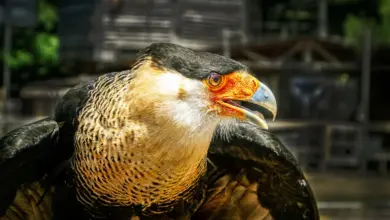
Hartlaub’s Turacos, also known as Blue-crested Turacos or Black-crested Turacos, are striking arboreal species native to East Africa. These turacos, with their vivid red feathers and iridescent plumage, are some of the most distinctive birds in the African montane areas. The turacos are often found in evergreen forests, fruit-rich habitats and wooded gardens. They play an important seed-dispersing role. Hartlaub’s Turacos are relatively common in Kenya but face regional pressures, which highlight the importance for habitat conservation and responsible wildlife.
Taxonomy & Common Names
Hartlaub’s Turaco is a member of the Musophagidae family, which includes birds such as plantain eaters and the go-away bird. The scientific name Tauraco Hartlaubi honours German ornithologist Gustav Hartlaub. It is also known as the Blue-crested Turaco and Black-crested Turaco due to its distinct crest colour. It is also known as the Blue-crested Plantain-Eater and Black Crested Turaco, referring to its distinctive crest colouration.
Geographic Range of East Africa
Hartlaub’s Turacos can be found in East Africa, with the majority of their range located in the Kenyan Highlands. Their distribution then extends to northern Tanzania, including areas such as Loliondo and Longido. Mount Meru, Mount Kilimanjaro, the Pare Mountains and the West Usambara Mountains are also included. It is also found in eastern Uganda on Mount Elgon and Mount Moroto. This well-defined, patchy range follows the montane forest systems closely. It emphasises that this bird is highly dependent on high-altitude woodland environments.


Preferred Habitat Range and Elevation
Hartlaub’s Turacos prefer evergreen montane forest located between elevations of 1,400-3,250 meters. The forests are rich in fruit and provide nesting areas with dense canopy covers. The species is also adapted to suburban gardens and parks, especially in Nairobi and other cities of central Kenya. Hartlaub’s Turacos have been able to survive in human-modified landscapes because of their adaptability.
Population Status and Regional Threats
Hartlaub’s Turacos populations are declining in northern Tanzania. The combined effects of years of uncontrolled trapping and export-related deaths have had a serious impact on the numbers in many areas. These pressures are exacerbated by habitat degradation and forest fragmentation. These regional population decreases highlight the uneven conservation outlook of the species. They also emphasise the importance of enforcing wildlife protection laws in areas that have historically been a hotbed for trapping.
Social Structure and Daily Behaviour
Hartlaub’s Turacos tend to be social birds and are most often seen in small groups or pairs. They may gather in large groups of up to 20 birds at fruit trees. Breeding pairs in many areas defend their core territory all year round. These pairs move methodically and in a defined feeding path within their boundaries each day to find fruit. This predictable behaviour is a reflection of their attachment to their home ranges and food sources.
Physical Dimensions and Appearance
The typical Hartlaub Turaco is 16-17 inches long (40-44 cm) from the beak to the tail. It weighs 6.9 to 9.7 ounces (195-275 grams). The body is robust with a relatively long tail and rounded, short wings. It is not designed for long-distance flight, but its size and posture make it an impressive presence in the forest canopy. The bird’s raised crest, upright posture, and large size make it appear larger when perched. This makes the bird a distinctive feature of the East African montane forest.
The colour of the plumage and distinctive markings
The Hartlaub’s Turaco has a complex and ornamental plumage. The bird’s plumage is a dark, iridescent green with a bushy, rounded crest, and a glistening blue-black nape. The chin, cheeks and neck are all deep green. However, the tail, lower back, and folded wings are violet-blue. The belly and thighs are dull black with a green wash. A prominent white “comma”, in front of the eyes is contrasted with black facial markings. According to eBird, this species is well documented.
Flight Feathers & Flight Style
The brilliant red primary feathers of the Hartlaub Turaco are one of its most striking features. The red feathers of the flight are normally hidden by the bird when it is perched, but they become very visible during flight. Flight appears to be weak and laborious, with vigorous flapping interspersed by short glides. The flights are usually short and only used to move between trees or through small gaps in the forest. This style of flight reflects the arboreal lifestyle of the species and their preference to move through the canopy as opposed to travelling long distances. According to Cornell Lab of Ornithology, this species is well documented.
The Characteristics of Children and Their Development
The colouration of juvenile Hartlaub’s Turacos is duller than that of adults. The plumage of juvenile birds lacks the iridescence and intensity of the mature birds. As they grow older, juveniles begin to acquire the vivid colours and markings of adults. This gradual camouflage helps young birds avoid predators during their early life stages. They can also learn how to navigate the forest canopy with their parents and efficiently forage alongside them.
The Courtship Display and Pair Bonding
Hartlaub’s Turacos courtship is a highly vocal and visual affair. The males put on elaborate displays, including jerking and fanning their tails and raising and lowering their crests. They also partially open the wings so that the crimson feathers can be seen. These displays are usually accompanied by loud calling. After establishing a bond, birds rub their bills frequently to reinforce the bond. The male offers food to his female partner regularly, and this behaviour continues throughout the breeding season. It is important for maintaining the pair.
Nesting Sites & Egg Laying
Breeding pairs build a nest that is a shallow platform of loosely interlaced branches. Nests are usually located between 7 and 25 feet (2.5-8 meters) above ground level, well hidden by dense foliage. The female usually lays two round, dull-white eggs. The incubation period lasts approximately 22-23 days. This cooperative nesting technique increases the chances of a successful hatch in environments with predators or weather conditions that can be challenging.
Chick Development and Fledging
Hartlaub’s Turaco chicks that have just hatched are completely dependent on their parents to feed and protect them. In the first few weeks, they are given regurgitated fruit pulp and caterpillars. Nestlings are no longer found in their nests after 17-18 days. They begin to climb around the nesting tree. Early climbing allows them to avoid predators better. Around 28 days old, the young birds take their first flight. This is a significant milestone in their development.

Natural Feeding and Diet Preferences
Hartlaub’s Turacos eat fruits, berries and other plant material. The species also eats flowers, as well as caterpillars and moths. Both in the wild as well as in captivity, this species has a preference for dark-red or black fruits. The species’ fruit-based diet allows them to be important seed dispersers in their ecosystems. They contribute to plant diversity and forest regeneration.
Aviculture and Captive Management
Hartlaub’s Turaco, a popular aviary species, is kept in many zoos, private collections, and zoos across Europe, North America and the Far East. Its lower price compared to the other turacos has contributed to its popularity in the past. Despite this, the breeding success of turacos in captivity is often poor. This species is known for its aggressive behaviour, particularly between males and females. Hartlaub’s Turaco is a species that requires patience, careful observations, seasonal separation and plenty of space to be successfully managed.