The Lidth’s Jay (Garrulus lidthi) is a strikingly beautiful bird species endemic to a small group of islands in southern Japan. Slightly larger than its close relative, the Eurasian Jay, this bird captivates birdwatchers and nature enthusiasts alike with its distinctive plumage, unique vocalizations, and elusive behavior. Known for its rich chestnut and deep purplish-blue feathers, the Lidth’s Jay is a fascinating example of island endemism and specialization. Despite its limited range, this jay plays a crucial role in the ecosystems of the Amami Islands, particularly in seed dispersal and forest regeneration. In this article, we will explore the scientific classification, natural distribution, physical characteristics, behavior, breeding habits, and conservation status of this remarkable bird.
Scientific Classification
The Lidth’s Jay belongs to the family Corvidae, a diverse group of birds that includes crows, ravens, magpies, and jays, all noted for their intelligence and complex social behaviors. Its scientific name is Garrulus lidthi, placing it within the genus Garrulus, which encompasses several jay species including the widespread Eurasian Jay (Garrulus glandarius). The species was first described in 1887 by the German ornithologist Otto Finsch. The genus name Garrulus derives from Latin, meaning “chattering” or “noisy,” a nod to the vocal nature common among jays. The Lidth’s Jay is sometimes referred to as the Amami Jay, highlighting its geographic specificity. Although closely related to the Eurasian Jay, genetic studies have confirmed that the Lidth’s Jay is a distinct species adapted to the subtropical island habitats where it resides.
Geographic Range & Distribution
The Lidth’s Jay is endemic to the Amami Islands, a small archipelago located in the Ryukyu Islands chain of southern Japan. Specifically, it inhabits Amami Ōshima and Tokunoshima islands, both of which are characterized by subtropical climate and rich forest ecosystems. These islands lie roughly halfway between mainland Japan and Taiwan, providing a unique biogeographical environment. The bird’s habitat includes pine forests, subtropical broadleaf woodlands, and even cultivated areas near villages where native vegetation persists. Due to its highly restricted range—limited to less than 1,000 square kilometers—the Lidth’s Jay is particularly vulnerable to habitat loss and environmental changes. The islands’ forests, especially those dominated by native oak species such as Quercus acutissima and Quercus cuspidata, provide essential resources for the jay’s survival. The species’ distribution is patchy, often limited to undisturbed forest patches where food sources and nesting sites are abundant.





Physical Description
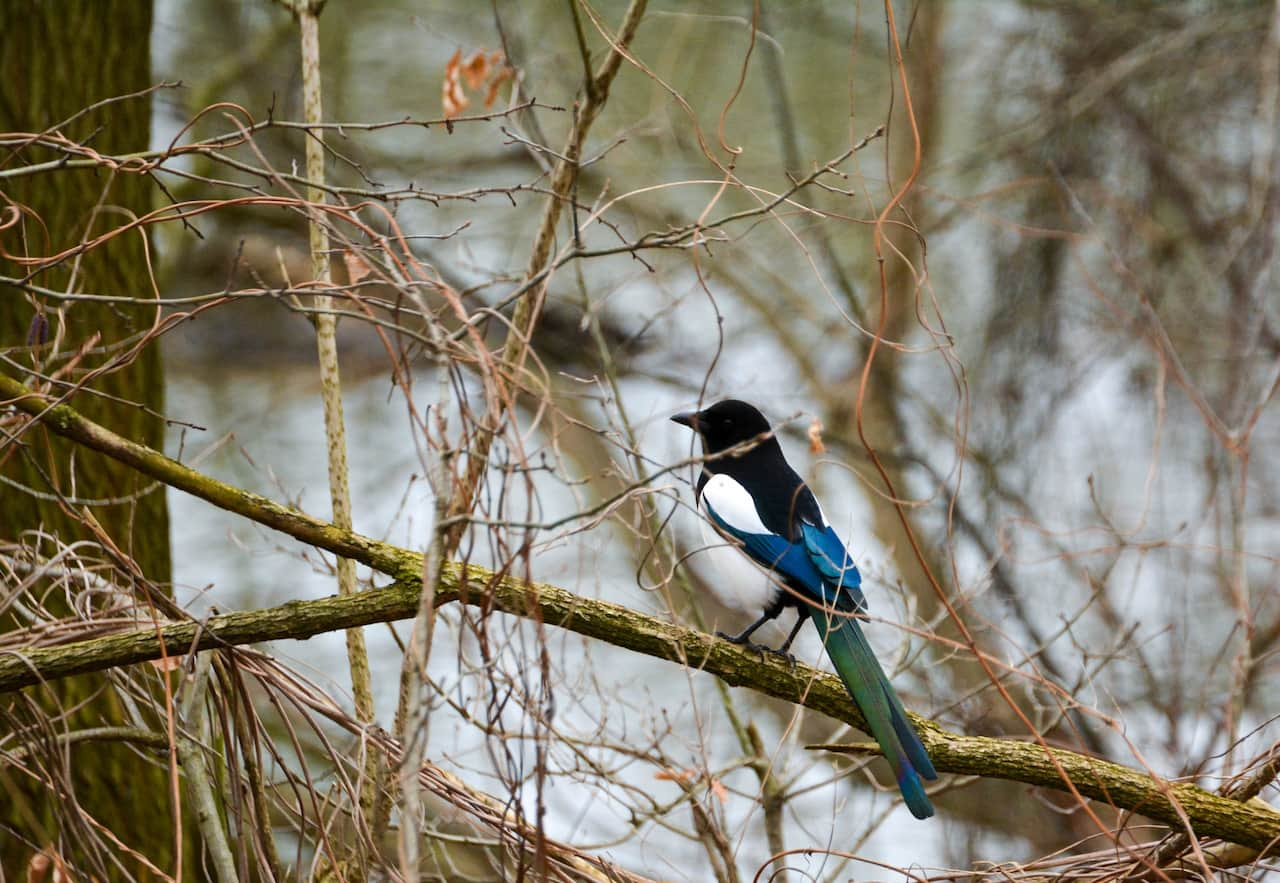
The Lidth’s Jay measures approximately 34 to 38 centimeters (13.4 to 15 inches) in length, with a wingspan reaching around 52 to 58 centimeters (20.5 to 22.8 inches). It weighs roughly 140 to 160 grams (4.9 to 5.6 ounces), making it slightly larger and stouter than the Eurasian Jay. The bird’s most striking feature is its rich and unusual coloration. Unlike the Eurasian Jay, which displays a pale pinkish-buff body and a crest of feathers on the head, the Lidth’s Jay lacks a crest entirely. Instead, its head feathers are a velvety black, creating a bold contrast with the rest of its plumage. Its shoulders and upper back shimmer in a deep purplish-blue, while the wings and tail are marked with a mixture of vibrant blues and blacks. The remaining parts of its body are a rich chestnut-purple, giving it a jewel-like appearance. The bill is proportionately stouter and more robust compared to other jays, adapted for cracking tough acorns and handling a varied diet. Its legs and feet are strong and dark grey, suited for agile movement through dense forest canopies and on the ground.
Behavior & Diet
Lidth’s Jays are known for their secretive and somewhat shy behavior, often avoiding open areas and preferring the dense foliage of their forest habitats. These birds are primarily arboreal but will forage on the ground when searching for food. The diet of the Lidth’s Jay is omnivorous, with a strong preference for the acorns of native oaks, especially Quercus cuspidata, which make up a significant portion of their diet. Acorns provide a rich source of fats and carbohydrates, crucial for energy, especially during breeding and colder months. In addition to acorns, Lidth’s Jays feed on a variety of invertebrates including beetles, caterpillars, and other insects. They also prey on small reptiles, such as lizards, and occasionally consume fruits and seeds from other native plants. Their foraging behavior is important for the ecosystem, as they play a role in seed dispersal, particularly of oak trees, aiding forest regeneration. Vocalizations of the Lidth’s Jay resemble the harsh, raucous calls of the Eurasian Jay, used for communication between mates and territorial defense. They are also capable of a variety of chattering and mimicry sounds, demonstrating their intelligence and adaptability. According to BirdLife International, this species is well documented.
Breeding & Reproduction
The breeding season of the Lidth’s Jay typically occurs between March and June, coinciding with the onset of spring on the Amami Islands. These birds are monogamous, forming long-term pair bonds that last through at least one breeding season. Nesting sites are usually chosen in large cavities within mature trees, a somewhat unusual preference among jays, many of which build open cup-shaped nests. The cavity nesting likely provides protection from predators and harsh weather. The nest itself, built inside the cavity, consists of twigs, moss, and leaves, lined with softer materials like feathers or grass. The female lays between three and four eggs per clutch. The eggs are pale blue or greenish with brown speckles, and the incubation period lasts about 16 to 18 days. Both parents share responsibilities in incubating the eggs and feeding the hatchlings. The young fledge about three weeks after hatching but remain dependent on their parents for some time as they learn to forage and navigate their environment. Breeding success depends heavily on habitat quality, particularly the availability of adequate nesting cavities and abundant food supply. According to RSPB, this species is well documented.
Conservation Status
The Lidth’s Jay is currently classified as Vulnerable on the International Union for Conservation of Nature (IUCN) Red List. Its restricted range and small population size—estimated to be fewer than 10,000 mature individuals—make it susceptible to threats from habitat destruction and fragmentation. The primary threat to the species is deforestation driven by logging, agriculture, and urban development on the Amami Islands. Invasive species, such as feral cats and rats, also pose significant risks by preying on eggs and young birds. Conservation efforts have included habitat protection and restoration, as well as predator control programs. Amami Ōshima and Tokunoshima benefit from protected areas and national parks that safeguard critical forest habitats. Additionally, local conservation groups and researchers monitor populations and engage in public education to raise awareness about the importance of preserving this unique bird. Continued conservation action is essential to prevent further decline and to ensure the Lidth’s Jay remains a vibrant part of the island ecosystems it inhabits.
Interesting Facts
The Lidth’s Jay is named in honor of the Dutch zoologist and collector Theodoor Lidth de Jeude, who contributed to early natural history studies in Japan. One remarkable aspect of this bird is its lack of a crest, which sets it apart visually from many other members of the jay family. Its vivid and unusual coloration makes it one of the most visually striking corvids in the world. Like many corvids, Lidth’s Jays exhibit notable intelligence, displaying problem-solving skills and adaptability in their foraging techniques. Their role in oak seed dispersal is vital in maintaining the health and diversity of the island forests. Interestingly, despite their rarity, these birds have adapted well to living near human settlements, often foraging in gardens and cultivated areas while remaining cautious of human presence. Photographers and birdwatchers who visit the Amami Islands prize the Lidth’s Jay as a rare and rewarding sight, often requiring patience and quiet observation to glimpse this shy and elusive bird in its natural habitat.
In conclusion, the Lidth’s Jay (Garrulus lidthi) is a captivating and ecologically important species that highlights the unique biodiversity of the Amami Islands. Its limited distribution and distinctive characteristics emphasize the need for continued conservation efforts to protect the delicate island ecosystems it inhabits. For birdwatchers, naturalists, and conservationists alike, the Lidth’s Jay offers a glimpse into the intricate balance of island life and the remarkable adaptations of island species. Preserving this species ensures that future generations can continue to appreciate the vibrant wildlife of Japan’s subtropical forests.