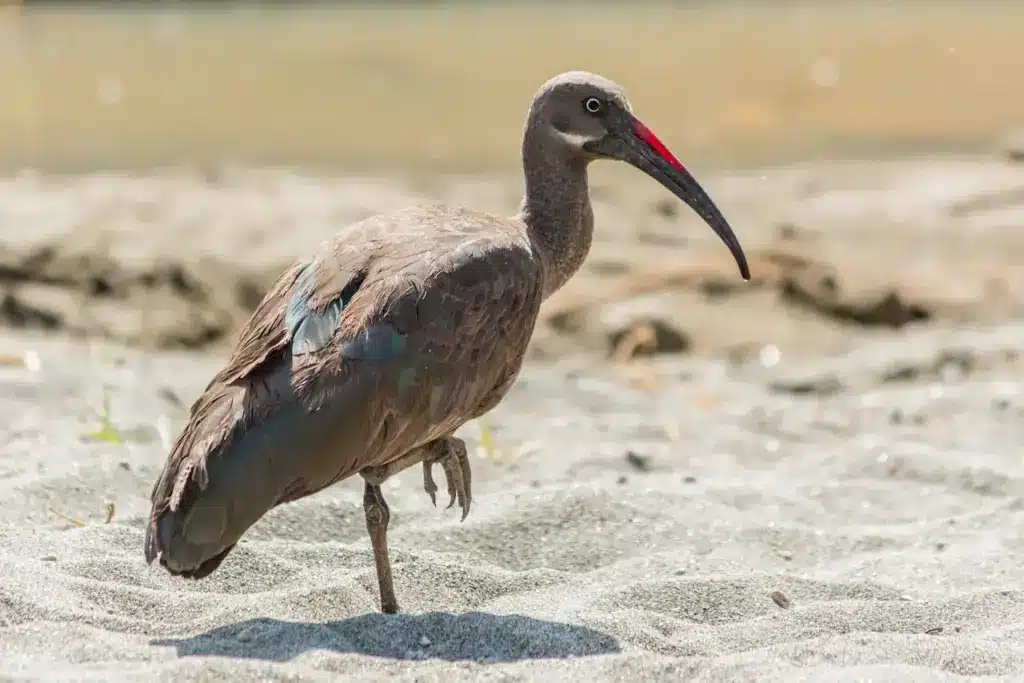
The Wattled Ibis is a bird that can be easily identified by its long, curved bill and dark plumage. It also has a thin wattle hanging from its base. The Wattled Ibis, unlike its more widely distributed cousins, is native to the Ethiopian Highlands. This makes it an interesting subject for birdwatchers, ecologists and anyone interested in Africa’s rich avifauna. This species is found in high-altitude grasslands, cliffs and even urban parks. It thrives in diverse habitats and displays intriguing behaviours that make it stand out from other wading bird species.
Wattled Ibis: Physical description and classification
The Wattled Ibis is a member of the family Threskiornithidae, which also includes spoonbills and ibises. The scientific name Bostrychia Carunculata refers to a “caruncle” or wattle that hangs off the bird’s head. This fleshy outgrowth gives the species its common name. These birds are large to medium in size and measure approximately 60cm (24 inches).
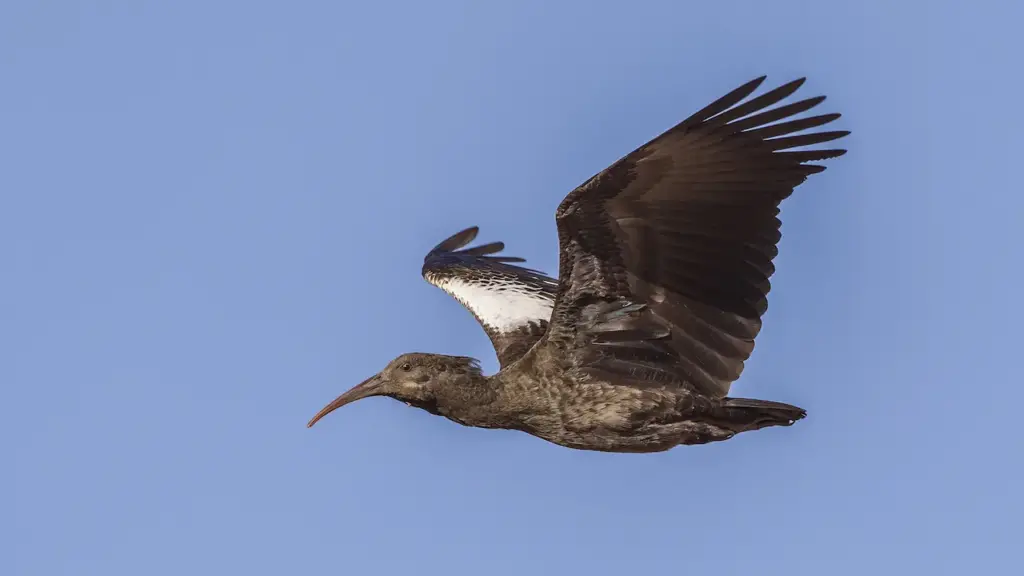
The majority of their plumage is dark brown. However, the contrast between white patches on the shoulders and white eye irises gives them an impressive appearance, particularly in flight. The long, downward-curved bill allows the bird to probe into soft soil or shallow water in search of prey. The Wattled ibis flies with its neck extended. This is a characteristic that it shares more with herons and storks than with other members of the family.

What is the range of Wattled Ibises?
The restricted geographic distribution is one of the most intriguing aspects of the Wattled Ibis. The Abyssinian Highlands are home to this bird. They cover parts of Ethiopia and also Eritrea. The birds can be found in heights between 1,500 and 4,100 meters (approximately 5,001 to 13,500 feet). They are more common in higher elevations, but they have been recorded at lower altitudes. This includes the coasts of Eritrea.
The habitats they prefer are open areas such as alpine meadows and highland rivers where there is abundant food and soft soil. Wattled Ibises can adapt to many different environments. They are commonly seen in city parks and mixed forests.
Behaviour and social structure
The Wattled Ibis is usually nonmigratory or stationary. This means that they stay within their range all year round. Local altitudinal movement can occur in response to seasonal changes or food availability. These movements usually involve short distances and shifting between different elevations for feeding and roosting.
The birds can be found in groups of 30 to 100 birds. However, solitary birds and pairs are also seen. During the season that is not breeding, larger flocks can be seen. They are gregarious not only when they feed, but also when they roost and nest.
The Wattled Ibis in Flight and Formation
The pattern of flight is one of the most distinctive behaviours for this bird. The Wattled Ibis does not retract its neck in flight like herons do. Instead, it flies fully extended. The unique shape they take in the air is a result of this. also often fly in V formation, a highly efficient group travel method that reduces wind resistance and saves energy.
The birds can form these aerial formations in the morning and late afternoon, as they travel from feeding grounds to roosting areas across the highlands.
Nesting and breeding season
Wattled Ibises breed in the breeding period between March and July. However, breeding has been observed during December. Breeding occurs following the rainy season when the food is abundant. This increases the chances of chicks being successfully reared.
The Wattled Ibis is known to build colonies that can contain more than 500 individuals. They nest primarily in rocky hills, which offer protection against predators. isolated Nests are also documented on building ledges as well as Tree Tops. This shows the species’ ability to adapt. Nests are constructed from twigs, plant material, and are often reused over several years.
The clutch is usually composed of 2 or 3 white eggs. Both parents are involved in the incubation process and care for the chicks. During this time, nesting colonies are very vocal and active. They move between feeding grounds and nests constantly and make constant calls. According to RSPB, this species is well documented.
Food Habits and Diet
Wattled Ibis are opportunistic foragers. They mainly feed in open pastures, marshes and croplands. Their long bills are often seen probing soil in search of small invertebrates. They eat a variety of insects and beetles as well as earthworms and small mammals. They also eat reptiles like snakes and lizards. According to eBird, this species is well documented.
A particularly interesting behaviour is the tendency of these animals to closely follow livestock in agricultural areas. Foraging for domestic animals, they look for beetles or other insects. They take advantage of disturbed soils and readily available sources of food. The scavenging behaviour of these animals not only shows their adaptability but also highlights their role in controlling the insect populations within farmland ecologies.
Wattled Ibises, Human Habitats
The tolerance of human activity is one of the most striking features of the Wattled Ibis. Wattled Ibises, unlike many other species of birds that prefer to avoid urban and semiurban environments, have been seen nesting in man-made structures and foraging in city parks. They have been able to maintain stable populations in spite of increasing habitat fragmentation due to their ability to adapt to human-made landscapes without significant behavioural changes.
They are a familiar sight to many Ethiopians due to their presence on cultivated land, proximity to human settlements, and calm demeanour. In some areas, they have a cultural respect or appreciation because of their helpful habits and calm demeanour.
Conservation Status of Wattled Ibises: Are They at Risk?
According to the IUCN Red List the Wattled Ibis has been classified as a species of Least Concern. This means that the population is stable, and not in immediate danger. The large altitudinal distribution and varied diet of the Wattled Ibis, as well as its ability for it to live close to human settlements, contribute to this species’ relative safety compared to other, more sensitive or specialised species.
Despite this, threats that continue to threaten highland ecosystems such as overgrazing, deforestation and urban expansion could present challenges in the near future. In order to ensure the survival of this species, conservation efforts will need to be made in order protect montane forests and nesting areas on cliffs.
It is important to monitor the population, as any rapid decline could have grave consequences. environmental education, sustainability agriculture and ecotourism can all help to preserve the Wattled Ibis.
The Wattled Ibis as a Cultural Icon in Ethiopia
The Wattled Ibis in Ethiopia is more than just a bird. It is a part of the landscape that many highland communities live with. These birds are easily recognisable as they fly overhead or forage near rural roads and farmland. They have become an important part of the Ethiopian Highland Ecosystem. They may not carry the same mythological significance as other African birds, but their calm nature and daily visibility often inspire a sense of natural harmony or of local pride.
Birdwatchers in Ethiopia are often struck by the charisma of this bird. It is a highlight on ornithological trips to the region.
Last Thoughts on Why the Wattled Ibis Matters
The Wattled Ibis (Bostrychia Carunculata), is more than a highland species–it is an indicator of ecological health, as well as a cultural icon and a sign of adaptation in a rapidly changing world. This bird, which is native to a region of Africa that’s rich in history and ecological diversity, offers valuable insight into how species can flourish both in natural environments and those altered by humans.
The combination of striking physical appearance with unusual vocalisations and social behaviour makes it a favourite bird among both local and international observers. Birds like the Wattled Ibis are a reminder that environmental changes will continue to affect biodiversity globally.