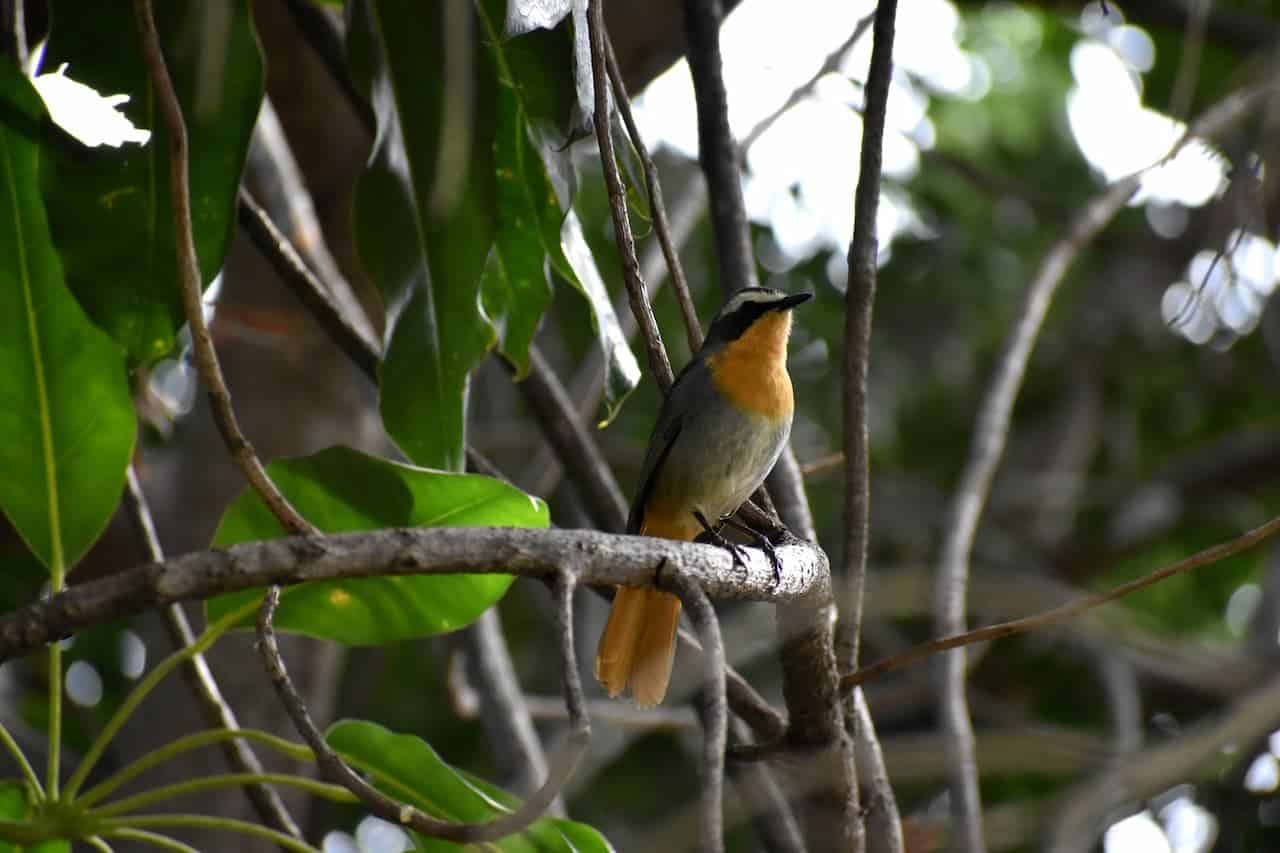
The Yellow-winged Tanager (Thraupis abbas) is a striking bird native to parts of Central America and southern Mexico, known for its distinctive yellow wing patches that contrast beautifully with its overall muted plumage. A member of the diverse tanager family, this species thrives in a variety of humid woodland habitats and is an intriguing subject for birdwatchers, naturalists, and wildlife photographers. Its combination of subtle coloring and social behavior makes it a fascinating bird to observe in the wild.
Scientific Classification
The Yellow-winged Tanager belongs to the family Thraupidae, a large group commonly referred to as tanagers, which are native primarily to the Neotropics. Its scientific name is Thraupis abbas. The genus Thraupis encompasses several medium-sized tanagers characterized by their often colorful and patterned feathers, which are adapted to various forest and woodland ecosystems throughout Central and South America.
Within its taxonomic hierarchy, Thraupis abbas is classified as follows: Kingdom Animalia, Phylum Chordata, Class Aves, Order Passeriformes, Family Thraupidae, Genus Thraupis, Species abbas. This species shares close relations with other members of the genus such as the Blue-gray Tanager (Thraupis episcopus) and the Palm Tanager (Thraupis palmarum), though it is readily distinguishable by its unique yellow wing patches and subtle lavender throat hues.


The name “abbas” is Latin for “abbot” or “father,” a term historically used in species naming that often denotes a characteristic or a tribute, though the exact reasoning behind this species’ epithet is not well documented. The species was first described by the German ornithologist Jean Cabanis in 1851.
Geographic Range & Distribution
The Yellow-winged Tanager has a distribution that spans the southern portion of Mexico down through parts of Central America, predominantly along coastal and lowland regions. Its range primarily extends from the Gulf of Mexico and Caribbean coasts of Mexico—including the states of Veracruz, the southern tip of San Luis Potosí, and the Yucatán Peninsula—continuing southward through Belize, Guatemala, and Honduras, reaching as far as Nicaragua. On the Pacific coast, it inhabits areas from Chiapas, Mexico, through parts of Honduras as well.
Within this range, Thraupis abbas favors humid and mesic woodland environments, often frequenting open forest edges, secondary growth, plantations, and sometimes gardens or parks near forested areas. The species is generally considered common to locally abundant throughout its distribution, although its population density may fluctuate depending on habitat conditions and seasonal food availability.
The Yellow-winged Tanager inhabits elevations from near sea level up to about 1,200 meters (approximately 3,900 feet), demonstrating flexibility within humid forest zones but showing a preference for lowland and foothill environments. Its presence along both Caribbean and Pacific coasts illustrates its adaptability to diverse microhabitats within the tropical forest biome.
Physical Description
The Yellow-winged Tanager is a medium-sized passerine, measuring approximately 18 centimeters (7 inches) in length. It typically weighs between 30 and 40 grams, with a wingspan averaging around 25 to 28 centimeters (10 to 11 inches). This size places it among the average-sized members of the tanager family.
Its plumage is primarily a subdued dusky green to bluish-gray tone, providing an understated backdrop that highlights its most distinctive feature: the bright yellow patches on the wings. These yellow patches are located on the secondary and greater coverts, creating a vivid flash of color when the bird is in flight or perched with wings slightly spread. The underparts, especially the throat and breast, exhibit a pale lavender or lilac hue, a subtle but elegant coloration that sets it apart from many other tanagers.
Juvenile Yellow-winged Tanagers differ noticeably from adults. Young birds lack the prominent yellow wing patches and lavender tones, instead displaying an olive-green head and upper back, which blend with their more muted body coloration. This camouflage likely helps juveniles avoid predation while they are learning to forage and navigate their environment.
The bill is stout and slightly curved, adapted for their omnivorous diet, while the legs and feet are a pale grayish color. Their eyes are dark, contrasting gently with the plumage, and the tail is moderately long with rounded tips. Overall, the Yellow-winged Tanager balances subtlety and splendor in its appearance, making it a quietly beautiful species in its natural habitat.
Behavior & Diet
Yellow-winged Tanagers are social birds, often found in flocks that can number 50 individuals or more, especially outside the breeding season. This flocking behavior aids in foraging efficiency and predator detection, allowing them to exploit food resources effectively while remaining vigilant. They are active and agile, frequently moving through the mid to upper canopy layers of forests and woodlands.
In terms of diet, Thraupis abbas is an omnivore with a preference for fruit, insects, and nectar. Their diet includes a variety of small fruits from trees and shrubs, which provide essential sugars and vitamins. Insects such as beetles, caterpillars, and ants are taken to supply protein, especially important during breeding seasons when nutritional demands are higher. Nectar feeding also occurs, making them occasional pollinators in their ecosystems.
Their foraging technique is versatile: they glean insects from leaves and branches, hover briefly to sip nectar from flowers, and pluck fruits both on the tree and sometimes from the ground. This dietary flexibility allows the Yellow-winged Tanager to thrive in varying environmental conditions and seasonal changes.
Their vocalizations include high-pitched, sibilant calls that are often heard while perched or in flight. These calls serve various social functions, including maintaining flock cohesion and alerting others of potential threats. Their song is relatively simple compared to other tanagers but is distinctive enough to identify the species in the field. According to Bug Guide, this species is well documented.
Breeding & Reproduction
The breeding season for Yellow-winged Tanagers generally coincides with the wetter months in their range, which vary depending on locality but often occur between March and July. During this time, males may become more territorial and exhibit subtle courtship behaviors, including vocal displays and wing flicking to attract females. According to IUCN Red List, this species is well documented.
The female constructs a small, cup-shaped nest made from dried fibers, leaves, mosses, and sometimes spider silk to bind the materials. These nests are typically positioned at mid-height in trees or tall shrubs, often concealed among dense foliage to reduce predation risk. Nest height averages between 2 to 5 meters (6 to 16 feet) above the ground, striking a balance between accessibility and safety.
Clutch size usually consists of three eggs. The eggs are pale gray in base color, mottled with brown speckles that provide camouflage against the nest materials. Incubation is primarily the responsibility of the female and lasts roughly 12 to 14 days. During this period, the male may assist by bringing food or defending the territory.
Once hatched, the chicks are altricial—born blind, featherless, and helpless. Both parents participate in feeding the young, providing a diet rich in insects and soft fruits to support rapid growth. Fledging occurs approximately two weeks after hatching, though juveniles may remain dependent on parental care for some time as they learn essential survival skills.
Conservation Status
The Yellow-winged Tanager is currently classified as Least Concern by the International Union for Conservation of Nature (IUCN). This status reflects its relatively wide distribution and stable population trends. The species is common to locally abundant throughout much of its range, and it exhibits a degree of adaptability to habitat alteration.
However, like many forest-dependent birds, the Yellow-winged Tanager faces potential threats from habitat loss and fragmentation due to deforestation for agriculture, logging, and urban development. While it can tolerate some secondary growth and disturbed habitats, extensive deforestation reduces available nesting and foraging areas, potentially impacting local populations.
Conservation efforts in its range often focus on preserving remaining forest patches and promoting sustainable land use practices. Protected areas within its geographic distribution, including national parks and reserves in Mexico and Central America, provide important refuges. Continued monitoring of population trends and habitat integrity is essential to ensure this species remains common in the wild.
Interesting Facts
The Yellow-winged Tanager’s yellow wing patches are not only visually striking but also serve as important signals during social interactions. When in flight or during courtship, the flash of yellow helps individuals maintain contact within noisy, dense forest environments. This color signaling plays a role in flock cohesion and mate attraction.
Unlike many brightly colored tanagers, the Yellow-winged Tanager’s more muted plumage offers excellent camouflage when perched quietly among foliage, balancing the need for visibility during flight with stealth while resting.
Its diet also contributes to its ecological role as a seed disperser and occasional pollinator. By consuming and excreting seeds of various fruiting plants, the Yellow-winged Tanager aids in forest regeneration and plant diversity. Similarly, by feeding on nectar, it helps in the pollination of some flowering species, supporting broader ecosystem health.
Despite its attractive appearance, this species is often overlooked due to its quiet demeanor and preference for mid-canopy habitats. Birdwatchers seeking the Yellow-winged Tanager may need to rely on its distinctive calls or look for groups moving through the trees.
Finally, the species’ adaptability to a range of forest types, including secondary growth and edges, demonstrates its resilience in the face of moderate habitat disturbances, an encouraging sign for its long-term survival amid changing landscapes.
Conclusion
The Yellow-winged Tanager (Thraupis abbas) is a captivating and ecologically important bird of the Neotropics. Its distinctive yellow wing patches and subtle lavender throat set it apart visually, while its social behavior and versatile diet make it a dynamic participant in the forest ecosystems of southern Mexico and Central America. Although currently not threatened, ongoing habitat changes require attention to ensure this species continues to thrive. For bird enthusiasts and nature lovers, encountering a flock of Yellow-winged Tanagers offers a glimpse into the vibrant yet delicate world of tropical woodland birds, reminding us of the intricate connections that sustain biodiversity across the Americas.