Observing hummingbirds visiting a backyard feeder or garden can be a delightful experience, especially when multiple birds appear simultaneously. Often, newcomers find themselves wondering whether the smaller hummingbirds are juvenile offspring of an adult or if they represent different species altogether. This question is particularly common in regions like Missouri, where the diversity of hummingbird species is limited but subtle differences in size, color, and behavior can cause confusion. Identifying hummingbird species accurately requires understanding their taxonomy, physical characteristics, geographic distribution, and behaviors. This expanded guide will help nature enthusiasts and birdwatchers distinguish the hummingbird species commonly found in Missouri and nearby areas, with insights into their fascinating world.
Scientific Classification
The bird family Trochilidae encompasses all hummingbirds, a diverse group of small, often iridescent birds known for their rapid wing beats and hovering flight. Within this family, species vary widely in size, coloration, and habitat preferences. In Missouri, the most commonly observed hummingbird species is the Archilochus colubris, commonly known as the Ruby-throated Hummingbird. This species is the only regular breeding hummingbird in the eastern United States, including Missouri.
The Ruby-throated Hummingbird belongs to the order Apodiformes, which also includes swifts. Taxonomically, it is distinguished by its brilliant red throat patch in males, a feature used in courtship and territorial displays. Juvenile and female Ruby-throated Hummingbirds lack this vivid throat coloration, making them harder to identify at first glance. Other species occasionally spotted during migration or in winter, such as the Rufous Hummingbird (Selasphorus rufus), may cause confusion due to their smaller size and differing color patterns, but these are relatively rare in Missouri.





Geographic Range & Distribution
The Ruby-throated Hummingbird’s geographic range spans much of eastern North America, including the eastern United States, southern Canada, and parts of Mexico. In Missouri, these hummingbirds arrive in early spring, typically around mid-April, and remain until late September or early October before migrating south to Central America for the winter. Their migration is remarkable, with some individuals flying nonstop across the Gulf of Mexico, covering distances up to 500 miles.
While Missouri is primarily home to Ruby-throated Hummingbirds during the breeding season, occasional sightings of other species like the Rufous Hummingbird occur, often due to vagrancy or unusual migratory patterns. The Rufous Hummingbird breeds mainly in the northwestern United States and Canada, migrating to Mexico and the southern United States in winter. Its presence in Missouri is uncommon but not unheard of, especially during fall migration. Understanding these geographic patterns helps birdwatchers determine which species they are likely to encounter in their backyard or local park.
Physical Description
The Ruby-throated Hummingbird is a small bird, measuring approximately 7 to 9 centimeters (2.8 to 3.5 inches) in length with a wingspan of 11 to 13 centimeters (4.3 to 5.1 inches), and weighing around 2.6 to 6 grams (0.09 to 0.21 ounces). Adult males are distinguished by their iridescent ruby-red throat patch, known as a gorget, which can appear black or dark depending on the angle of light. Their backs are metallic green, and they have white underparts. Females and juveniles lack the red gorget and instead show a white throat with some gray or green spotting, making them appear less flashy.
In contrast, the Rufous Hummingbird is slightly smaller, about 7 to 8 centimeters (2.8 to 3.1 inches) long, with a wingspan of approximately 11.5 centimeters (4.5 inches), and weighs around 3 to 4.5 grams (0.1 to 0.16 ounces). Males display a bright orange-red throat and a rusty orange back, while females have green backs and white underparts with orange flanks. Their distinctive rusty coloration is a helpful identification feature, but because they are rare in Missouri, confusion is less common.
Juvenile hummingbirds, regardless of species, are often more challenging to identify due to their muted coloration and smaller size. Juveniles resemble adult females but may have faint spots or streaks on their throats. Observing behavior, such as feeding patterns and vocalizations, alongside physical traits, can aid in accurate identification.
Behavior & Diet
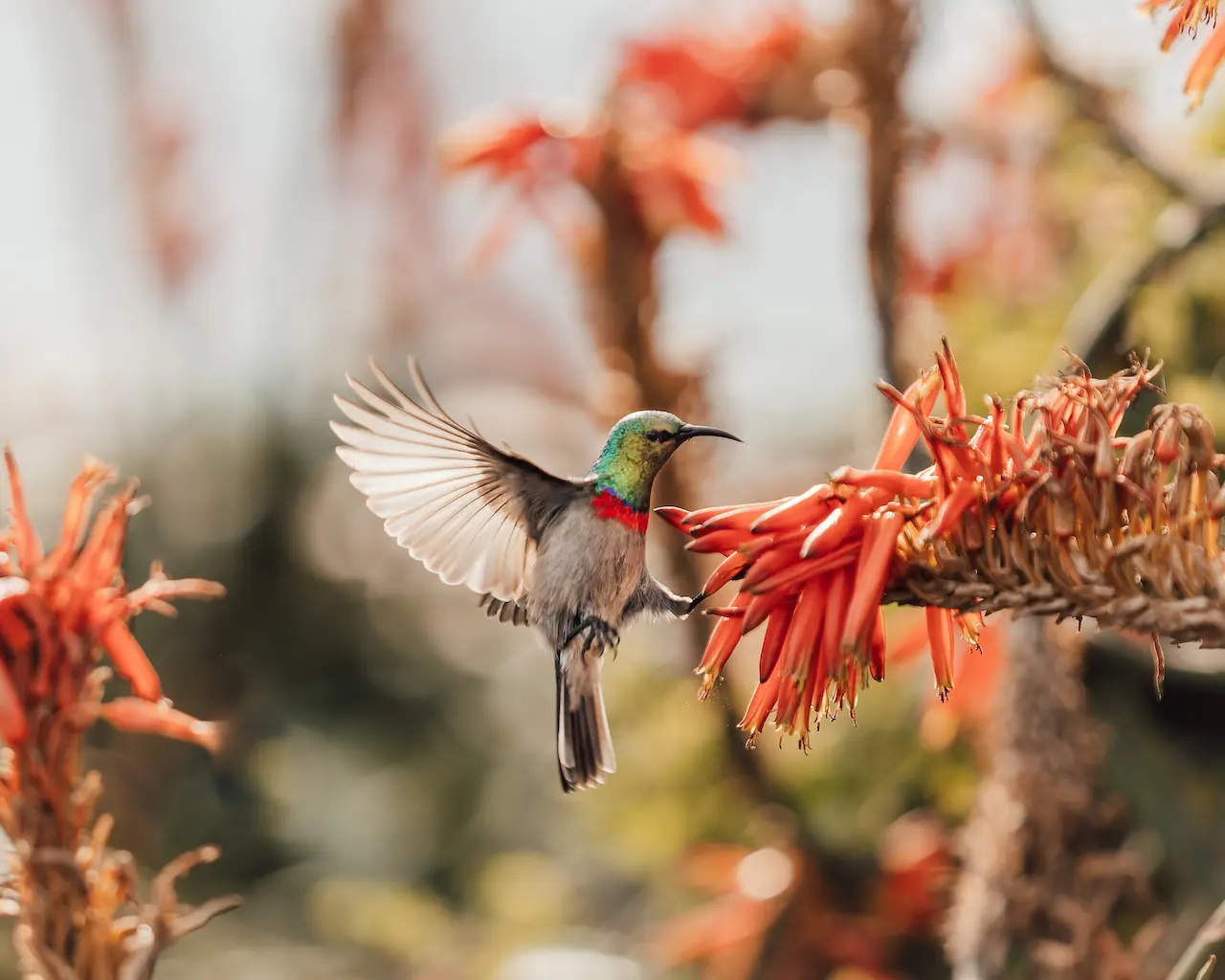
Hummingbirds are well-known for their incredible flight capabilities, including hovering, backward flight, and rapid wing beats—up to 53 beats per second in some species. The Ruby-throated Hummingbird is highly territorial, especially males, who defend feeding territories aggressively during the breeding season. Their diet primarily consists of nectar from a variety of flowering plants such as trumpet creeper, bee balm, and jewelweed, which provides the high energy necessary for their demanding flight style. They also consume small insects and spiders, which supply essential proteins and nutrients.
Feeding behavior involves rapid darting movements between flowers and feeders. Ruby-throated Hummingbirds have long, specialized bills and tongues adapted to extract nectar efficiently. Outside the breeding season, they may form loose aggregations at abundant food sources. Vocalizations include sharp, high-pitched chirps used in communication and territorial defense. During migration, they rely heavily on flower-rich stopover sites and feeders to refuel.
Breeding & Reproduction
The breeding season for Ruby-throated Hummingbirds in Missouri typically begins in late spring, around May, and lasts through July. Males perform elaborate courtship displays that include rapid dives and fluttering flights to attract females. Once a female selects a mate, she alone constructs the nest, usually on a slender branch coated with lichens and spider silk, which allows the nest to expand as the chicks grow. According to Audubon Society, this species is well documented.
Nests are small and cup-shaped, often no larger than a walnut, and are usually placed 4 to 20 feet above the ground. The female lays two tiny, white eggs measuring about 1 centimeter (0.4 inches) in length. Incubation lasts approximately 12 to 14 days, with the female solely responsible for warming the eggs. After hatching, the chicks remain in the nest for 18 to 22 days before fledging. During this time, the female feeds them a diet of regurgitated nectar and small insects. According to RSPB, this species is well documented.
Hummingbirds typically raise one or two broods per season. Juvenile hummingbirds seen in Missouri during summer are the result of these breeding efforts. Their smaller size compared to adults and less vivid coloration can lead observers to wonder whether they are different species or offspring. Understanding this reproductive cycle helps clarify that multiple size classes often represent age differences within a single species rather than multiple species.
Conservation Status
The Ruby-throated Hummingbird is currently listed as Least Concern by the International Union for Conservation of Nature (IUCN). Populations are stable or increasing in many parts of their range, thanks in part to adaptability to suburban and urban habitats where feeders and garden flowers provide abundant food. However, these birds face threats from habitat loss, climate change, and window collisions during migration.
Conservation efforts focus on preserving native flowering plants, reducing pesticide use, and educating the public on providing safe feeding stations. Regular maintenance and cleaning of hummingbird feeders prevent the spread of disease, which can be a significant risk in areas with high bird concentrations. While the general outlook for Ruby-throated Hummingbirds is positive, ongoing habitat monitoring remains essential to ensure long-term viability.
Interesting Facts
One of the most remarkable features of hummingbirds is their ability to hover by rapidly flapping their wings in a figure-eight pattern, which creates lift on both the upstroke and downstroke. This unique flight mechanism enables them to feed from flowers with precision and agility. The Ruby-throated Hummingbird’s heart rate can reach up to 1,260 beats per minute during flight, supporting its incredibly high metabolism.
These birds have an extraordinary memory for flower locations and feeder sites, returning consistently throughout the day. Despite their small size, they are fiercely territorial and will chase away much larger birds and insects. During migration, some Ruby-throated Hummingbirds undertake a nonstop flight across the Gulf of Mexico, an impressive feat for a bird weighing less than a nickel.
Interestingly, the iridescent colors seen in hummingbird feathers are not due to pigments but rather to microscopic structures that reflect and refract light, changing color depending on the viewing angle. This optical phenomenon explains why male Ruby-throated Hummingbirds can appear dark or brilliantly red depending on lighting conditions, sometimes confusing observers trying to differentiate between species or individuals.
For backyard birdwatchers in Missouri, spotting Ruby-throated Hummingbirds and their juveniles is a rewarding experience that offers a glimpse into the intricate lives of these tiny avian marvels. Understanding the subtle variations in size and plumage can deepen appreciation and enhance identification skills, making each sighting a unique opportunity to connect with nature.
In summary, the smaller hummingbirds visiting your backyard in Missouri are most likely juvenile Ruby-throated Hummingbirds rather than a mix of species. Their size difference and plumage reflect their age and developmental stage. By observing their behavior, physical traits, and seasonal patterns, you can confidently identify these remarkable birds and enjoy the vibrant display of one of North America’s most beloved hummingbird species.