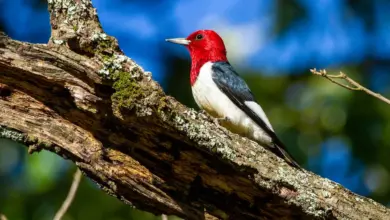
The Lark Bunting (Calamospiza melanocorys) is a striking and uniquely adapted songbird native to the grasslands of North America. Renowned for its dramatic seasonal plumage changes and complex vocalizations, the Lark Bunting captivates birdwatchers and naturalists alike. Despite its elusive nature and preference for open prairie habitats, this species plays a vital role in the ecology of North American grasslands. Over recent decades, habitat loss has threatened its populations, making the conservation of prairie ecosystems a critical priority for ensuring the Lark Bunting’s continued survival.
Scientific Classification
The Lark Bunting belongs to the family Cardinalidae, which includes grosbeaks, cardinals, and other buntings. Its scientific name is Calamospiza melanocorys, where “Calamospiza” refers to the bird’s reed-like habitat preferences (“calamo” meaning reed) and “melanocorys” derives from Greek, meaning “black crest,” a nod to the male’s distinctive breeding plumage. Unlike many sparrows that fall under the family Passerellidae, Lark Buntings are more closely related to cardinals, despite their sparrow-like appearance.
First described by the American ornithologist John James Audubon in 1834, the species remains the only member of the genus Calamospiza. The Lark Bunting’s unique taxonomic placement reflects its specialized adaptations to the open prairie environments of central North America, setting it apart from other buntings and sparrows.





Geographic Range & Distribution
The Lark Bunting primarily inhabits the shortgrass and mixed-grass prairies of central North America. Its breeding range spans southern Canada—primarily in the prairie provinces such as Alberta, Saskatchewan, and Manitoba—and extends southward through the Great Plains of the United States, including states like Montana, North Dakota, South Dakota, Nebraska, Kansas, Oklahoma, and Colorado. The bird favors large open expanses of native grassland, where it nests and forages.
During the non-breeding season, Lark Buntings migrate southward in flocks to wintering grounds in southern Texas, northern Mexico, and occasionally as far south as northern Central America. This migratory behavior allows them to avoid the harsh winter conditions of the northern prairies. Migration typically occurs from late summer to early fall, with return flights to breeding grounds in spring.
As grassland habitats have diminished due to agricultural expansion, urbanization, and energy development, the Lark Bunting’s range has shown signs of contraction in some areas. However, the species remains relatively widespread within its core prairie habitats.
Physical Description
The Lark Bunting is a medium-sized songbird, measuring approximately 18 to 20 centimeters (7 to 8 inches) in length, with a wingspan ranging from 27 to 33 centimeters (10.5 to 13 inches). It weighs between 28 and 40 grams (1 to 1.4 ounces), making it slightly larger and bulkier than many sparrows. The bird’s stout, conical bill is well adapted for cracking seeds and catching insects.
One of the most remarkable features of the Lark Bunting is the striking sexual dimorphism in its plumage, especially during the breeding season. Breeding males display a bold black plumage with large, distinctive white wing patches that contrast sharply against their dark body. This high-contrast pattern is used in courtship displays and territorial signaling. Outside the breeding season, males molt into a more subdued, mottled brown and gray plumage that closely resembles the females, making them less conspicuous.
Females and juveniles exhibit a cryptic coloration that provides excellent camouflage in prairie grasses. Their plumage is primarily brown with darker streaks on the back, breast, and flanks, and white underparts. The wings are darker with brown edges, and the bill is a subtle grayish color. The subtle coloration helps females avoid predation while nesting on the ground.
Behavior & Diet
Lark Buntings are ground-dwelling birds that prefer open grasslands with sparse shrub cover. They are most often seen foraging on the ground, picking through grasses and bare soil for food. Their diet shifts seasonally; during the breeding season, they primarily consume insects such as grasshoppers, beetles, caterpillars, and other arthropods. This protein-rich diet supports the energy demands of breeding and raising young.
In the winter months, when insects are scarce, Lark Buntings switch to a predominantly seed-based diet, feeding on a variety of grass seeds and weed seeds found in their habitat. This dietary flexibility allows them to survive the seasonal fluctuations of prairie ecosystems.
These birds are highly social outside the breeding season, often forming large flocks during migration and winter. They forage actively in groups, which can number from a few dozen to over a hundred individuals. Their behavior includes short flights to capture flying insects, and they may also feed on low shrubs and plants when ground food is limited.
Vocalizations are important for communication. The Lark Bunting’s song is a melodious combination of whistles, trills, and warbles, often compared to the complex songs of larks, hence the name. Their calls include soft, hooting notes used for contact between individuals. During the breeding season, males perform elaborate flight displays, singing while soaring upward and then descending with wings and tail spread, showcasing their white wing patches to claim territory and attract mates.
Breeding & Reproduction
The Lark Bunting’s breeding season typically begins in late spring, from May through July, coinciding with the peak of insect abundance in the prairie. Males establish and defend territories that can vary in size but usually encompass a few hectares of suitable nesting habitat. They use their striking black and white plumage and vocal displays to ward off rivals and court females. According to RSPB, this species is well documented.
Nests are constructed on the ground, often hidden among grasses or under small shrubs to provide camouflage and protection from predators. The nest itself is a shallow, open cup made from grasses, stems, and other plant materials, lined with finer materials such as hair or feathers. Nest sites tend to be spaced apart, though small, loose colonies may form in favorable habitats. According to Audubon Society, this species is well documented.
Females lay between three and six eggs per clutch. The eggs are pale green or blue with brown spotting. Incubation lasts about 11 to 14 days and is performed solely by the female. During this time, males continue to defend the territory and may mate with multiple females in polygynous arrangements.
Once hatched, the altricial chicks are cared for by the female and fed a diet rich in insects. They fledge approximately 9 to 12 days after hatching but remain dependent on parental care for several weeks as they learn to forage independently. The species usually produces one or two broods per season depending on environmental conditions.
Conservation Status
According to the International Union for Conservation of Nature (IUCN), the Lark Bunting is currently classified as Least Concern. This designation reflects its relatively large range and stable population numbers. However, the species faces ongoing threats primarily linked to habitat loss and degradation.
Grassland conversion to agriculture, urban sprawl, energy development such as oil and gas extraction, and the suppression of natural fire regimes have all contributed to the loss and fragmentation of native prairie ecosystems critical to the Lark Bunting. These changes reduce the availability of suitable nesting and foraging habitat, leading to local population declines in some regions.
Conservation efforts aimed at protecting and restoring prairie habitats benefit the Lark Bunting and numerous other grassland-dependent species. Initiatives include preserving large tracts of native grassland, promoting sustainable agricultural practices, and reintroducing controlled burns to maintain habitat quality. Monitoring programs continue to track population trends to ensure timely conservation measures.
Interesting Facts
The Lark Bunting holds the distinction of being the official state bird of Colorado, symbolizing the state’s vast and iconic grasslands. Its unique breeding plumage transformation is unparalleled among North American sparrows; during the breeding season, males are almost entirely black with white wing patches, but after molt, they resemble females closely, a rare trait among songbirds.
Male Lark Buntings are known for their elaborate courtship flights, which combine singing and visual displays in mid-air. These displays not only attract females but also serve as a warning to other males. Interestingly, the intensity and complexity of these displays can vary among individuals, with more dominant males often exhibiting more pronounced behaviors.
Unlike many birds that nest in trees or shrubs, Lark Buntings nest exclusively on or near the ground. This makes their nests vulnerable to predation by mammals, snakes, and birds of prey, as well as disturbance by livestock and humans. Their cryptic nesting behavior and camouflaged eggs are vital adaptations to avoid detection.
During migration, Lark Buntings often travel in large flocks, sometimes mixing with other grassland species. These flocks can be spectacular sights for birdwatchers, especially when the birds are seen feeding and flying in unison across open fields.
Finally, the Lark Bunting’s song, a rich blend of whistles and trills, has earned it the nickname “prairie songbird,” as its melodies are emblematic of the open grassland soundscape.
Conclusion
The Lark Bunting is a remarkable symbol of North America’s prairie ecosystems, showcasing unique adaptations in plumage, behavior, and habitat preference. As a species dependent on the vast grasslands that once covered millions of acres, its future hinges on the preservation and restoration of these fragile environments. For birdwatchers and nature enthusiasts, the Lark Bunting offers a glimpse into the complex and dynamic world of grassland birds, reminding us of the intricate connections between wildlife and their habitats. Continued education, research, and conservation efforts will be essential to ensure this charismatic bird remains a vibrant part of North America’s natural heritage.