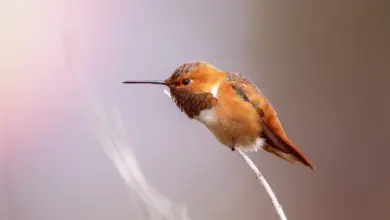
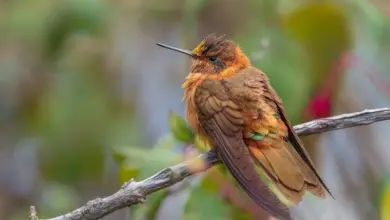
Lancebills are a distinctive genus of hummingbirds known scientifically as Doryfera. These small, agile birds are celebrated for their exceptionally long, slender bills that resemble a lance, an adaptation perfectly suited to their specialized feeding habits. The genus Doryfera comprises two recognized species: the Blue-fronted Lancebill (Doryfera johannae) and the Green-fronted Lancebill (Doryfera ludovicae). Both species inhabit the lush, humid environments of Central and South America, where they play an essential role in the pollination of various flowering plants. These hummingbirds exhibit fascinating behaviors and physiology that make them a captivating subject for birdwatchers, researchers, and nature enthusiasts alike.
Scientific Classification
The Lancebills belong to the family Trochilidae, which encompasses all hummingbird species. Within this family, they are classified under the genus Doryfera, distinguished by their unusually long and straight bills adapted to accessing nectar from deep tubular flowers. The genus contains two species: the Blue-fronted Lancebill (Doryfera johannae) and the Green-fronted Lancebill (Doryfera ludovicae).
Both species were first described in the 19th century, with Doryfera johannae named by Bourcier & Mulsant in 1846, and Doryfera ludovicae described by Bourcier in 1847. The genus name Doryfera derives from Greek, meaning “lance bearer,” a direct reference to their unique bills. As members of the Trochilidae family, Lancebills share many characteristics common to hummingbirds, such as rapid wingbeats, hovering flight, and a high metabolism, but their specialized bill shape sets them apart from many other hummingbird genera.




Geographic Range & Distribution
Lancebills are native to the Neotropical region of Central and South America. The Blue-fronted Lancebill (Doryfera johannae) is found primarily along the eastern slopes of the Andes, stretching from southern Nicaragua through Costa Rica, Panama, and Colombia, down into Ecuador and northern Peru. This species favors humid and wet forest habitats, often at mid-elevations ranging from about 400 to 1,500 meters above sea level, though it can sometimes be found up to 2,000 meters.
The Green-fronted Lancebill (Doryfera ludovicae) occupies a slightly more restricted range, primarily in Colombia and Ecuador, especially along the Pacific slopes and in the Chocó biogeographic region, which is noted for its high rainfall and biodiversity. This species also prefers dense, wet forests and is typically found at similar elevations to the Blue-fronted Lancebill. Both species favor areas near streams and rivers, which provide abundant flowering plants and insects crucial for their diet.
Physical Description
Lancebills are relatively small hummingbirds, with an average body length ranging from 11 to 13 centimeters (approximately 4.3 to 5.1 inches). They weigh between 4 and 6 grams, making them lightweight and highly maneuverable in flight. Their most notable physical feature is their extremely long, straight bills, which measure about 3.5 to 4 centimeters—roughly one-third of their body length. This bill morphology is among the longest in relation to body size within hummingbirds and is perfectly adapted for feeding on long, tubular flowers.
The Blue-fronted Lancebill sports a striking iridescent blue forehead and crown, contrasted by a greenish-bronze upper body and a white to grayish underbelly. The tail is relatively short and dark, often with a subtle blue sheen. In comparison, the Green-fronted Lancebill exhibits a bright green forehead and crown, with similar bronze-green upperparts and a whitish underside. Both species show subtle sexual dimorphism, with males typically exhibiting brighter, more metallic plumage than females.
Behavior & Diet
Lancebills are highly territorial birds, especially males who vigorously defend feeding sites rich in nectar. Their long bills allow them to access nectar from flowers that are often inaccessible to other hummingbirds or pollinators, such as bees and butterflies, which cannot navigate the narrow, tubular corollas. These birds primarily feed on nectar from a variety of brightly colored flowers, especially those that are red or orange and tubular, which tend to have high sugar content. Common nectar sources include epiphytes, shrubs, and flowering trees.
To extract nectar, Lancebills use their extendible, straw-like tongues, capable of flicking in and out up to 13 times per second while hovering in place. Their hovering flight is maintained by rapid wingbeats, allowing them to feed with precision while their tail is often cocked upward. Beyond nectar, Lancebills supplement their diet with small arthropods, including spiders and insects. These protein sources are particularly vital during the breeding season when females require additional nutrients for egg production and chick development. Lancebills catch insects by hawking—snatching prey mid-air—or by gleaning them from leaves and spider webs.
Male Lancebills aggressively defend their territories against rival males and large insects such as bumblebees and hawk moths. They perform aerial displays and chase intruders away to maintain exclusive access to their nectar-rich feeding grounds. Despite this territoriality, outside of breeding, Lancebills are solitary birds and do not form flocks or social groups.
Breeding & Reproduction
Lancebills follow the typical hummingbird reproductive pattern, where males’ involvement ends after mating. There is no pair bonding or cooperative breeding; females alone build nests, incubate eggs, and raise the young. Males attract females through aerial courtship displays, often flying in exaggerated U-shaped patterns to showcase their agility and plumage. According to iNaturalist, this species is well documented.
The nest of the Blue-fronted Lancebill is a small cup constructed from moss, spider silk, and plant fibers, typically attached to the underside of rock overhangs or cave ceilings near running water. The Green-fronted Lancebill similarly nests on rocky ledges or inside caves, where the microclimate provides protection from predators and harsh weather. The female lines the nest with soft plant fibers, animal hair, and down feathers, securing the structure with sticky spider webs for flexibility and durability. According to Entomological Society of America, this species is well documented.
The clutch size usually consists of two tiny eggs, each measuring about 12 to 14 millimeters in length. Incubation lasts approximately 14 to 16 days, with the female maintaining constant warmth. After hatching, the chicks remain in the nest for about three weeks, fed regurgitated nectar and small insects by the mother. A nesting female can capture up to 2,000 insects daily to meet the protein demands of her growing brood.
Conservation Status
Currently, both Lancebill species are classified by the International Union for Conservation of Nature (IUCN) as Least Concern. The Blue-fronted Lancebill (Doryfera johannae) and Green-fronted Lancebill (Doryfera ludovicae) maintain relatively stable populations across their ranges, thanks in part to their preference for habitats within protected forest reserves and national parks. However, habitat loss due to deforestation, agricultural expansion, and infrastructure development poses a potential threat, especially in regions with rapidly declining forest cover.
Because these hummingbirds rely heavily on specific flowering plants and intact forest ecosystems, conservation efforts that protect riparian forests and montane habitats are critical. Preserving corridors of native vegetation ensures that Lancebills continue to access the nectar sources they depend on and maintain their vital role as pollinators. Monitoring populations and habitat quality remains essential to detect any early signs of decline.
Interesting Facts
Lancebills are remarkable not only for their extraordinary bill length but also for their specialized ecological niche. Their feeding behavior excludes many other pollinators, making them key agents in the reproduction of certain plant species that have evolved alongside them. This mutualistic relationship highlights the intricate balance of tropical forest ecosystems.
Another fascinating aspect of Lancebill biology is their ability to hover with incredible stability while feeding. Their wingbeats average around 50 to 60 beats per second, allowing unparalleled maneuverability that even the most skilled birdwatchers find mesmerizing. Additionally, the use of spider silk in their nests is a brilliant adaptation that provides elasticity and strength, preventing the nest from breaking under stress or weather fluctuations.
During courtship, male Lancebills’ aerial displays are not only visual but may also produce faint mechanical sounds created by their wings, adding an acoustic element to their mating rituals. Such behaviors underscore the complexity of communication and reproductive strategies in hummingbirds.
Lastly, Lancebills’ long bills are so specialized that they are considered a textbook example of coevolution between pollinators and plants. This evolutionary relationship demonstrates how species can drive each other’s development over millions of years, resulting in unique biological adaptations.
Conclusion
The Lancebills of the genus Doryfera represent a fascinating example of hummingbird specialization and ecological interdependence. With their distinctive long bills, vibrant plumage, and intricate behaviors, these birds embody the delicate balance of tropical forest ecosystems. Their role as pollinators highlights the importance of preserving natural habitats, ensuring that these remarkable hummingbirds continue to thrive. Whether admired by birdwatchers in the misty Andean foothills or studied by scientists probing the mysteries of coevolution, Lancebills offer a captivating glimpse into the wonders of avian life.