Bird Overview
The Plumbeous Hawk, due to its small range and dependence on intact forest habitats, is vulnerable to habitat destruction. The deforestation of land for agriculture or development is a major threat to its survival. This leads to a decrease in habitats suitable for it across its range. This species is rare, and little is known about its ecology and behaviour. It is important to protect the forest habitats where this hawk lives, not only for it but for many other species that share the ecosystem.

Bird Group:
Identification
Plumbeous Hawks are a small but sturdy raptor. Males measure around 32 cm, and females are slightly longer at 35 cm. The Plumbeous Hawk has a wingspan of 71-79 cm and weighs 500 grams. The short, broad and rounded wing shape of this hawk helps it to maneuver through dense forests.
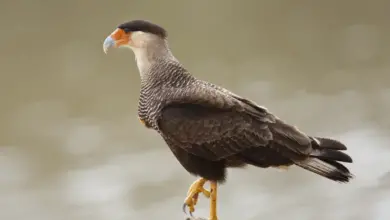
Adults have a slate-grey, almost black plumage covering most of their bodies. This is contrasted with a tail that’s blackish and has a white band. Upper wings are dark grey to almost black. The head, upper back, and underparts, however, are lighter grey. Underwings are mainly white with dark tips on the primary feathers. The thighs are marked with fine grey and white stripes, while the chin and neck are a darker grey. The bill of the crow is black, with a bright orange cere. Their glowing red eyes and red-orange feet and legs end in black talons, giving them an attractive appearance. Although males and females have similar colouring, the females are slightly larger.
The plumbeous hawks are similar in appearance to the adults, but they can be distinguished from them by the white bars on their belly, flanks and thighs, as well as the white tips on their upper tail coverts. The eyes of juveniles are usually browner and have a narrower second white band. Understanding these physical characteristics can help researchers and birdwatchers identify this secretive species in its natural habitat.
Songs & Calls
It is usually quiet and elusive, but does make a few vocalisations which can be used to identify it in dense forests. Its most recognisable call is a loud, whistled, and mournful “weeeeeaa… weeeeeaa…weea-weea,” often heard during the early morning. It can also emit a thin, high ” wheeee-urr” and, when alarmed or excited, a fast, quavering ” whi-iiii, whiiiii. According to Cornell Lab of Ornithology, this species is well documented.
Location
Habitat
The Plumbeous Hawk has a small, scattered range that stretches from eastern Panama to western Colombia and northwestern Ecuador. It was once found in many areas of this region. However, habitat loss and other factors led to local declines. This includes its apparent disappearance from western Panama. Although reports have come in from other nearby areas, such as northwestern Peru and the Caribbean, they are most likely misidentifications. The confirmed records of this species remain restricted to its core range. According to eBird, this species is well documented.
The hawk is a secretive hunter who prefers to “sit and wait” in dense lowland forest. Its hunting style allows it to remain hidden within the canopy of the forest. Due to its elusive nature and preference for forests in the interior, this species has likely been under-recorded. This makes it difficult to assess its true size and distribution. Sightings of this elusive bird are rare even in protected areas. This highlights the importance of preserving intact forest habitats and conducting thorough canopy-level surveys to better understand and safeguard this elusive species.
Behaviour
The male and female hawks are often seen in pairs or alone. They sometimes perform vocal duets that suggest a degree of communication. The Plumbeous Hawk’s breeding behaviour is still largely a mystery. However, it is believed to spend most of the year in its forest habitat. It usually flies through the forest at a low altitude with rapid, direct wingbeats. Rarely, if ever, does it soar. Early in the morning, it vocalises often from perches exposed to the sun. However, during the rest of the day, the bird prefers shaded areas deep within the forest.
Feeding
The Plumbeous Hawk eats a variety of small vertebrates, including frogs and crabs. It also eats fish, water snakes, and other aquatic animals. It may also feed on large insects and small mammals. This raptor hunts primarily along the shores of rivers and lakes, perching silently for long periods of time before diving down to catch prey. This raptor’s strategy allows it to take advantage of a variety of food sources in its forest habitat.
Breeding
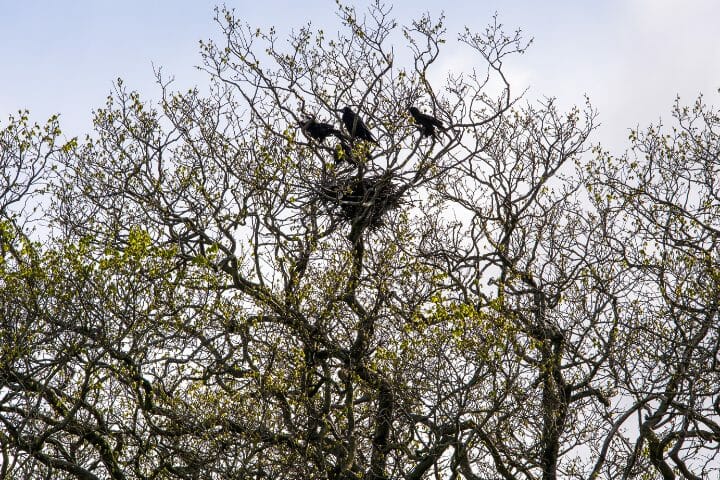
Although the breeding habits of this hawk are largely unknown to us, we can learn a lot from closely related raptors. The Plumbeous Hawk builds stick nests in the tops of tall trees. This provides safety and an excellent vantage point to raise their young. Plumbeous Hawks may be territorial like many other raptors. They will defend their nesting site and the surrounding home ranges vigorously, especially during breeding season.
Many raptors are monogamous. This includes species like the Plumbeous Hawk. They form long-term pairs that ensure a successful offspring raising over several seasons. Although direct observations of the Plumbeous Hawk’s breeding behaviour are rare, researchers and conservationists can use these patterns to anticipate their needs and safeguard vital nesting habitats. It is important to preserve tall, mature trees in undisturbed forest areas for the breeding success and survival of these elusive species.
Conservation
Risks / Threats
The Plumbeous Hawk is under threat across its range, primarily because of habitat loss in Central and South America. Deforestation caused by agricultural expansion has destroyed the lowland humid forests on which this species relies. The destruction of the habitat is further exacerbated by logging for timber and mining. The Plumbeous Hawk can tolerate some habitat disturbance, but it depends heavily on a continuous forest cover to breed and survive.
Plumbeous Hawks are dependent on relatively intact forest ecosystems. Habitat fragmentation can pose a serious threat to its survival. Conserving this species requires protecting large areas of forest connected by trails and encouraging sustainable land use. Understanding these challenges is important for conservationists and enthusiasts of nature. Not only does it highlight the importance of conserving forest habitats, but it also highlights the importance of conserving the other species that rely on this rich ecosystem.