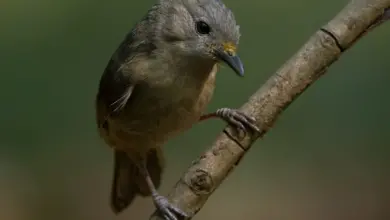
The Horus Swift (Apus horus) is a fascinating member of the swift family, known for its remarkable aerial skills and distinctive markings. This small, insectivorous bird is named after Horus, the ancient Egyptian god of the sun, who was revered as a symbol of power and protection. The Horus Swift’s name pays tribute to this cultural heritage, reflecting the bird’s striking presence in the skies of sub-Saharan Africa. Despite its relatively inconspicuous size, the Horus Swift’s unique behaviors, habitat preferences, and physical features make it a captivating subject for birdwatchers and ornithologists alike. For more information, see our guide on hummingbirds.
Scientific Classification
The Horus Swift belongs to the family Apodidae, which encompasses all true swifts. The scientific name for this species is Apus horus. The genus name Apus comes from the Greek word meaning “without feet,” a reference to the swift’s very short legs, which are not well suited for walking but excellent for clinging to vertical surfaces. The species was first described in the 19th century, and since then, several subspecies and color morphs have been identified, reflecting the bird’s adaptation to various African habitats.
Swifts, including the Horus Swift, are often mistaken for swallows due to their similar body shapes and feeding habits, but they belong to a different family and order. Swifts are more closely related to hummingbirds than to swallows, and their wing structure and flight mechanics are uniquely adapted for an almost entirely aerial lifestyle. The Horus Swift is part of a group of medium-sized swifts that includes species like the Little Swift (Apus affinis) and the White-rumped Swift (Apus caffer), with which it sometimes shares overlapping ranges.


Geographic Range & Distribution
The Horus Swift has a predominantly sub-Saharan African distribution, occupying a wide but patchy range across eastern and southern Africa. Its range extends from the southern regions of South Africa up through Mozambique, Zambia, and into the highlands and mountainous areas of Ethiopia, Kenya, and Uganda. Notably, it has recently expanded its range to include the De Hoop Nature Reserve in the Western Cape of South Africa, demonstrating a degree of adaptability to new environments.
In southern Africa, the Horus Swift is mainly migratory, with birds breeding in South Africa during the warmer months and then migrating northwards to spend the winter in more tropical regions. Other populations situated in more equatorial locations tend to be resident or only engage in local movements. The species tends to avoid large urban centers, preferring more natural or semi-natural habitats, often near sandy banks or cliffs that provide suitable nesting sites.
Identification challenges arise because of the species’ similarity to other swifts and the presence of several subspecies with varying plumage patterns. This complicates precise mapping of its full range, but broad distribution patterns are well documented thanks to ongoing bird surveys and observations. In the highlands of Ethiopia and parts of Kenya and Uganda, large populations thrive, making these areas key strongholds for the species.
Physical Description
The Horus Swift is a medium-sized swift, measuring approximately 13 to 15 centimeters in length, with a wingspan typically ranging from 35 to 40 centimeters. It has a robust, slightly bulky body compared to some other swift species, which contributes to its distinctive silhouette in flight. Weighing around 30 to 40 grams, this species is built for endurance and agile aerial maneuvering.
Its plumage is predominantly dark, almost blackish, but it is easily identified by a conspicuous white patch on the chin and a white rump, which stands out sharply against the otherwise dark body. The tail is medium length and forked, but not as deeply as in related species like the White-rumped Swift. This tail shape influences the bird’s flight style, which is characterized by rapid, fluttering wingbeats and agile turns.
There are notable subspecies and color variations within the Horus Swift population. For instance, Apus horus fuscobrunneus, found in southwestern Angola, exhibits a paler brown rump and a small grey throat patch. Another form, toulsoni, present in northwestern Angola and Zimbabwe, is considered a dark morph of the nominate species, featuring a darker rump and a reduced throat patch. These variations sometimes lead to debates over subspecies classification or even potential species splits.
Behavior & Diet
Horus Swifts are highly aerial birds, spending the majority of their lives on the wing. Their powerful, fast flight allows them to catch flying insects with remarkable precision. Their diet consists almost entirely of small airborne insects, including flies, ants, beetles, and moths, which they capture during continuous flight. This insectivorous diet plays an important role in controlling insect populations in their ecosystems.
Unlike many birds that perch regularly, Horus Swifts have very short legs and rarely settle on the ground. Instead, they cling vertically to walls or cliffs when resting. Their feet are specially adapted for gripping vertical surfaces, allowing them to roost inside nest tunnels or on rocky outcrops. They often feed over a variety of habitats, including open woodlands, grasslands, and near water bodies, but tend to avoid heavily urbanized areas.
Their flight pattern is somewhat fluttering and erratic, which helps distinguish them from other swift species. Vocalizations include a buzzing, repetitive call described as “peeeeooo, peeeeooo,” which can often be heard overhead during their feeding flights or near nesting sites. This call serves as communication between mates and within loose groups during non-breeding seasons.
Breeding & Reproduction
The Horus Swift has a distinctive breeding strategy closely tied to its nesting habits. It typically nests in old burrows excavated by other birds, especially bee-eaters, ground woodpeckers, kingfishers, and martins. These burrows, often found in natural or artificial sandy banks, provide safe, sheltered sites for raising their young. The swift constructs a flat nest inside the tunnel, made from vegetation and animal hair, which is bound together using the bird’s own saliva, a common trait among swifts. According to Cornell Lab of Ornithology, this species is well documented.
Clutch size ranges from one to four eggs, which are white and oval-shaped. The incubation period lasts about 28 days, during which the parents take turns incubating the eggs. After hatching, the fledgling period is approximately six weeks, during which the chicks are fed a diet of regurgitated insects caught by their parents in flight. Although Horus Swifts are not colonial nesters, the nature of their preferred nesting sites often results in multiple pairs nesting in proximity within bee-eater or martin colonies. This loose aggregation provides some level of communal protection against predators. According to eBird, this species is well documented.
Breeding seasons vary geographically but generally coincide with the warmer months when insect prey is abundant. The species avoids large towns and urban sprawl for breeding, preferring quieter areas with suitable nesting banks. The use of pre-existing burrows reduces the energy expenditure required for nest excavation, allowing more focus on feeding and raising offspring.
Conservation Status
The International Union for Conservation of Nature (IUCN) currently lists the Horus Swift as a species of Least Concern. This classification reflects its relatively wide distribution across sub-Saharan Africa and its generally stable population trends. However, like many aerial insectivores, it faces indirect threats primarily linked to habitat loss and environmental changes affecting insect populations.
Urbanization, agricultural intensification, and the destruction of nesting sites such as sandy banks and cliffs could potentially impact local populations. Additionally, climate change poses a longer-term threat by altering insect availability and migratory patterns. Nevertheless, the Horus Swift’s ability to utilize a range of habitats and its recent range extensions suggest a degree of resilience.
Conservation efforts for this species are largely dependent on preserving natural habitats, especially nesting sites and foraging areas. Protected areas like the De Hoop Nature Reserve in South Africa provide important refuges. Continued monitoring of population trends and habitat quality is essential to ensure the Horus Swift remains a thriving element of Africa’s rich avifauna.
Interesting Facts
The Horus Swift’s connection to ancient Egyptian mythology is a unique cultural note that sets it apart from many other bird species. Horus, the god after whom the bird is named, was a deity associated with the sun and kingship, often depicted as a falcon or a man with a falcon’s head. This symbolic tie adds an intriguing dimension to the bird’s identity.
Unlike many birds, Horus Swifts spend almost their entire lives in flight, landing only to breed or roost. Their feet are so small and weak that they cannot walk, hop, or even stand properly on the ground. Instead, they cling to vertical surfaces and launch straight into flight, a remarkable adaptation to their aerial lifestyle.
The saliva used in nest construction is sticky and strong, making their nests durable despite being built in precarious locations. This adaptation is shared among many swift species and is crucial for nest stability within narrow tunnels.
The species’ fluttering flight and distinctive white chin patch make it a favorite subject for bird photographers, especially in the diverse landscapes of eastern and southern Africa where it can be observed in both natural and semi-urban environments.
Finally, the presence of subspecies and color morphs within the Horus Swift population highlights the evolutionary adaptability of the species. The dark morphs and pale variants demonstrate how local environmental pressures can shape physical characteristics, offering valuable insights into the ecology and genetics of swifts.
In summary, the Horus Swift is a remarkable bird that combines mythological significance, specialized aerial adaptations, and intriguing ecological behaviors. Its widespread but patchy distribution across sub-Saharan Africa, unique nesting habits, and resilient lifestyle make it a compelling species for study and appreciation among bird enthusiasts and nature lovers worldwide.