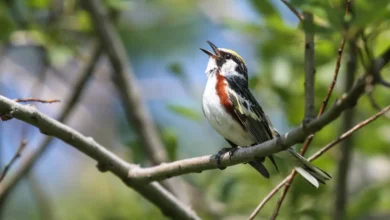
The Barred Warbler (Sylvia nisoria) is a striking and robust member of the typical warbler family, known for its distinctive barred plumage and relatively large size within its genus. This species inhabits a wide range across Eastern Europe and much of temperate Asia, showcasing fascinating migratory behavior as it journeys to wintering grounds in eastern Africa. Despite its broad distribution, the Barred Warbler faces challenges from habitat loss and agricultural intensification in parts of its range, leading to localized population declines. This article explores the biology, ecology, and conservation of this remarkable bird, providing detailed insight for birdwatchers, naturalists, and wildlife enthusiasts.
Scientific Classification
The Barred Warbler belongs to the genus Sylvia, which encompasses many species of typical warblers predominantly found across Europe, Asia, and North Africa. Its full scientific name is Sylvia nisoria, originally described in the early 19th century. The genus Sylvia is part of the family Sylviidae, a group of small passerine birds that are mainly insectivorous and known for their melodious songs. Molecular studies suggest that the Barred Warbler represents an ancient lineage within the genus, setting it apart from other closely related species. Researchers such as Helbig (2001) and Jønsson and Fjeldså (2006) have indicated that it does not have any particularly close relatives within the genus, emphasizing its unique evolutionary history.
Taxonomically, the Barred Warbler stands out due to its morphological and genetic distinctiveness. Unlike many other Sylvia warblers, which tend to be smaller and less heavily patterned, the Barred Warbler exhibits heavy barring on its underparts, a feature shared only with the Cyprus Warbler (Sylvia melanothorax), which differs markedly in coloration and distribution. This unique appearance and phylogenetic position make the Barred Warbler an important species for understanding the evolutionary pathways of typical warblers in the Palearctic region.


Geographic Range & Distribution
The Barred Warbler breeds across a wide expanse of Eastern Europe and temperate Asia, from countries such as Poland, Ukraine, and Belarus, extending eastwards through Russia and into Central Asia, reaching as far as western Siberia and northern Kazakhstan. Its breeding range primarily includes open woodlands, shrubby steppes, and scrubby areas, where it favors habitats with dense low vegetation for nesting and foraging.
During the non-breeding season, the Barred Warbler undertakes a long-distance migration to winter in eastern Africa, primarily in countries like Ethiopia, Kenya, and Tanzania. This migration is notable for covering thousands of kilometers, with birds moving southward in late summer and returning to breeding grounds in spring. While primarily an eastern species, the Barred Warbler is also observed as a regular passage migrant in western Europe, including Great Britain and Ireland, especially during migration seasons in spring and autumn. These western occurrences, however, are less common and typically involve individuals that have strayed from their main migratory routes.
Its habitat preferences during breeding are closely tied to areas with scattered bushes or low trees, often in open or semi-open landscapes. This affinity for shrubby environments means that changes in land use, such as the removal of hedgerows and increased agricultural monoculture, can have significant impacts on its local populations. Nevertheless, the species remains widespread overall, although some countries report declines linked to habitat degradation.
Physical Description
The Barred Warbler is one of the larger typical warblers, measuring between 15.5 and 17 centimeters in length, with a wingspan ranging from approximately 23 to 27 centimeters. It weighs roughly 25 to 35 grams, making it relatively robust compared to other members of the genus. This size contributes to its distinct silhouette and presence in the field.
Adult males display a predominantly greyish upper body with a subtle olive tint on the wings and back. Their underparts are white to pale grey, heavily barred with dark brown or black horizontal stripes, which extend from the throat down to the flanks and belly. This barring is a key identification feature, setting the species apart from other warblers. The female is generally paler and less boldly marked, with lighter barring that can sometimes appear more diffuse or restricted to the flanks and breast. Juvenile birds lack barring entirely and have a more uniform brownish-grey plumage, which can make them harder to identify, especially outside the breeding season.
The Barred Warbler’s bill is fairly stout and pointed, adapted for insectivory, and its legs and feet are typically dark brown or black. The eyes are dark with a faint pale eye-ring, adding to its somewhat stern expression. In flight, the species reveals broad, rounded wings and a relatively long tail, often flicked or flickering as it moves through its habitat.
Behavior & Diet
Barred Warblers are primarily insectivorous, feeding on a diverse range of invertebrates found in their shrubby and open habitats. Their diet consists mainly of beetles, caterpillars, flies, and spiders, which they glean from foliage and twigs with quick, precise movements. Like many warblers, they are agile foragers, moving actively among dense shrubs and low trees to locate prey.
In addition to insects, the Barred Warbler supplements its diet with soft fruits and berries, particularly during late summer and autumn when these resources become abundant. This seasonal shift to frugivory provides essential energy reserves for migration and overwintering periods. Known berry sources include elderberries, blackberries, and various wild fruits found in their breeding and wintering habitats.
The species is generally shy and skulking, often remaining hidden within dense vegetation, which can make observation challenging. However, during the breeding season, males sing frequently to establish territory and attract mates. The song is a distinctive chattering sequence, comprising a mix of clear, melodious notes interspersed with harsher clicks and rattles. It is reminiscent of a Blackbird’s song in tone but less fluid and more mechanical. The call notes are sharp and varied, often described as a harsh “chack” or “tack,” used as alarms or contact signals.
Breeding & Reproduction
The Barred Warbler breeds from late May through July, depending on the latitude and local climate conditions. It prefers open country with scattered bushes, hedgerows, and brambles, where it constructs its nest relatively low to the ground, typically within dense shrubs or thorny plants. This choice of nesting site offers protection from predators and concealment from aerial threats. According to Cornell Lab of Ornithology, this species is well documented.
The nest itself is a neat cup made of grasses, stems, and leaves, lined with finer materials such as hair or feathers. Females usually lay between three and seven eggs, with an average clutch size of five. The eggs are pale blue or greenish with fine reddish-brown speckles, blending well with the nest environment. According to eBird, this species is well documented.
Incubation lasts approximately 11 to 14 days and is primarily the responsibility of the female. During this period, the male defends the territory by singing and chasing rivals. Once hatched, the chicks are altricial, born naked and helpless, requiring intensive care. Both parents feed the young a steady diet of insects and small invertebrates to support rapid growth. Fledging occurs after around 12 to 15 days, after which the juveniles remain dependent on their parents for some time as they learn to forage independently.
The Barred Warbler typically raises one brood per breeding season, although in some favorable conditions, a second brood may be attempted. Successful breeding is closely linked to habitat quality and food availability, with poor years or degraded habitats resulting in lower reproductive success.
Conservation Status
The International Union for Conservation of Nature (IUCN) currently lists the Barred Warbler as a species of Least Concern, reflecting its wide distribution and relatively stable overall population. However, regional declines have been reported in parts of its range, especially in Central and Western Europe. Countries such as Germany have documented population decreases, primarily attributed to habitat loss caused by intensified agriculture, removal of hedgerows, and urban expansion.
Conservation efforts for the Barred Warbler focus on preserving and restoring suitable breeding habitats, including maintaining networks of shrubs, hedgerows, and open woodlands. Sustainable agricultural practices that retain structural diversity in the landscape benefit not only the Barred Warbler but also a host of other farmland and scrubland birds. Monitoring programs continue to track population trends, and migratory routes are of interest for international conservation cooperation, given the species’ long-distance movements to Africa.
Climate change may pose future challenges by altering habitat availability and food resources across both breeding and wintering areas. However, the species’ broad range and adaptability to different habitats provide some resilience against environmental fluctuations.
Interesting Facts
The Barred Warbler’s heavy barring on the underparts is unusual among typical warblers and is one of the easiest features to identify in the field. Its barred pattern is not only a camouflage mechanism but also a unique evolutionary trait that sets it apart from most other Sylvia warblers.
Another intriguing aspect of this species is its migratory route. Unlike many European warblers that winter in southern Europe, the Barred Warbler undertakes a more ambitious journey to eastern Africa. This migration involves crossing significant geographical barriers, including deserts and mountain ranges, highlighting the remarkable endurance and navigational skills of these small birds.
Barred Warblers are rarely seen singing outside the breeding season, making their vocal displays during summer particularly valuable for identification. Their song is often considered less melodious than that of the closely related Garden Warbler (Sylvia borin), but it has a charming mechanical quality that fascinates birdwatchers.
Juveniles’ lack of barring can cause confusion with other unbarred warblers, but their larger size and overall shape usually provide clues to experienced observers. Their shy nature means they often remain hidden in dense cover, making sightings a special treat for those fortunate enough to encounter them.
Finally, the Barred Warbler’s presence as a rare vagrant in western Europe, including the British Isles, attracts considerable interest from birdwatchers. These western visitors provide opportunities to study the species’ dispersal and migration patterns outside its core range.
In summary, the Barred Warbler is a captivating species with distinctive markings, impressive migratory behavior, and a vital role in the ecosystems it inhabits. Its conservation depends on maintaining diverse habitats across continents, ensuring that future generations can continue to enjoy this unique warbler’s presence in the wild.