The Gunnison Grouse is an endemic bird that is unique to the United States. It’s a lesser-known species, but it is known for its fascinating courtship displays and distinctive appearance. The Gunnison Grouse shares many similarities with the Greater Sage-Grouse, but is an entirely different species that deserves recognition and protection. This bird, with its decreasing population and limited geographical range, has become a symbol of the fragile ecologies of the American West. This detailed blog post will explore all you need to learn about the Gunnison Grouse, from its habitat and discovery to its behaviour, conservation status and the urgent threats it faces.
A Native American of the American West
Gunnison Grouses are found only in the southwestern region of Colorado and the southeast part of Utah. The majority of their population is concentrated in the Gunnison Basin in Colorado. The bird is one of the most restricted geographically in North America. The bird is a resident of sagebrush ecosystems and relies heavily on the vegetation for food, nesting sites, and cover. Gunnison Grouse is a key indicator for the health of sagebrush ecologies because of its limited range and habitat.
A New Discovery for Modern Times
The Gunnison Grouse is the first bird to be described as a new species in the continental United States in over a century. Ornithologists ignored the differences between the Gunnison Grouse and the more common Greater Sage Grouse for decades, thinking the latter was just a smaller variation. The molecular genetics studies showed that there was no gene flow between these two species. This genetic divergence, combined with observable physical and behavioural differences, confirmed the Gunnison Grouse as a unique species–scientifically named Centrocercus minimus to reflect its smaller size.


Physical Characteristics of the Gunnison Grouse
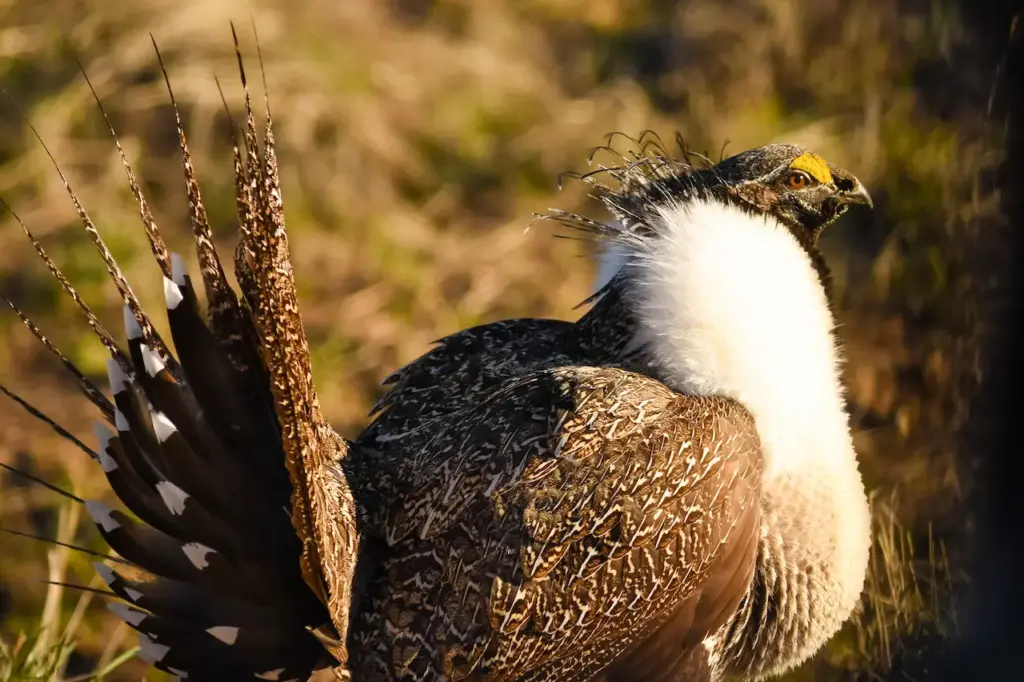
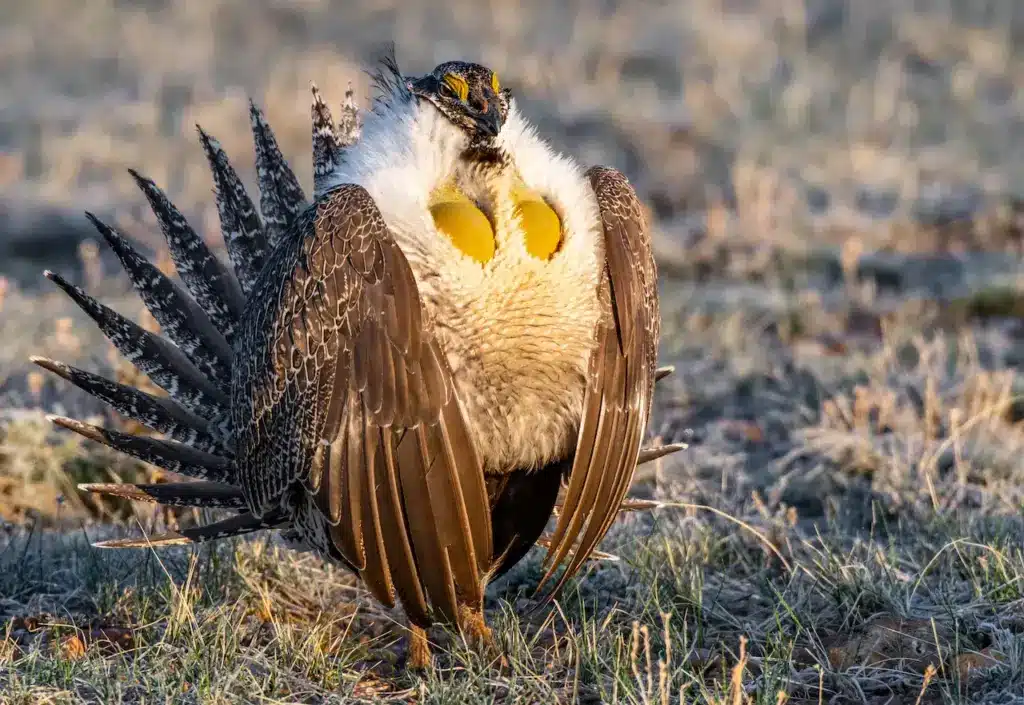
The Gunnison Grouse, although visually similar to the Greater Sage-Grouse, is about one-third smaller. This gives it a noticeably compact appearance. Its thick and bushy plumes, located behind the head, are more noticeable than its larger cousin. Ornithologists can distinguish the two species by comparing their plumes and vocalisations. The males have dark bodies and white chests. These characteristics are more visible when they perform their elaborate mating display. Gunnison Grouses are better adapted for high-elevation and colder areas of the Gunnison Basin because they have a smaller body size.
Fascinating courtship displays and breeding behaviour
The complex courtship ritual that takes place every spring during breeding season is one of the most fascinating aspects of the Gunnison Grouse. The males perform ” strutting displays ” in communal areas called leks to attract the females. The leks consist of flat, open spaces surrounded by dense sagebrush. Males inflate the yellow air sacs and puff out their chests during the display. This produces a series of whistling and popping sounds which echo throughout the lek. These displays are designed to attract females who will evaluate and select a mate depending on how well the males perform.
Lek Dynamics: A Competitive Spectacle
Leks play an important role in Gunnison Grouse social structures. They are essential not only for breeding, but also for the survival of Gunnison Grouse. It is interesting to note that only a few dominant males will be selected by the females for mating, resulting in reproductive failure being highly skewed. The displays can begin well before sunrise and continue until the early morning hours. They repeat for several weeks every spring. Leks can be repeated year after year and passed on through generations. This makes it vital to preserve these locations for the survival of the species. Lek sites can be negatively affected by disturbances such as noise pollution or land development.
Chick Rearing and Nesting
After mating, females depart the lek to find nesting sites in nearby sagebrush. The females build simple ground nests where they lay 6-8 eggs on average. After approximately four weeks, the eggs hatch. The chicks hatch precocial, meaning that they can walk and feed themselves soon after hatching. During the first weeks, she provides guidance and protection to her brood by leading them to areas with plenty of insects and vegetation. The early stages of the chick’s life are crucial, since habitat quality, predators, and weather conditions are all factors that influence survival rates. According to Cornell Lab of Ornithology, this species is well documented.
Habits of Diet and Foraging
The diet of the Gunnison Grouse varies according to season. In the winter months, they eat sagebrush leaves, which are high in nutrients and essential for energy. In the spring and summer, their diet includes forbs and flowers. This is especially true during chick-rearing when protein is essential for growth. Conservationists are increasingly concerned about the impact of habitat degradation and invasive plants on native forbs. Land management is essential to ensure that these birds can access the seasonal food sources they need. According to RSPB, this species is well documented.
Habitat Loss and Population Decline
The Gunnison Grouse’s most pressing problem today is habitat fragmentation. In the West, as human populations grow, sagebrush ecosystems in the U.S. are being converted to agricultural land, housing, and infrastructure development. The landscape is often fragmented by roads, fences and energy projects, which isolate grouse and reduce lek accessibility. Invasive plant species such as cheatgrass can further reduce habitat quality because they increase fire risks and compete with native vegetation. Gunnison Grouse populations have decreased dramatically in the last several decades. Current estimates place the global population of Gunnison Grouse at less than 5,000 individuals.
Conservation Status – A Controversial Discussion
The Gunnison Grouse is a subject of conservation debates due to its shrinking population and habitat. The U.S. Environmental groups have petitioned repeatedly the U.S. Fish and Wildlife Service, USFWS, has petitioned the Endangered Species Act to include the bird. The agency acknowledges the species’ fragile situation, but its decisions on protection status are inconsistent and controversial. The species was listed as endangered in 2014. This move is seen as a compromise by some, rather than an absolute commitment to their protection. Critics say that more urgent and stronger action is required to stop the Gunnison Grouse slipping towards extinction.
Habitat restoration and conservation efforts
Many federal, state and non-governmental groups are working together to restore and protect Gunnison Gruse habitat. Conservation efforts include sagebrush planting projects, fencing modifications to reduce collisions, and restricting development near leks. In some places, conservation agreements encourage landowners in certain areas to maintain landscapes that are grouse-friendly. Collaborations between ranchers and conservationists, as well as government agencies, are a promising way to balance land use and habitat preservation. Education campaigns can also be vital to raising awareness of the birds’ plight and encouraging local stewardship.
Why the Gunnison Grouse is Important
The Gunnison Grouse is an icon of the larger environmental challenges that the American West faces. This bird is a symbol of a complex, interconnected ecosystem that supports hundreds of species from mule deer to pronghorns and countless pollinators. The Gunnison Grouse also highlights the importance of modern conservatism, which must adapt to changing landscapes and social needs. By saving the Gunnison Grouse, we are also preserving a piece of America’s rich natural heritage.
Final thoughts: A species at the Crossroads
Gunnison Grouse’s story is both fascinating and cautionary. Once overlooked, this newly recognised bird is now at the forefront of important discussions about biodiversity, land usage, and conservation. Despite the efforts made to protect this bird species, there are still many challenges. This is especially true as climate change, human expansion, and other factors continue to threaten its biome. In order to ensure the Gunnison Grouse’s survival, it is important that proactive conservation strategies based on science are implemented. Public support must also be maintained. We can save not only the Gunnison Grouse, but also the ecosystems of the American West by taking action today.