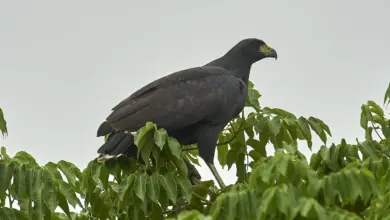
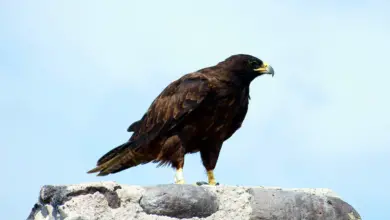
The Grey-headed Kite (Leptodon cayanensis) is a striking bird of prey known for its distinctive coloration and agile hunting skills. This raptor inhabits a variety of forested environments across Central and South America, where it plays an important role in controlling populations of reptiles and large insects. Noted for its graceful flight and unique vocalizations, the Grey-headed Kite captures the attention of birdwatchers and nature enthusiasts alike. Although not as widely known as some of its raptor relatives, this species exhibits fascinating behaviors and adaptations that make it a compelling subject for study and observation.
Scientific Classification
The Grey-headed Kite belongs to the family Accipitridae, which includes hawks, eagles, and other diurnal birds of prey. Its scientific name is Leptodon cayanensis, placing it in the genus Leptodon. This genus is notable for containing only two species: the Grey-headed Kite and the extremely rare White-collared Kite (Leptodon forbesi), which is restricted to a small region of northeastern Brazil and is considered critically endangered.
The genus name Leptodon derives from Greek, meaning “slender tooth,” a reference to the sharp beak adapted for tearing flesh. The species name cayanensis reflects its association with the Guiana region of northeastern South America. Within the larger taxonomic framework, the Grey-headed Kite is part of the order Accipitriformes, which encompasses most hawks and eagles, distinguishing them from falcons and other raptors of the order Falconiformes.




Geographic Range & Distribution
The Grey-headed Kite has a broad but patchy distribution throughout much of Central and South America. It breeds and resides from eastern Mexico and the Caribbean island of Trinidad, extending southward through the tropical forests of Central America. Its range continues through northern South America, including countries like Colombia, Venezuela, Ecuador, Peru, Bolivia, and parts of northern Argentina and Brazil.
This species is primarily associated with humid lowland forests, swampy woodlands, and riverine habitats. It favors open woodland or forest edges where it can perch high to survey the ground for prey. The Grey-headed Kite is rarely found in dense, closed-canopy rainforest, instead preferring areas where light penetrates and prey species are abundant. Elevationally, it is most commonly observed from sea level up to around 1,200 meters, although it can occasionally be found higher in montane regions.
Despite its wide distribution, the Grey-headed Kite is generally considered an uncommon to locally common species, with population density varying according to habitat quality and prey availability. Its presence in protected areas and national parks across its range helps to safeguard portions of its habitat from deforestation and degradation.
Physical Description
The Grey-headed Kite is a medium-sized raptor measuring between 46 and 53 centimeters in length, with a wingspan ranging from approximately 112 to 130 centimeters. Adults typically weigh between 410 and 605 grams, making them relatively lightweight and agile hunters.
One of the most distinctive features of the Grey-headed Kite is its pale grey head, which contrasts strikingly with its black upperparts and white underparts. The tail is black with two or three narrow white bars, providing a subtle but elegant pattern in flight. Its bill is a notable pale blue with a darker tip, adapted for grasping and tearing prey, while the legs and feet are grey, equipped with sharp talons for effective capture.
Immature Grey-headed Kites exhibit fascinating plumage variation, presenting two distinct color morphs. The light phase resembles adults but with a white head and neck, accented by a black crown and a distinctive black eyestripe. In this morph, the bill is black and the legs are bright yellow. The dark phase, less commonly seen, features an overall blackish head, neck, and upperparts, with buff underparts streaked with dark markings. This polymorphism is thought to aid in camouflage and may have ecological or behavioral significance.
In flight, the Grey-headed Kite demonstrates a characteristic pattern of deliberate flapping followed by gliding, allowing it to conserve energy while maintaining surveillance for prey. Its wings are broad and rounded, facilitating agile maneuvering through forested environments.
Behavior & Diet
The Grey-headed Kite is a skilled predator, primarily feeding on reptiles, which make up the bulk of its diet. It specializes in hunting lizards and snakes, often swooping down from a high perch to catch prey on the ground or in low vegetation. This bird exhibits a sit-and-wait hunting strategy, remaining motionless for long periods before launching a swift and precise attack.
In addition to reptiles, the Grey-headed Kite supplements its diet with amphibians such as frogs and a variety of large insects, including grasshoppers and beetles. This opportunistic feeding behavior allows it to adapt to seasonal fluctuations in prey availability. Occasionally, it may also take small mammals or birds, although these are less common in its diet.
The species is generally solitary or found in pairs, particularly during the breeding season, and is known for its silent and stealthy hunting approach. When in flight, it glides smoothly and deliberately, often circling high above the canopy to spot potential prey. The call of the Grey-headed Kite is a distinctive mewling “keow,” which can carry over long distances and is typically given during territorial displays or in communication between mates.
Breeding & Reproduction
Grey-headed Kites breed during the rainy season in much of their range, timing reproduction to coincide with increased prey abundance. The nest is constructed high in a tree, often in emergent canopy branches or near the forest edge, offering a strategic vantage point and protection from ground predators. According to Cornell Lab of Ornithology, this species is well documented.
The nest itself is a platform of sticks carefully lined with grasses and other soft materials to cushion the eggs and chicks. The female typically lays one or two eggs per clutch. These eggs are white with a purplish tint concentrated at one end, adorned with brown spotting that provides subtle camouflage against the nest lining. According to RSPB, this species is well documented.
Incubation is primarily the responsibility of the female and lasts approximately 33 to 35 days. During this period, the male supplies food and guards the territory. Upon hatching, the chick is altricial—born naked and helpless—and requires attentive care and feeding from both parents.
Fledging occurs around 40 to 50 days after hatching, but young kites may remain dependent on their parents for several weeks as they learn to hunt and navigate their environment. Breeding success is closely tied to habitat quality, with undisturbed forest areas supporting higher reproductive rates.
Conservation Status
The Grey-headed Kite is currently classified as a species of Least Concern by the International Union for Conservation of Nature (IUCN). Despite habitat loss across parts of its range due to deforestation and land conversion for agriculture, this species maintains relatively stable populations thanks to its broad distribution and adaptability.
Nonetheless, ongoing threats remain. Large-scale deforestation, especially in the Amazon Basin and Central America, poses a risk by reducing suitable nesting and foraging habitats. In some areas, the fragmentation of forest patches limits the bird’s ability to find adequate prey and secure breeding sites. Additionally, persecution and accidental poisoning can occasionally impact local populations.
Conservation efforts that protect large tracts of tropical forest habitat indirectly benefit the Grey-headed Kite, as they do many other forest-dependent species. Protected areas, national parks, and reserves throughout Central and South America serve as important refuges. Continued monitoring and research are necessary to ensure that populations remain healthy and that emerging threats are addressed promptly.
Interesting Facts
The Grey-headed Kite’s two color morphs in juveniles are a fascinating example of polymorphism, which is relatively rare among raptors. This variation may help young birds blend into different forest environments, providing camouflage from predators or aiding in hunting stealth.
Unlike many raptors that rely heavily on soaring flight, the Grey-headed Kite’s deliberate flap-flap-glide pattern allows it to navigate dense woodland with remarkable agility. This flight style is energy-efficient and well-suited to its preferred habitats where thermal currents are weak or inconsistent.
Although it primarily feeds on reptiles and amphibians, the Grey-headed Kite’s hunting technique has been observed to include a surprising level of patience and precision. It will often remain perfectly still for extended periods, watching intently before a sudden, swift strike that rarely misses its target.
In some areas, the Grey-headed Kite serves as a bioindicator species, reflecting the health of lowland forest ecosystems. Its presence suggests a relatively intact habitat with sufficient prey populations, making it a valuable species for ecological monitoring.
Finally, the Grey-headed Kite’s call—a plaintive, mewing “keow”—is distinctive and often one of the first clues for birdwatchers trying to locate this otherwise elusive raptor in dense forest environments.
In conclusion, the Grey-headed Kite is a remarkable bird of prey with a unique ecological niche across the forests of the Americas. Its elegant appearance, specialized diet, and intriguing behaviors make it a fascinating species for anyone interested in tropical wildlife. As habitat conservation continues to be a priority, the Grey-headed Kite stands as both a symbol and beneficiary of healthy forest ecosystems, reminding us of the intricate connections within nature.