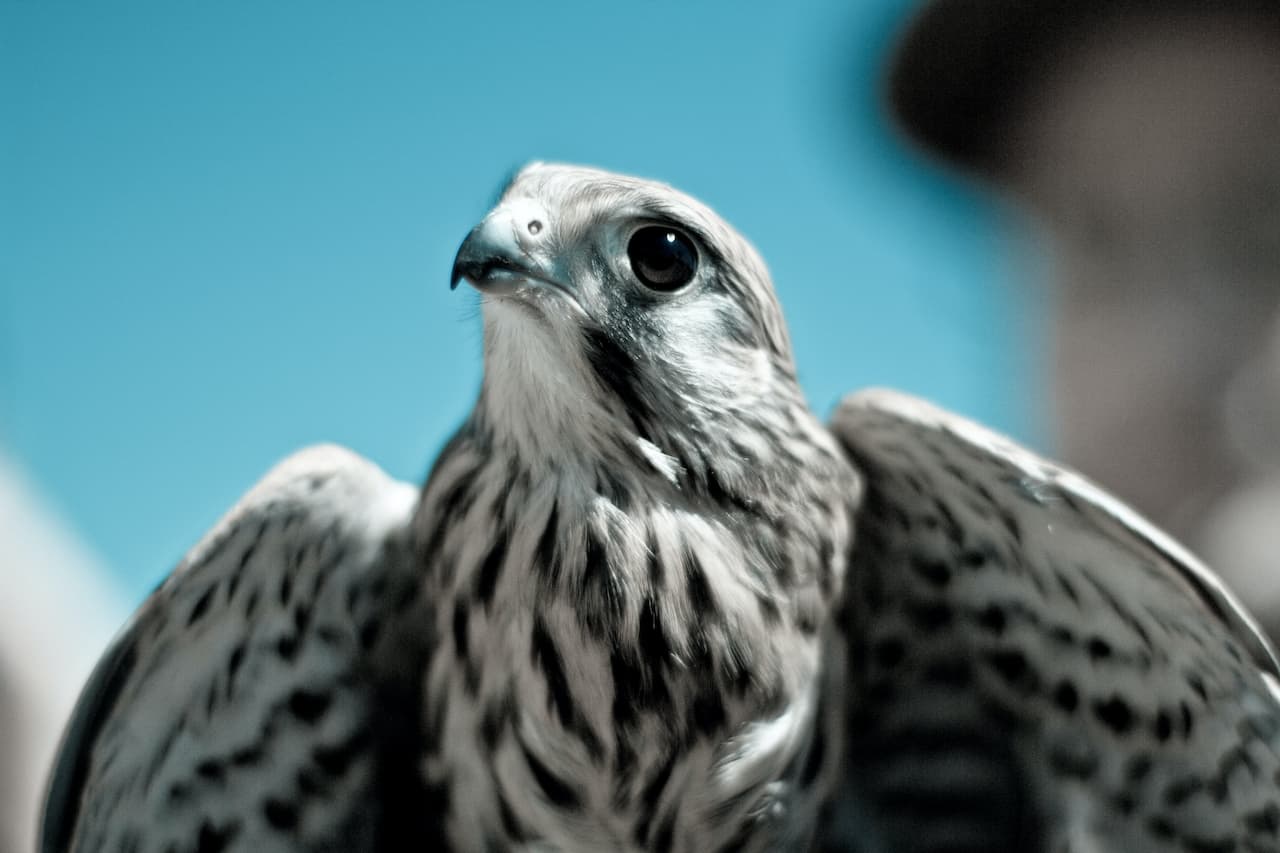
The Besra (Accipiter virgatus) is a small but formidable bird of prey belonging to the family Accipitridae, which encompasses a broad group of diurnal raptors including eagles, buzzards, and harriers. Known for its agility and stealth, the Besra is a master hunter in dense forest habitats across South and Southeast Asia. Its compact size, rapid flight, and keen eyesight make it a highly efficient predator of small birds, reptiles, and insects. Despite its relative obscurity compared to larger raptors, the Besra plays a vital ecological role in the control of prey populations within its forest environment.
Scientific Classification
The Besra is classified within the genus Accipiter, a group commonly known as the true hawks or goshawks. Its full scientific name is Accipiter virgatus, first described by the British naturalist Thomas Horsfield in 1821. The family Accipitridae, to which it belongs, is diverse and widespread, including many species adapted to different ecological niches. This family is characterized by hooked beaks, strong talons, and exceptional eyesight—features that support their predatory lifestyle.
The genus Accipiter is notable for species with short, broad wings and long tails, adaptations that facilitate maneuvering through forested environments. The Besra shares this morphology with its close relatives such as the Eurasian Sparrowhawk (Accipiter nisus) and the Shikra (Accipiter badius). Within the genus, the Besra is sometimes confused with the Shikra due to similar size and plumage patterns, but it can be distinguished by its darker upperparts and the presence of a distinctive dark vertical throat stripe in all plumages.


Geographic Range & Distribution
The Besra is widely distributed across South and Southeast Asia, inhabiting a vast range extending from the Indian subcontinent through Myanmar, Thailand, and southern China to the islands of Indonesia and the Philippines. It is a resident breeder in these regions, favoring dense tropical and subtropical forests as its primary habitat. Countries where the Besra is commonly found include India, Nepal, Bangladesh, Bhutan, Sri Lanka, Malaysia, and parts of Indonesia such as Sumatra and Borneo.
In addition to dense forests, the Besra is known to venture into more open habitats during the non-breeding season. During winter months, it may be observed in woodland edges, secondary forests, savannahs, and even cultivated areas where tree cover is sufficient to permit its hunting style. Despite this adaptability, the Besra is primarily a forest specialist, relying on thick vegetation for cover and hunting opportunities.
Its altitudinal range varies widely depending on the region, from near sea level up to elevations of about 2,000 meters in mountainous areas. This flexibility allows the Besra to exploit a variety of forest types, from lowland rainforests to montane oak and pine forests.
Physical Description
The Besra is a medium-sized raptor, measuring between 29 and 36 centimeters in length with a wingspan ranging from approximately 50 to 70 centimeters. Males typically weigh between 110 to 160 grams, while females are larger and heavier, commonly reaching 180 to 250 grams—exhibiting the sexual dimorphism typical of Accipiter species. The female’s larger size aids in incubating eggs and defending the nest.
Its build is compact with short, broad wings and a long tail, an evolutionary adaptation that allows rapid, agile flight through dense foliage. The flight pattern is distinctive: a repeated “flap-flap-glide” rhythm, which helps conserve energy while navigating the complex forest environment. The underwings are barred, a feature that helps differentiate the Besra from similar raptors like the Shikra, which has less prominent barring.
The adult male Besra sports dark blue-grey upperparts and a white underside marked with reddish barring. This coloration provides excellent camouflage in dappled forest light. The female is browner above with similar barring below, allowing her to blend seamlessly into the tree canopy and branches. Juvenile Besras display dark brown upperparts and a white underside with brown barring, as well as a barred tail, making them somewhat more conspicuous but still well camouflaged.
Behavior & Diet
The Besra is a highly skilled hunter that relies on stealth, surprise, and rapid bursts of flight to capture prey. It typically hunts from a concealed perch, scanning the surroundings before launching a swift attack. Its flight through dense undergrowth is swift and maneuverable, enabling it to pursue birds and reptiles into thick vegetation. The species is known for a hunting style similar to that of the Eurasian Sparrowhawk and North American Sharp-shinned Hawk, both members of the same genus.
Its diet is diverse and opportunistic, consisting mainly of small birds, lizards, insects, and occasionally small mammals. Birds such as bulbuls, warblers, and finches are common prey items, as are reptiles like skinks and agamid lizards. Large dragonflies and other sizeable insects also form part of the diet, especially during seasons when bird prey is less abundant. The Besra’s sharp talons and strong beak allow it to subdue prey efficiently, sometimes killing with a swift bite to the neck.
During winter, when prey availability changes, the Besra may broaden its diet and utilize more open habitats to find food. Its ability to adapt hunting techniques and prey choice helps it survive in varied environments throughout its range. According to Cornell Lab of Ornithology, this species is well documented.
Breeding & Reproduction
The Besra breeds annually, typically during the dry season when food availability is more predictable. Nesting sites are almost always located in the dense canopy of mature trees, often well concealed to protect against predators and human disturbance. The nest itself is a loose platform of sticks, built anew each year by the pair. These nests can be found at heights ranging from 5 to 20 meters above ground. According to Audubon Society, this species is well documented.
The female lays between two and five eggs per clutch, with three or four being the most common. The eggs are pale bluish or greenish white, sometimes with reddish or brown speckles. Incubation lasts around 28 to 30 days and is primarily the responsibility of the female, while the male provides food.
After hatching, the chicks are altricial, meaning they are born relatively undeveloped and require significant parental care. Both parents participate in feeding the nestlings, which fledge approximately 30 to 35 days after hatching. Juvenile Besras remain dependent on their parents for several weeks before dispersing to establish their own territories.
Conservation Status
The International Union for Conservation of Nature (IUCN) currently lists the Besra as a species of Least Concern. This status reflects its wide distribution and presumed large population size. However, the species faces ongoing threats from habitat loss and fragmentation, particularly deforestation for agriculture, urban expansion, and logging across Southeast Asia.
Because the Besra depends heavily on dense forest habitats, degradation of primary and secondary forests could impact local populations. In some regions, the species is considered uncommon or rare due to habitat pressure. Conservation efforts aimed at preserving forest ecosystems indirectly benefit the Besra by maintaining its hunting and breeding grounds.
Monitoring population trends remains important, as continued habitat destruction could lead to declines. Fortunately, the Besra’s adaptability to secondary forests and partially disturbed habitats provides some resilience against environmental changes, but this cannot replace the ecological value of intact forest systems.
Interesting Facts
The Besra is sometimes called the “forest hawk” due to its preference for thick woodland environments. Unlike many larger raptors that soar at high altitudes, the Besra’s hunting style relies on low, fast flights weaving through trees and undergrowth. This makes spotting the bird a challenge for birdwatchers, though its characteristic flight pattern and barred underwings are useful identification markers.
Another fascinating aspect of the Besra is its vocalizations. It produces a sharp, repeated “kik-kik-kik” call, especially during the breeding season or when alarmed. This call helps pairs maintain contact in dense vegetation and signifies territory defense.
In some parts of its range, the Besra is known to exhibit occasional migratory or dispersal behavior, particularly juveniles that leave natal territories to find new habitats. However, most populations are resident year-round. Its ability to exploit a variety of prey and habitats within its range speaks to its evolutionary success as a forest raptor.
In summary, the Besra (Accipiter virgatus) is a remarkable small hawk well adapted to life in dense forests across South and Southeast Asia. Its agile flight, varied diet, and secretive behavior make it a fascinating subject for bird enthusiasts and researchers alike. While it currently enjoys a stable conservation status, protecting its forest habitat remains crucial to ensuring that this sleek hunter continues to thrive in the wild.