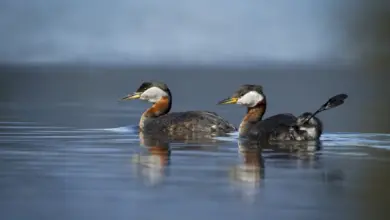
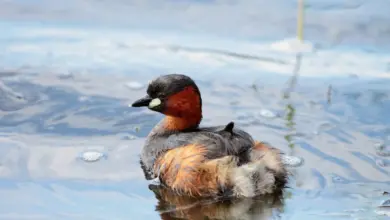
This species occurs mainly in open waterways. Most birds are seen on low-altitude lakes and sluggish rivers (often surrounded by forests), as well as estuarine marshes. While breeding, it frequents the heavily vegetated inlets off of large lakes. Outside of the breeding season, most birds will move to estuaries and bays, usually heavy with kelp (occasionally, they are even seen on the open sea). Non-breeding birds may live along the coasts all year.
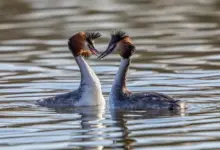
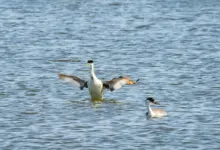
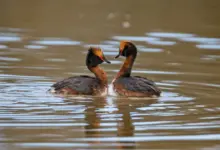
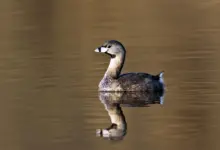
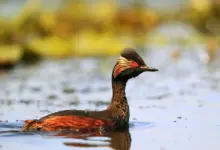
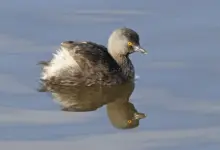
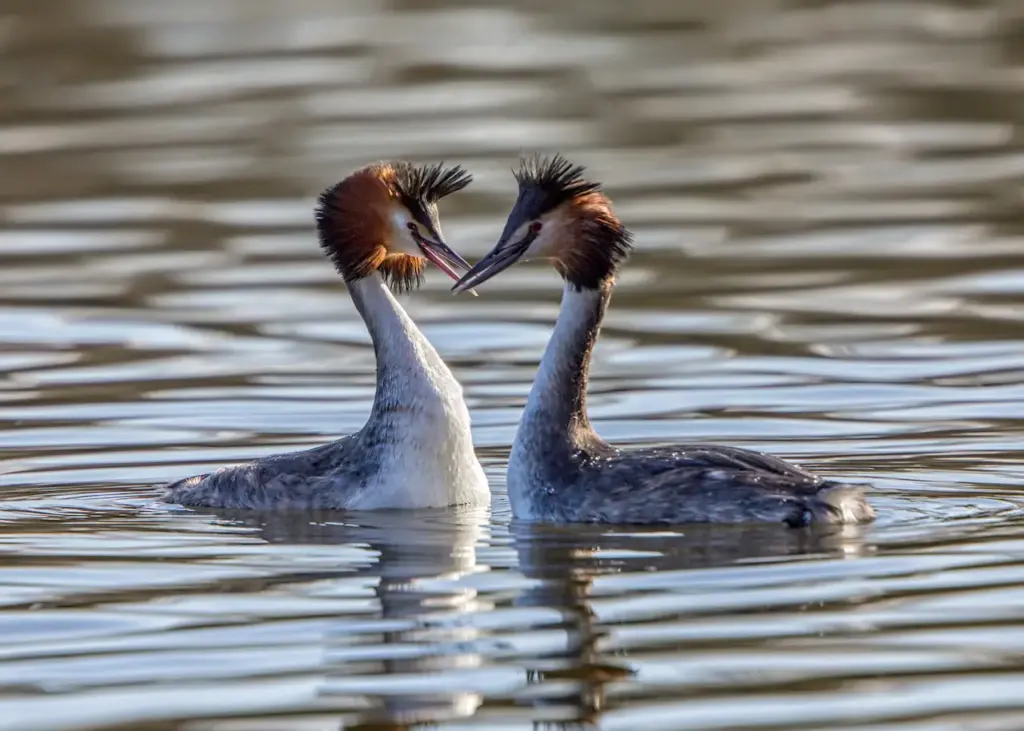
This is a very large grebe, with proportions more like a goose or a cormorant than a typical grebe. They range in length from 67-80 cm (26-32 inches) and usually weigh about 1600 grams (3.5 lb), but can scale to at least 2 kg (4.4 lb). They are buffy-rufous on the neck and chest, blackish on the back, and have a whitish belly. The head is sooty grey with a reddish brown eye. Due to its size and unique colouration, the Great Grebes is unlikely to be confused with any other bird, including other grebes.
The Great Grebes lives on a diet comprised mostly of fish, sometimes over 11 cm (4.3 inches) long, but usually smaller. Prey competition can occasionally occur with the Neotropic Cormorant over fish, but that species (despite a smaller body size) usually takes larger fish. Also, insects, crustaceans, and mollusks are taken. The diet can switch to almost half crabs during the wintertime along the coasts, and these birds can also take the young of other waterbirds, especially coots.
After living in groups numbering up to the hundreds, these birds move inland to breed. Most populations lay their eggs from October to January, moving further south. In the isolated Peruvian population, nesting occurs in September and October, with a possible second clutch in January or February. They are moderately social when breeding, occasionally forming colonies. 3 to 5 eggs (sometimes 6) are laid. Two broods, or possibly more, can be raised at the same time.
Identification:
In Australia, the Great Grebe can be easily identified in Australia’s wetlands and lakes. The striking appearance of this graceful waterbird, particularly during breeding season, is what makes it so distinctive. It displays a dramatic double black crest with a chestnut-orange ruff on its neck. It is easy to identify even outside of the breeding season because it has a dark cap and clean white cheeks. The sleek profile, slender beak, and slender neck give the bird a streamlined appearance, making it perfect for diving or gliding gracefully over water. Bird watchers will see them often in pairs or individually, moving slowly and low in the water. They often dive out of sight, only to appear metres away.
The size of a Great Grebe is one way to tell it apart from other species. It’s much larger than the other grebes. The body size ranges between 46 and 51 cm, with a wingspan ranging from 85 to 90 centimetres. They are reluctant flyers and are rarely seen in flight. When they do, they have white underwings with a rapid wingbeat. It’s a rare treat to see one in Australia, especially when it is in its breeding plumage.
According to Cornell Lab of Ornithology, this species is well documented.
Breeding
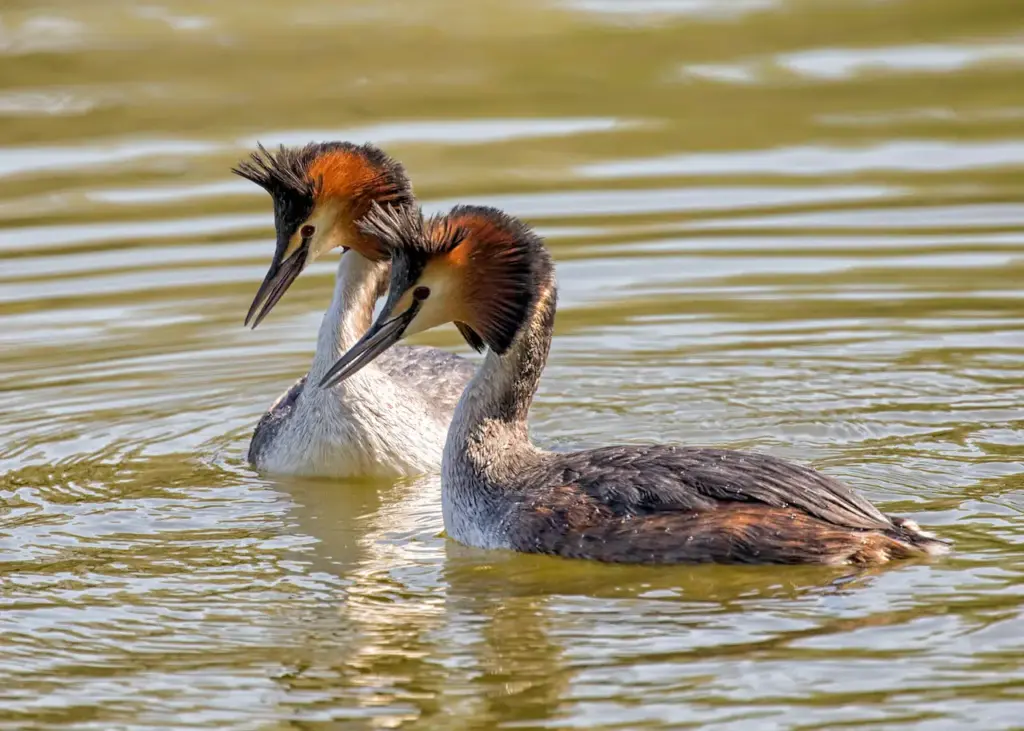
Not only is the Great Grebe admired for its appearance, but also for its elaborate courtship rituals. The spectacular mating displays of these birds have been described as a graceful water dance. The male and female will raise their chests and shake their heads, presenting each other with water plants in an act that is as beautiful as it is spectacular. This is one of the most amazing bird behaviours and a highlight during breeding season for birdwatchers. According to RSPB, this species is well documented.
Grebes construct floating nests that are anchored to reeds and water plants at the edge of slow-moving or still freshwater. The nest is constructed by both the male and female using aquatic vegetation. A typical clutch consists of four eggs that are chalky white, measuring approximately 54 mm x 37 mm x 42 grams. Both parents share the incubation duty, starting with the first laid egg. The eggs hatch at different rates over the course of 27-29 days. This strategy ensures that at least some chicks will survive under varying conditions. The young are very precocial. They hatch with feathers that have down, and they can swim almost instantly.
Feeding
Great Grebes make excellent underwater hunters. They use their sharp beaks to hunt down small fish that are the main part of their diet. They feed by making rapid, streamlined dives, where they disappear under the surface for several seconds and emerge with a wriggling, small fish in their bill. They also feed on crustaceans, amphibians such as frogs, newts and freshwater shrimp. The diet of these fish can change depending on the locality and season, demonstrating their adaptability to different freshwater habitats in Australia.
They are excellent indicators of the health of wetlands because they rely on healthy, clean waterways to feed. You can learn a lot by observing grebes at your local lakes and wetlands. When you see a Great Grebe feeding or hunting its young in the wild, it’s worth taking a minute to admire how efficient and specialised this bird can be.
These birds are widespread throughout most of their range. They have been lucky in that much of their native habitat has not been cleared, especially in the southern portions of their range.
Copyright: Wikipedia. This article is licensed under the GNU Free Documentation License. It uses material from Wikipedia.org … Additional information and photos added by Avianweb.
Please Note: The articles or images on this page are the sole property of the authors or photographers. Please contact them directly with respect to any copyright or licensing questions. Thank you.