The Great Blue Heron (Ardea herodias) stands out as the most common and iconic wading bird across North and Central America. This impressive species, known for its striking size and graceful movements, inhabits regions stretching from southern Alaska through Canada, the United States, Mexico, the Caribbean, and even the Galapagos Islands. Despite occasionally being mistaken for cranes, Great Blue Herons belong to the heron family and display unique behaviours and physical traits that set them apart from their relatives.
Physical Description and Identifying Features
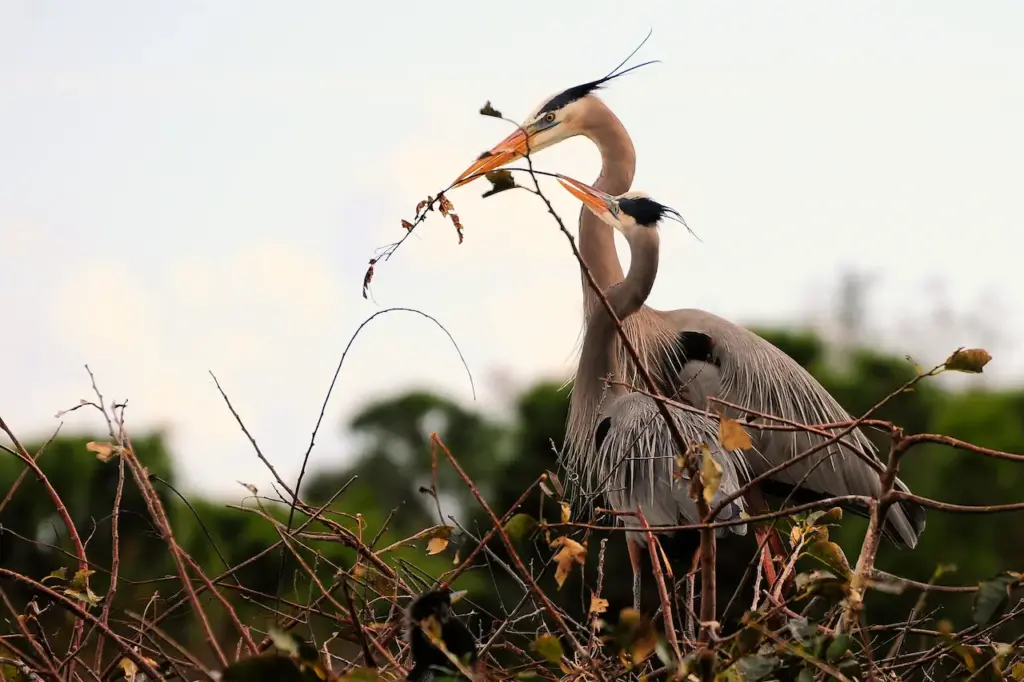
The Great Blue Heron, which is also known as the Great Blue Heron, is the largest species of heron in North America. Only the Goliath Heron or the White-bellied Heron is larger. The average height of these birds is four feet. They have a wingspan of around seven feet and weigh 5.5 pounds. The long neck and legs of these birds allow them to easily wade through shallow water, searching for prey. The main plumage colour is a blue-grey with chestnut on the flanks and thighs. During breeding season, the head plumes are black. Their necks form an “S” with their legs trailing, making it easy to identify from a distance.
The Great Blue Heron’s Range and Habitat
Great Blue Herons are found in open water habitats such as marshes and lakes. They also thrive along coastal shores and near saltwater and freshwater habitats. They can adapt to many different environments. From the lush estuaries of the Pacific Northwest to the tropical mangroves in the Caribbean, they can thrive. They avoid high-altitude mountains and deserts. Some populations migrate on a seasonal basis; those east of the Rockies travel to Central America and northern South America in colder months. Western and southern populations, however, tend to live there all year.






Subspecies and Colour Morphs explained
While the Great Blue Herons are all similar in appearance, there are several colour variations and subspecies, especially in parts of southern Florida and the Caribbean. The Great White Heron is a unique white variant found only in southern regions. Scientists continue to debate whether this white bird is a distinct species or subspecies of Great Blue Heron. A hybrid form called Wurdemann’s Heron is also known to display mixed plumage and can be considered a cross between the typical blue and white morphs.
The Feeding Habits and Behaviour of Great Blue Herons
Great Blue Herons hunt alone and are most active in the early morning or at dusk. This is when prey is plentiful. They are patient and stealthy, standing still or moving slowly in shallow water. They strike quickly and accurately with their sharp, long bills once they have detected a fish or frog. They eat a variety of foods, including fish, crustaceans and amphibians. They can adapt to different habitats and thrive.

Breeding and Nesting Patterns
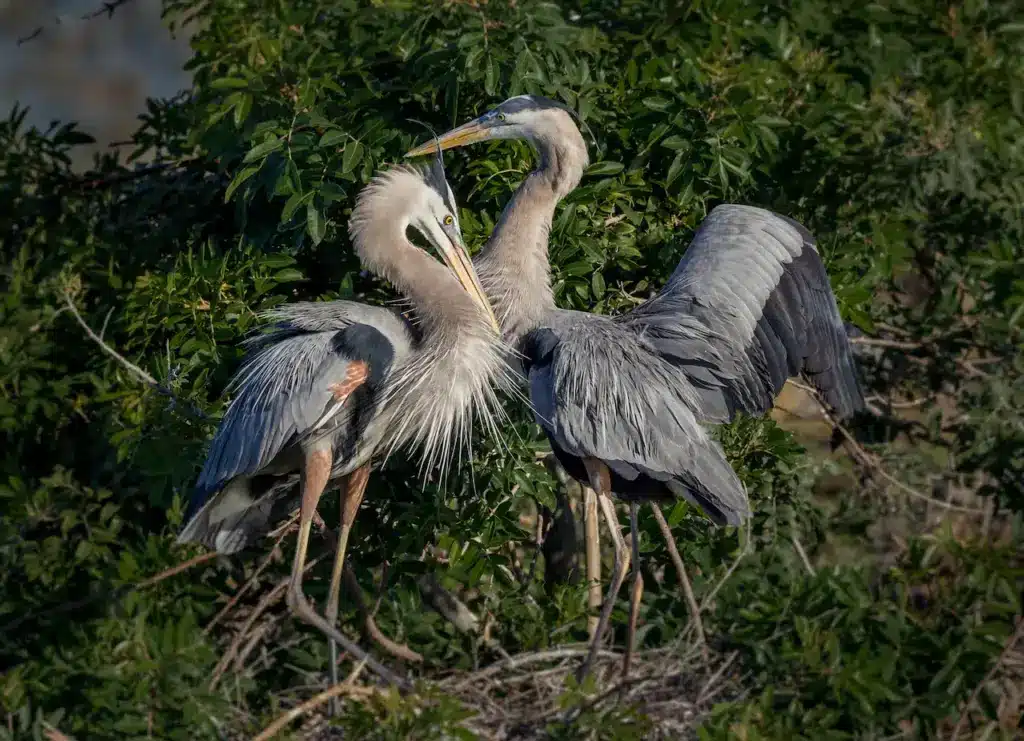
The breeding season of the Great Blue Herons varies depending on where they live. In general, it occurs from March to May in northern regions and from November to April in southern areas. During the breeding season, Great Blue Herons tend to be monogamous, raising one brood a year. Nesting colonies are called heronries, rookeries or heronries. They often share nesting sites with other species of heron. Nests consist of large platforms made from sticks and lined with soft materials. They are located high up in trees or shrubs, near water. The females lay between 2 and 7 pale blue eggs, which are incubated by the mother for about one month. Both parents feed their hatchlings. They reach sexual maturity at around two years of age.
Vocalizations & Communication
Great Blue Herons are generally quiet birds. However, they can produce different sounds in certain situations. When alarmed or defending their territory, they emit a harsh croaking call. They also make softer “ars” when greeting family members. Bill snapping and complex body movements are used to attract mates during courtship. They use vocalisations to communicate with each other and breed, even though they are usually silent when foraging.
Wild Animals: Lifespan, Threats and Survival
The average life expectancy of a Great Blue Heron is 15 years, but some can reach up to 24 years. Nearly 70% of juveniles do not survive their first year. Predation by eagles and owls, as well as raccoons and other mammal species, as well as human-related hazards such as habitat disruption, hunting and vehicle collisions, are all threats. To ensure healthy populations, conservation efforts are focused on protecting wetland areas and minimising human impacts near nesting sites.
Similar Species: How to Tell Them Apart
Great Blue Herons can be mistaken for similar birds such as the Sandhill Cranes, Great Egrets, and European Grey Herons. Sandhill Cranes have a shorter, heavier body and a red crown. Great Egrets have smaller legs and lack the chestnut feathers on their thighs. The European Grey Heron is a grey-colored bird that lives primarily in Eurasia. It lacks the colourful streaking of the Great Blue Heron. Bird watchers can identify these magnificent wading birds by being aware of the differences. According to eBird, this species is well documented.
Great Blue Herons: Ecological Importance
Great Blue Herons are apex predators in wetland ecologies and play an important role in controlling amphibian and fish populations. They are a sign of healthy aquatic ecosystems, and their nesting and feeding activities contribute to the nutrient cycle. The protection of Great Blue Herons is essential to the health and diversity of wetland ecosystems. These habitats are vital for many other species, including aquatic life and migratory bird species. According to RSPB, this species is well documented.
Great Blue Herons: How to Find and Enjoy Their Company
The beauty of the Great Blue Herons and their impressive size attract many bird watchers and nature lovers. Lakeshores, estuaries, marshes and lakes are ideal viewing areas where these birds nest or hunt. The best time to view their graceful flight patterns and hunting behaviour is in the early mornings or late afternoons. It is important to maintain a respectful distance from these birds, particularly during breeding season.
Conservation Status and Future Outlook
At the moment, Great Blue Herons do not appear to be endangered. They have stable populations in most of their range. Nevertheless, threats such as wetland destruction and pollution, or climate change, could have an impact on their habitats. Conservation efforts aimed at protecting wetland ecosystems and increasing public awareness are vital to the long-term existence of this iconic species.
Great Blue Heron Fun Facts
-
Great Blue Herons are able to fly up to 30 miles per hour despite their size.
-
They are known for their deliberate, slow hunting style.
-
The fish have excellent eyesight, which allows them to see prey below the surface of the water.
-
Great Blue Herons have been known to use tools, such as baiting fish to attract them.
Alternate (Global) Names
Catalan: Bernat americà … Chinese: ??? … Czech: Volavka velká … Danish: Stor Blåhejre … Dutch: Amerikaanse Blauwe Reiger, Grote Blauwe Reiger … Finnish: Amerikanharmaahaikara … French: Grand Héron, Grand Héron bleu, Héron bleu, Héron de Wurdemann, Gwo Krabye ble … German: Kanadareiher, Nordamerika-Reiher … Icelandic: Bláhegri … Italian: Airone azzurro, Airone azzurro maggiore … Japanese: Ooaosagi … Lithuanian: Kanadinis garnys … Norwegian: Herodiashegre … Polish: Czapla modra … Portuguese: Garça-azul-grande, Garça-real-americana … Russian: ??????? ?????, ????? ??????? ??????? … Slovak: Volavka statná … Slovenian: Ameriška siva ?aplja … Spanish: Garcilote, Garza Azul, Garza Azulada, Garza Ceniza, Garza Morena, Garzón, Garzón Azul, Garzón azulado, Garzón Cenizo, Garzón moreno, Rabihorcado Grande … Swedish: Amerikansk gråhäger … Turkish: Amerika Gri Bal?kç?l?
Conclusion: The Great Blue Heron in Nature
The Great Blue Heron represents wetland ecologies in the Americas. Bird lovers and naturalists are captivated by its stunning appearance, patient hunter techniques and fascinating social behaviour. The protection of these birds and habitats will ensure the vibrancy of aquatic ecosystems and the legacy of the most elegant wading bird in nature.