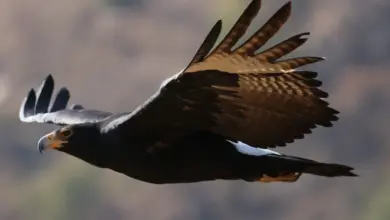
The Steppe Eagle (Aquila nipalensis) is a striking and powerful bird of prey known for its expansive range across the vast Eurasian steppes and its impressive migratory journeys. This species belongs to the family Accipitridae, which includes many of the world’s most renowned raptors such as hawks, kites, and other eagles. Recognizable by its broad wings and soaring flight, the Steppe Eagle plays a critical ecological role as both a predator and scavenger within its open habitat. Despite its widespread distribution, this eagle faces numerous challenges in the wild, making it a species of considerable conservation concern today.
Scientific Classification
The Steppe Eagle is classified in the genus Aquila, a group that encompasses some of the most formidable eagles on the planet. Its full scientific name is Aquila nipalensis. Historically, the Steppe Eagle was considered closely related to the Tawny Eagle (Aquila rapax), and for a time, the two were even treated as a single species. However, morphological and anatomical studies, supported by molecular genetic analysis, have since confirmed that these eagles are distinct species and not each other’s closest relatives. These differences include variations in plumage, size, and skeletal structure.
The species was first described scientifically by Hodgson in 1833, and its taxonomic status has since been refined through extensive research. Within the species, there are notable geographical subspecies distinctions. For example, A. n. nipalensis inhabits the eastern part of the range and tends to be larger and darker, while A. n. orientalis is found in Europe and Central Asia and is slightly smaller and paler. This differentiation reflects adaptations to varying environmental conditions across the eagle’s extensive range.


Geographic Range & Distribution
The Steppe Eagle has one of the most extensive breeding ranges of any eagle species, occupying the wide-open landscapes of the Eurasian steppes. It breeds from southeastern Europe, including Romania and parts of Eastern Europe, eastwards through southern Russia, Kazakhstan, Mongolia, and into parts of northern China. The eagle favors arid and semi-arid habitats such as steppes, semi-deserts, and savannahs, where open vistas allow for ease of hunting and scavenging.
During the non-breeding season, Steppe Eagles undertake long-distance migrations to warmer regions. The European and Central Asian populations typically migrate southwards into Africa, wintering in the Horn of Africa and the Sahel region. Eastern populations migrate to the Indian subcontinent, particularly northern and central India, where they find abundant food supplies during winter months. This remarkable migratory behavior is one of the longest of any eagle species, with individuals traveling thousands of kilometers between breeding and wintering grounds.
Throughout their range, these eagles are closely associated with open and dry habitats, avoiding dense forests or highly mountainous areas. Their distribution is also influenced by the availability of prey and suitable nesting sites, which are often found near water sources or isolated trees within the steppe.
Physical Description
The Steppe Eagle is a large raptor, measuring between 62 to 74 centimeters in body length. Its wingspan ranges from approximately 165 to 190 centimeters, allowing it to soar efficiently over vast landscapes during hunting and migration. Adult birds weigh between 2.5 to 4.5 kilograms, with females generally larger and heavier than males, a common trait among birds of prey.
In terms of plumage, adult Steppe Eagles display predominantly brown upperparts with darker, almost blackish flight feathers and tail. Their underparts are paler, often with a slight golden or tawny hue, especially noticeable on the nape and back of the neck. Juvenile birds tend to have duller and more mottled plumage, lacking the rich contrast seen in adults. There is considerable variation in plumage coloration across the species’ range, with eastern populations typically darker and more robust in appearance.
The Steppe Eagle’s broad wings have a slightly fingered appearance at the tips, aiding in soaring flight. Their strong, hooked beak is adapted for tearing flesh, while their talons are powerful enough to grasp and kill small to medium-sized prey. The eyes are a striking yellow to amber color, providing keen vision essential for spotting food across open terrain. Overall, the Steppe Eagle presents a robust and majestic profile, emblematic of the vast steppe ecosystems it inhabits.
Behavior & Diet
Steppe Eagles are primarily scavengers, a trait that sets them apart from some other eagle species that rely more heavily on live prey. Their diet largely consists of carrion, often feeding on the carcasses of large mammals such as wild ungulates and livestock. This scavenging behavior is crucial for ecosystem health, as it helps recycle nutrients and reduces the spread of disease. However, Steppe Eagles are also opportunistic hunters. They prey on small to medium-sized mammals like ground squirrels, hares, and rodents, as well as birds up to the size of partridges.
Their hunting technique involves soaring high above the ground on thermals, scanning for potential prey or carrion. When hunting live prey, they use a combination of surprise and powerful talon strikes to capture animals. Steppe Eagles are also known to engage in kleptoparasitism, stealing food from other raptors such as vultures and falcons. This behavior highlights their adaptability and opportunism within their ecological niche.
Although generally silent outside of the breeding season, Steppe Eagles emit a distinctive call described as a crow-like barking sound, especially during courtship displays or when defending their territory. Their soaring flight is characterized by slow, deliberate wingbeats interspersed with glides, allowing them to cover large distances efficiently during migration and daily movements.
Breeding & Reproduction
Steppe Eagles begin breeding in their vast steppe habitats during the spring months. They are territorial during this period, often returning to the same nesting sites year after year. The nests are large structures made of sticks, typically situated in isolated trees, cliffs, or sometimes on man-made structures. The size and placement of the nest provide safety from most ground predators and a good vantage point for the adults. According to Cornell Lab of Ornithology, this species is well documented.
The female usually lays between one to three eggs per breeding season. Incubation lasts approximately 40 to 45 days and is primarily the responsibility of the female, while the male provides food. Both parents participate in feeding and caring for the chicks once hatched. The young eagles fledge, or take their first flight, at about 60 to 70 days old but often remain dependent on their parents for some time afterward. According to BirdLife International, this species is well documented.
Breeding success varies depending on environmental conditions, food availability, and human disturbance. In some regions, Steppe Eagles face threats from habitat loss and persecution, which impact their reproductive rates. Nonetheless, their adaptability to a range of open habitats has allowed them to maintain relatively stable populations in parts of their range.
Conservation Status
According to the International Union for Conservation of Nature (IUCN), the Steppe Eagle is currently listed as Endangered on the Red List of Threatened Species. This concerning status reflects significant declines in population numbers across much of its range over recent decades. The primary threats to Steppe Eagles include habitat degradation, human disturbance, and poisoning—both intentional and unintentional.
Habitat loss has occurred due to agricultural expansion, urban development, and infrastructure projects that fragment the open steppe landscapes essential for the species. Additionally, the use of pesticides and rodenticides can poison the eagles indirectly through the food chain, especially given their scavenging habits. Electrocution on power lines and collisions with wind turbines also pose serious risks during migration and in wintering areas.
Conservation efforts are underway in several countries to protect breeding sites, reduce poisoning incidents, and raise awareness about the species’ plight. Monitoring programs and international cooperation are critical to safeguard the long-term survival of the Steppe Eagle, particularly because it crosses multiple national borders during migration. Protecting its habitats and minimizing human-induced mortality remain the most effective strategies for conservation.
Interesting Facts
The Steppe Eagle’s impressive migratory journeys are among the longest of any raptor species, with some individuals traveling over 8,000 kilometers between breeding and wintering grounds. These journeys require exceptional endurance and navigational skills, often crossing formidable barriers such as deserts and mountain ranges.
Unlike many eagles that primarily hunt live prey, the Steppe Eagle’s heavy reliance on carrion makes it an important ecological cleaner. This scavenging reduces the presence of decaying animal matter and curbs disease transmission in its habitat. It also displays remarkable adaptability by switching between scavenging and hunting based on food availability.
Another fascinating aspect is the eagle’s social behavior during migration. Steppe Eagles often form large flocks, sometimes numbering in the hundreds, particularly at key stopover sites where thermals aid their soaring flight. These gatherings are spectacular sights for birdwatchers and highlight the species’ communal tendencies during non-breeding seasons.
In some cultures across its range, the Steppe Eagle holds symbolic significance, often representing strength and freedom. Its majestic flight over the endless steppes has inspired folklore and admiration for centuries.
Finally, research has shown that Steppe Eagles are sensitive indicators of environmental health. Changes in their populations often reflect broader ecological shifts, making them valuable subjects for conservation biology and environmental monitoring.
In conclusion, the Steppe Eagle (Aquila nipalensis) is a remarkable species embodying the wild expanses of the Eurasian steppe. Its impressive size, soaring flight, and ecological role as both predator and scavenger make it a vital part of the ecosystems it inhabits. Despite facing significant threats, ongoing conservation efforts offer hope that future generations will continue to witness the majestic presence of this iconic eagle sweeping across the skies.