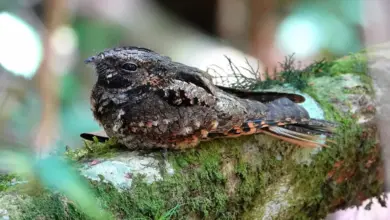
Falconets are among the smallest of raptors, captivating bird enthusiasts with their diminutive size and swift hunting skills. Members of the genus Microhierax, these tiny falcons embody the marvels of avian adaptation, displaying remarkable agility and speed despite their miniature stature. Found predominantly in Southeast Asia, falconets combine the fierce predatory nature of falcons with the delicate build of some of the smallest birds of prey. Their striking appearances and fascinating behaviors have made them a subject of interest for ornithologists and nature lovers alike. For more information, see our guide on birds of prey.
Scientific Classification
The falconets belong to the genus Microhierax, which is part of the family Falconidae, the family that includes all falcons and caracaras. The genus name Microhierax is derived from Greek, meaning “small hawk,” which aptly describes these birds. Falconets are closely related to the larger falcons but represent some of the tiniest members of this family. There are six recognized species within this genus: the Collared Falconet (Microhierax caerulescens), the Black-thighed Falconet (Microhierax fringillarius), the White-fronted Falconet (Microhierax latifrons), the Philippine Falconet (Microhierax erythrogenys), the Pied Falconet (Microhierax melanoleucus), and the Spot-winged Falconet, sometimes classified under Spiziapteryx circumcincta but more commonly recognized as a separate genus. Each species has subtle distinctions in plumage, size, and distribution, but all share the defining traits of swift flight and keen predatory skills.
Geographic Range & Distribution
Falconets inhabit a broad range of Southeast Asia, with their distribution spanning from the Indian subcontinent through Thailand, Malaysia, Indonesia, and the Philippines. The Collared Falconet is perhaps the most widespread species, found across northeastern India, Nepal, Bhutan, Bangladesh, Myanmar, Thailand, and parts of southern China. The Black-thighed Falconet occurs mainly in the lowland forests of Thailand and Malaysia, while the White-fronted Falconet is confined to Borneo’s dense rainforests. The Philippine Falconet is endemic to the Philippines, occupying various islands including Luzon and Mindoro. The Pied Falconet is native to parts of Indonesia, such as Sumatra and Java. These birds prefer forest edges, open woodlands, and areas near rivers or farmland where they can hunt effectively. Their habitat choices reflect a balance between the need for perches to spot prey and open spaces to engage in aerial hunting.



Physical Description
Falconets are extraordinary for their compact size, making them some of the smallest raptors in the world. Their body length ranges from approximately 18 to 22 centimeters (7 to 8.5 inches), with a wingspan between 35 and 45 centimeters (14 to 18 inches). Despite their petite frames, they possess the sharp talons and hooked beaks characteristic of falcons. Adult falconets display bold, contrasting plumage patterns that aid in identification. For example, the Collared Falconet has a glossy black head and upperparts, with a distinctive white collar around its neck and chestnut flanks. The Black-thighed Falconet is named for its striking black feathers on the thighs, contrasting with a white belly and chestnut back. The White-fronted Falconet features a mostly black body with a white forehead patch, while the Philippine Falconet exhibits a reddish-brown coloration with white underparts. Their eyes are large and dark, adapted for acute vision during hunting. Their wing shape is pointed and built for rapid, agile flight, enabling them to pursue swift insect prey or small birds through complex forested environments.
Behavior & Diet
Falconets are diurnal hunters known for their energetic and acrobatic flight styles. They typically hunt from perches, scanning for prey before launching swift, direct attacks. Their diet mainly consists of insects, particularly grasshoppers, beetles, cicadas, and dragonflies. However, they are also known to prey on small birds, lizards, and occasionally small mammals like rodents. Due to their small size, falconets rely heavily on speed and surprise rather than brute strength to capture prey. Observations show that they often hunt in pairs or small family groups, communicating through sharp calls and whistles. Outside the breeding season, they may form small flocks, which is unusual for raptors but beneficial for locating food sources. Their vocalizations are distinctive—high-pitched and repetitive calls that carry well through dense foliage. Additionally, falconets show territorial behavior, defending hunting grounds vigorously against intruders of the same species. According to Audubon Society, this species is well documented.
Breeding & Reproduction
Falconets exhibit fascinating breeding behaviors that align with their small size but demonstrate complex parental care. They are generally monogamous, forming strong pair bonds during the breeding season. Nesting sites are often chosen in natural tree cavities or abandoned nests of other birds, such as woodpeckers or barbets. Some species have been recorded nesting in bamboo clumps or rock crevices when suitable tree cavities are scarce. The female typically lays between three to five eggs per clutch, which are white or pale in color and slightly oval in shape. Incubation lasts about 28 to 32 days and is primarily the female’s responsibility, although males contribute by bringing food. Once hatched, the chicks are altricial—helpless and blind at birth—and require extensive care and feeding. Both parents actively feed the nestlings with freshly caught insects and small vertebrates. The fledging period lasts approximately 35 to 40 days, after which the young birds gradually learn to hunt and fly independently. Breeding success can be influenced by habitat quality and food availability, which vary seasonally and geographically. According to RSPB, this species is well documented.
Conservation Status
The conservation status of falconets varies by species, but generally, they are not currently considered globally threatened. According to the International Union for Conservation of Nature (IUCN), most species such as the Collared Falconet and Black-thighed Falconet are classified as Least Concern, benefiting from relatively wide distributions and adaptable behaviors. However, some species like the White-fronted Falconet and the Philippine Falconet face localized pressures from habitat loss due to deforestation, agricultural expansion, and urbanization. The Philippine Falconet, in particular, has a more restricted range and is vulnerable to forest degradation across the islands it inhabits. Conservation efforts for falconets focus on habitat protection, especially preserving mature forests and maintaining ecological corridors that allow for safe hunting and breeding grounds. Continued monitoring is important to ensure populations remain stable, especially in regions experiencing rapid environmental change. Falconets also benefit from legal protections under national wildlife laws in several countries within their range.
Interesting Facts
Falconets hold several unique distinctions that make them particularly fascinating. Despite their small size, they exhibit hunting behaviors comparable to much larger falcons, demonstrating the efficiency of their predatory adaptations. Their ability to hover briefly while sighting prey is unusual among falcons, giving them a tactical advantage in dense forest environments. Falconets also have exceptional eyesight, with visual acuity estimated to be several times sharper than that of humans, allowing them to detect even small insects against complex backgrounds. Another interesting aspect is their vocal communication; their repetitive calls serve not only to maintain contact between mates but also to establish territory boundaries. Unlike many raptors that are solitary, falconets often display social tendencies, sometimes perching in groups or hunting cooperatively. Their diminutive size also makes them a favorite among bird photographers looking to capture rare images of raptors in flight. Lastly, falconets have a cultural presence in some parts of Asia, where their agility and beauty are admired and occasionally featured in folklore and art.
In summary, falconets are remarkable examples of how size does not limit predatory prowess. Their combination of sharp vision, agile flight, and diverse diet allows them to thrive in varied habitats across Southeast Asia. While generally not endangered, continued vigilance is needed to ensure these miniature falcons continue to grace the skies of their native forests. For birdwatchers and wildlife enthusiasts, observing falconets offers a glimpse into the intricate balance of nature where even the smallest predators play a crucial role in their ecosystems.