The Hen Harrier (Circus cyaneus in Eurasia and Circus hudsonius in North America) is a striking medium-sized bird of prey known for its graceful flight and distinctive hunting style. Often recognized by birdwatchers and nature enthusiasts alike, this raptor holds a unique place in both the ecosystems it inhabits and cultural lore around the world. Although commonly referred to as the Northern Harrier in North America, the Hen Harrier has many alternate names including Marsh Hawk, Blue Hawk, White-rumped Harrier, and Frog Hawk, reflecting its wide distribution and the variety of habitats it frequents. This article explores the fascinating biology, behavior, and conservation of this captivating raptor.
Scientific Classification
The Hen Harrier belongs to the family Accipitridae, which includes hawks, eagles, and kites. Its genus, Circus, is derived from the Latin word for “circle,” referencing the bird’s characteristic circling flight pattern when hunting. The species is split into two closely related taxa: Circus cyaneus, which is primarily found across Eurasia, and Circus hudsonius, the North American counterpart, recognized as a separate species in recent taxonomic revisions based on genetic and morphological differences.
Adult male Hen Harriers typically display pale gray plumage with black wing tips and a conspicuous white rump patch, while females and juveniles tend to be brown with streaked underparts, making sexual dimorphism prominent. They measure between 40 to 52 centimeters (16 to 20 inches) in length, with a wingspan ranging from 97 to 122 centimeters (38 to 48 inches). Weight varies slightly between the sexes, with males averaging around 300 to 450 grams and females larger at 400 to 600 grams. This size dimorphism is typical among raptors and relates to breeding roles and hunting efficiency.


Geographic Range & Distribution
Hen Harriers have one of the broadest ranges of any harrier species, breeding extensively throughout the northern parts of the Northern Hemisphere. In Eurasia, Circus cyaneus breeds across northern and central Europe, Russia, Siberia, and parts of northern Asia extending eastwards to Kamchatka. In North America, Circus hudsonius breeds from Alaska through Canada and into the northern United States.
During the non-breeding season, Hen Harriers migrate southwards to warmer climates. European and Asian populations move into southern Europe, the Mediterranean basin, northern Africa, and parts of temperate Asia including India, China, and Japan. North American birds travel to the southern United States, Mexico, and sometimes Central America for the winter months.
In more temperate regions, such as parts of Great Britain, France, and the southern U.S., some Hen Harriers remain year-round, though many vacate higher altitude breeding grounds during winter. They prefer open habitats such as moorlands, marshes, bogs, and grasslands, often avoiding densely forested areas. Their reliance on wetlands and heathlands for nesting and hunting makes them sensitive to habitat alteration, particularly wetland drainage and agricultural development.
Physical Description
Hen Harriers are medium-sized raptors with a slim build and long wings adapted for low, buoyant flight over open terrain. Males exhibit a striking pale gray coloration on their upperparts, contrasted by black wingtips and a distinctive white rump patch that flashes conspicuously in flight. Their underparts are mostly white with some faint streaking. The face has a characteristic owl-like facial disc, which helps funnel sound to their ears, a trait uncommon among hawks but shared with other harriers, enhancing their hunting ability by detecting prey audibly.
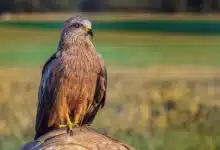
Females and juveniles differ markedly, often described as “brown” or “ringtails” by birdwatchers due to their mottled brown plumage with buff and cream streaks beneath. This cryptic coloration provides camouflage when nesting or hunting low over vegetation. Both sexes have long tails that aid maneuverability during flight, and broad wings that allow a slow, deliberate hunting style close to the ground.
Adults have yellow eyes, while juveniles tend to have brownish eyes that darken as they mature. Legs and feet are bright yellow, equipped with sharp talons used to grasp prey. The bill is hooked and dark gray, designed for tearing flesh. Overall, the Hen Harrier’s morphology reflects its specialization as a low-flying predator in open landscapes.
Behavior & Diet
Hen Harriers are renowned for their low, gliding flight just above the ground or vegetation, a hunting method called “quartering.” They fly slowly with wings held in a shallow V-shape, scanning for small mammals, birds, and occasionally amphibians or large insects. Their facial disc gives them enhanced hearing, allowing them to detect prey hidden in tall grasses or dense cover.
Their diet predominantly consists of small mammals such as voles, mice, and shrews, which make up the bulk of their food in many regions. However, they are opportunistic hunters and will take birds ranging from small passerines to larger species like grouse or ducklings, especially during the breeding season when nutritional demands are high. In wetland areas, amphibians and reptiles can supplement their diet. Their hunting success depends on a combination of stealth, speed, and acute sensory perception.
Hen Harriers are mostly solitary hunters, but during migration and in winter, they may gather in loose groups, sometimes roosting communally. They are generally silent outside the breeding season but vocalize with a distinctive, high-pitched “kek-kek-kek” call during courtship and territorial displays.
Breeding & Reproduction
Breeding typically occurs in spring and early summer, with timing varying by latitude. Hen Harriers nest on the ground in dense vegetation such as heather, marsh grasses, or moorland shrubs, often choosing sites that minimize disturbance and provide good cover. The female builds a simple scrape nest lined with grasses and feathers. According to eBird, this species is well documented.
Clutch sizes range from three to eight eggs, which the female incubates for about 30 to 36 days while the male provides food. Chicks hatch asynchronously, often leading to size disparities among nestlings. Both parents feed the young, with the female brooding and protecting them while the male hunts. The fledging period lasts approximately 30 to 40 days, after which juveniles gradually become independent. According to RSPB, this species is well documented.
Hen Harriers exhibit interesting courtship behavior involving aerial displays where males perform steep dives and acrobatic flights to impress females. These displays, combined with vocalizations, help establish pair bonds and territorial claims. Breeding success varies depending on habitat quality and prey availability, making the species vulnerable to environmental changes.
Conservation Status
According to the International Union for Conservation of Nature (IUCN), the Hen Harrier is currently classified as Least Concern due to its large global range and estimated global population of approximately 1.3 million individuals. However, regional populations face significant threats that have led to declines in certain areas.
In parts of Europe, particularly the United Kingdom and Ireland, Hen Harriers are subject to intense conservation efforts as their populations have suffered from habitat loss, illegal persecution, and changes in agricultural practices. The draining of wetlands, afforestation of moorlands, and intensive livestock grazing reduce suitable nesting and hunting habitats. Illegal killing, especially on grouse moors where harriers are perceived as threats to game birds, remains a major challenge.
In North America, habitat degradation due to wetland drainage, urban expansion, and monoculture farming affects local populations. Some U.S. states have listed the Northern Harrier as endangered or threatened, including Rhode Island, Illinois, and Massachusetts. Conservation initiatives focus on habitat restoration, legal protection, and public education to ensure the survival of this species in vulnerable regions.
Interesting Facts
Hen Harriers possess a unique facial disc similar to that of owls, enabling them to hear prey movements through dense cover, a rare adaptation among hawks. This feature allows them to hunt effectively even in low light or dense vegetation.
The name “Hen Harrier” is somewhat misleading, as they rarely prey on adult hens; instead, the name likely originated from their habit of hunting in farmland and marshy areas where poultry was kept. Their other names, such as Marsh Hawk and Blue Hawk, highlight their preferred wetland habitats and the male’s pale blue-gray plumage.
During the breeding season, males perform elaborate “sky-dances,” soaring and diving dramatically while calling to attract females and establish territories. These displays are a spectacular sight for birdwatchers and highlight the species’ agility and strength.
Hen Harriers are also known to roost communally in winter alongside other raptors such as Merlins and Marsh Harriers, forming small groups that offer safety and warmth during colder months.
Finally, their presence is often an indicator of healthy wetland and moorland ecosystems, making them an important species for ecological monitoring. Their sensitivity to environmental changes means that protecting Hen Harriers also benefits a wide array of other wildlife.
In conclusion, the Hen Harrier is a fascinating and ecologically significant bird of prey whose graceful flight and unique hunting adaptations captivate naturalists worldwide. While currently stable on a global scale, ongoing conservation efforts remain critical to safeguard vulnerable populations against habitat loss and persecution. By understanding the biology and challenges faced by this remarkable raptor, we can better appreciate and protect the open landscapes it calls home.