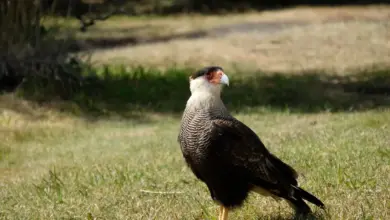
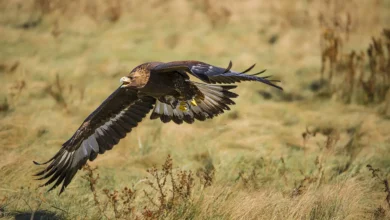
Harriers are a distinctive group of birds of prey known for their graceful, low-flying hunting style over open habitats such as grasslands, marshes, and agricultural fields. Belonging primarily to the genus Circus, these raptors are characterized by their long wings, slender bodies, and keen eyesight, enabling them to detect and capture a variety of prey including small mammals, reptiles, and birds. Their unique hunting technique—gliding just above the ground while scanning for prey—makes them a fascinating subject for birdwatchers and wildlife enthusiasts alike.
Scientific Classification
Harriers belong chiefly to the genus Circus, which is part of the family Accipitridae, a large family that also includes eagles, hawks, and kites. The genus name Circus comes from the Latin word for “circle,” referring to the circling flight these birds often display during hunting. This genus contains about 15 to 20 species, depending on the taxonomy source, with a few additional species sometimes placed in related genera such as Polyboroides and Geranospiza.
The genus Circus includes well-known species such as the Northern Harrier (Circus cyaneus), Montagu’s Harrier (Circus pygargus), and the Western Marsh Harrier (Circus aeruginosus). Outside this genus, the African Harrier Hawk (Polyboroides typus) and the Crane Hawk (Geranospiza caerulescens) exhibit harrier-like hunting behavior but differ in morphology and habits. The extinct Eyles’ Harrier (Circus eylesi) from New Zealand represents an unusual case of island gigantism, growing to the size of a small eagle before its extinction.




Geographic Range & Distribution
Harriers have a nearly global distribution, inhabiting every continent except Antarctica. Species within the genus Circus occupy a wide range of habitats but are most commonly found in open landscapes such as marshes, meadows, grasslands, and agricultural areas. The Northern Harrier, for example, breeds across much of North America and Eurasia, from Alaska and Canada to northern Europe and Asia, and migrates south to warmer regions during winter.
The Montagu’s Harrier is primarily a Eurasian species breeding in western and central Europe and parts of Asia, migrating to Africa and southern Asia during the non-breeding season. The Western Marsh Harrier is found across Europe, parts of northern Africa, and western Asia, while the Eastern Marsh Harrier (Circus spilonotus) inhabits parts of eastern Asia, including China, Russia, and Japan.
African species such as the African Marsh Harrier (Circus ranivorus) and the Swamp Harrier (Circus approximans) are widespread across sub-Saharan Africa and Australasia, respectively. The Madagascar Marsh Harrier (Circus maillardi) is endemic to Madagascar and nearby islands. Many harrier species exhibit seasonal migrations, moving between breeding and wintering grounds that can span thousands of kilometers.
Physical Description
Harriers are medium-sized raptors, generally slender with long, broad wings and long tails that aid their acrobatic flight. They typically measure between 40 and 55 centimeters in length, with wingspans ranging from about 90 to 125 centimeters. Weight varies by species, usually falling between 300 and 700 grams, with females often larger than males—a common trait among birds of prey.
Sexual dimorphism is pronounced in many harrier species, with males and females exhibiting distinct plumage. For example, the male Northern Harrier features gray upperparts and white underparts, while the female is predominantly brown with streaked underparts. Both sexes have a distinctive white rump patch visible in flight, a hallmark identification feature. Montagu’s Harriers show a similar pattern, with males displaying a pale gray and black coloration and females and juveniles appearing richly brown and buff.
Harriers possess facial discs reminiscent of owls, which help funnel sound to their ears, enhancing their ability to detect prey by hearing. This adaptation is particularly well developed in Northern Harriers, allowing them to hunt effectively even in low light or dense vegetation. Their long legs and sharp talons enable them to grasp small mammals and birds swiftly.
Behavior & Diet
Harriers are renowned for their distinctive hunting style: slow, low flight just above the ground, using sight and sound to locate prey. They often fly with wings held in a shallow V-shape, gliding silently and scanning for movement. This low hunting technique is energy-efficient and effective in open habitats, where harriers prey on a range of small animals.
Their diet primarily consists of small mammals such as voles, mice, and rabbits, but they also consume birds, reptiles, amphibians, and large insects. For instance, the Northern Harrier’s diet is dominated by small rodents during the breeding season, while opportunistic feeding on birds such as sparrows and shorebirds also occurs. Montagu’s Harriers often prey on small birds flushed from low vegetation, as well as insects and amphibians.
Harriers are diurnal hunters, most active during early morning and late afternoon. Their keen eyesight and hearing allow them to detect prey even under dense grass or reed beds. Once prey is spotted, harriers plunge down or swoop to capture it with their talons. They are also known for their agility, able to perform quick turns and sudden dives during the chase. According to RSPB, this species is well documented.
Breeding & Reproduction
Harriers typically breed in open habitats where nesting sites are well concealed. They build nests on the ground, often in dense vegetation such as tall grasses, reeds, or wetlands, which provides camouflage and protection from predators. The female primarily constructs the nest using sticks, grasses, and other plant material. According to Audubon Society, this species is well documented.
Breeding season varies by species and geographic location but generally occurs in spring or early summer. Clutch sizes range from three to seven eggs, depending on the species and environmental conditions. The eggs are usually pale with reddish or brown speckling, incubated mainly by the female for about 30 to 40 days.
Both parents participate in feeding the chicks after hatching, though the female often remains on the nest during early development stages. The young fledge approximately 30 to 40 days after hatching but may stay dependent on their parents for several weeks as they learn to hunt and survive independently. Harriers are generally monogamous during the breeding season, with pairs often reuniting annually if conditions allow.
Conservation Status
The conservation status of harrier species varies widely depending on their range, habitat availability, and human impact. Many species, such as the Northern Harrier (Circus cyaneus), are classified as Least Concern by the International Union for Conservation of Nature (IUCN) due to their broad distribution and relatively stable populations.
However, some harrier species face significant threats. The Pallid Harrier (Circus macrourus), which breeds in parts of Eastern Europe and Central Asia, is listed as Near Threatened, primarily due to habitat loss, agricultural intensification, and pesticide use. Similarly, the Black Harrier (Circus maurus), endemic to South Africa, is Vulnerable because of habitat fragmentation and degradation.
Wetland drainage, land-use change, and human disturbance are major challenges for harriers, whose open habitat preferences make them vulnerable to agricultural expansion and urbanization. Conservation efforts often focus on protecting breeding and foraging habitats, promoting sustainable agriculture, and monitoring populations to track changes. In some regions, harriers benefit from legal protection and habitat restoration projects that help maintain suitable environments for these elegant raptors.
Interesting Facts
Harriers have several fascinating adaptations and behaviors that set them apart from other raptors. One of the most notable is their facial disc, similar to that of owls, which is rare among diurnal birds of prey. This adaptation enhances their hearing, allowing them to detect prey hidden beneath vegetation or snow.
Another unique trait is their courtship display, which often involves spectacular aerial acrobatics. Males perform slow, deliberate flights with exaggerated wingbeats and sometimes present prey to females as part of the mating ritual. These displays reinforce pair bonds and demonstrate the male’s hunting prowess.
Harriers are also known for their ability to exploit a variety of habitats, from coastal marshes to upland grasslands and even agricultural fields. Their opportunistic diet and flexible hunting strategies contribute to their success across diverse environments. Despite this adaptability, many species are sensitive to habitat loss and require intact landscapes to thrive.
Finally, the extinct Eyles’ Harrier of New Zealand is a remarkable example of island gigantism, growing far larger than any living harrier species. Its extinction, likely caused by human activity and introduced predators, serves as a poignant reminder of the fragility of island ecosystems and the importance of conservation.
Conclusion
Harriers are a captivating group of raptors well adapted to life in open habitats around the world. With their distinctive low flight, keen senses, and striking plumage, they offer an excellent opportunity for birdwatchers and wildlife enthusiasts to observe predatory birds in action. Despite facing threats from habitat loss and environmental change, many harrier species continue to thrive thanks to their adaptability and ongoing conservation efforts. Understanding their biology and ecology not only enriches appreciation for these elegant hunters but also highlights the importance of protecting the diverse habitats they depend on.