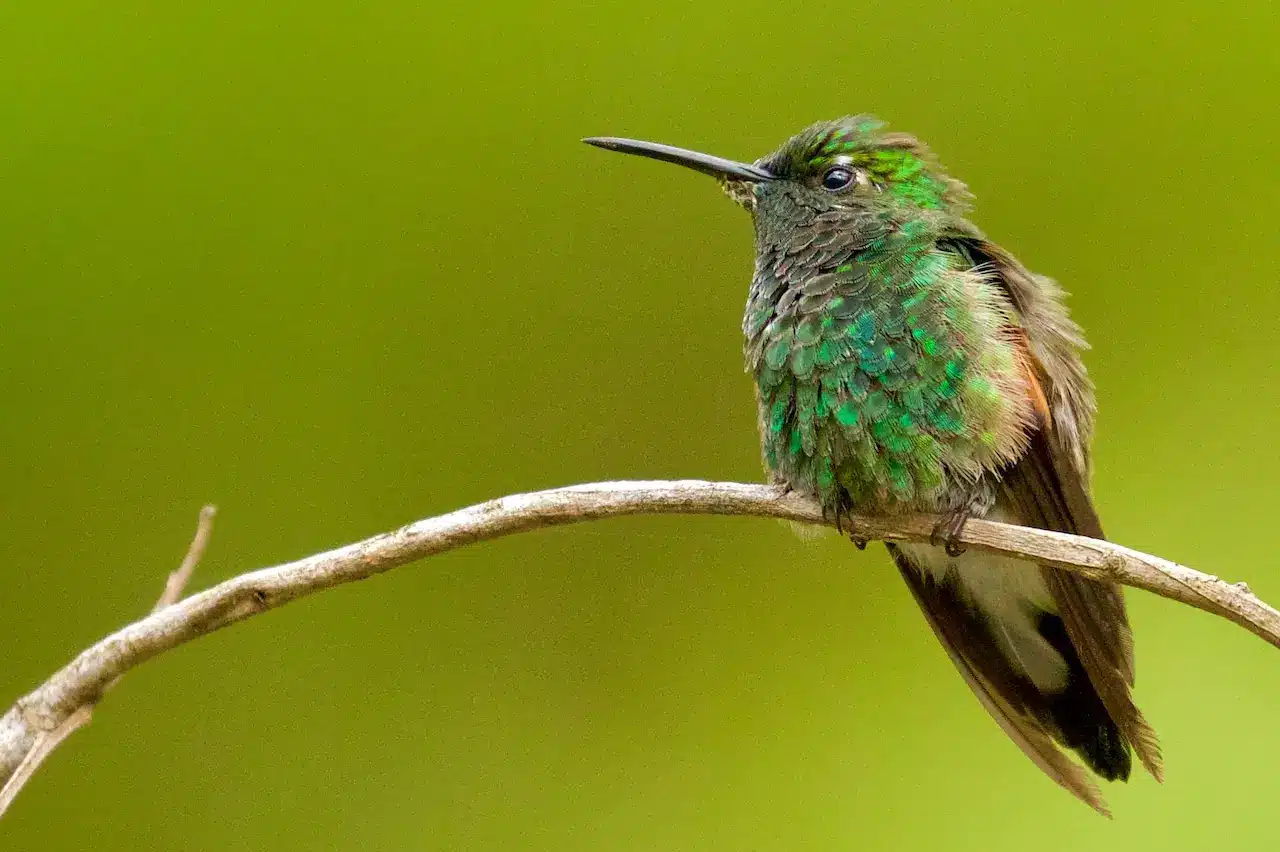
The Saw-billed Hermit (Ramphodon naevius) is a captivating species of hummingbird endemic to the Atlantic Forest of southeastern Brazil. Known for its distinctive serrated bill and relatively large size among hummingbirds, this species occupies a unique ecological niche within one of the most biodiverse yet threatened habitats in South America. Despite its striking appearance and intriguing behaviors, the Saw-billed Hermit faces increasing pressures from habitat loss and fragmentation, making its conservation a priority for ornithologists and environmentalists alike.
Scientific Classification
The Saw-billed Hermit belongs to the family Trochilidae, which encompasses all hummingbirds. Its scientific name is Ramphodon naevius, with the genus Ramphodon being monotypic—meaning the Saw-billed Hermit is the only species within it. This bird falls under the subfamily Phaethornithinae, commonly known as the “hermits,” a group characterized by their generally long, decurved bills and distinctive feeding and breeding behaviors.
First described by the German ornithologist Johann Friedrich Gmelin in 1788, the Saw-billed Hermit is phylogenetically distinct from other hermits due to its unique bill morphology and larger body size. The genus name Ramphodon derives from Greek roots meaning “beak” and “tooth,” a reference to the serrated edges of the bird’s bill. This physical adaptation is rare among hummingbirds and contributes to the species’ specialized feeding habits.



Geographic Range & Distribution
The Saw-billed Hermit is strictly endemic to the Atlantic Forest biome of southeastern Brazil, a region recognized for its exceptional biodiversity but also for its high levels of habitat destruction. Its range extends from the states of Espírito Santo and Minas Gerais in the north, southward through Rio de Janeiro and São Paulo, reaching as far as Rio Grande do Sul. Although primarily found in Brazil, there have been occasional, though unconfirmed, reports of sightings in the far northeastern tip of Argentina, suggesting the possibility of a slightly broader, albeit very limited, distribution.
This hummingbird is typically found at elevations ranging from sea level up to approximately 900 meters (around 3,000 feet), favoring dense Atlantic coastal forests and secondary growth habitats. It exhibits some tolerance for disturbed or regenerating forest but remains closely tied to areas with rich understory vegetation and abundant flowering plants. The Atlantic Forest itself is a biodiversity hotspot but has suffered from extensive deforestation, with estimates suggesting that less than 12% of its original coverage remains intact, which directly impacts the Saw-billed Hermit’s habitat availability.
Physical Description
The Saw-billed Hermit stands out as one of the largest and heaviest hummingbirds in its range, measuring between 14 to 16 centimeters (5.5 to 6.3 inches) in length and weighing approximately 10 grams (0.35 ounces). This size places it among the more robust species of hummingbirds, which typically range from 7 to 13 centimeters in length. Its wingspan, although not extensively documented, is proportionate to its body size, enabling agile flight essential for nectar feeding and territorial defense.
One of the species’ most distinctive features is its bill. Unlike the slender, often curved bills typical of many hummingbirds, the Saw-billed Hermit has a relatively straight bill with a unique hooked tip on the upper mandible and tiny serrations along the edges—hence the name “saw-billed.” The upper bill is dark, contrasting with a paler lower mandible. These serrations are hypothesized to assist in gripping flower petals or even in intraspecific interactions, such as territorial disputes.
The plumage is equally striking. The bird displays a heavily streaked chest with a warm, buffy supercilium (a stripe above the eye that resembles an eyebrow) that adds to its facial patterning. Its throat sports a vivid orange patch bisected by a dark central stripe, creating a dramatic contrast. The tail is rounded with buffy-brown tips, a feature that can aid in identification when the bird is perched. Sexual dimorphism is subtle but present: males tend to have more pronounced markings on the underparts and possess the characteristic hooked bill tip, whereas females have slightly shorter bills without the hooked tip and generally more subdued plumage.
The Saw-billed Hermit can be confused with the closely related Hook-billed Hermit (Glaucis dohrnii), but it is generally larger and has bolder streaking on its underparts, allowing experienced birdwatchers to distinguish between the two species.
Behavior & Diet
The Saw-billed Hermit exhibits fascinating behaviors typical of hermit hummingbirds but with some unique traits. Like other hermits, it is predominantly solitary outside the breeding season and does not form flocks or long-term pair bonds. Males are territorial and defend feeding areas vigorously, especially around patches of nectar-rich flowers.
Dietarily, the Saw-billed Hermit primarily feeds on nectar from a variety of flowering plants, including species of Heliconia, Costus, and other understory plants abundant in the Atlantic Forest. Its relatively large size and specialized bill allow it to access flowers that may be less accessible to smaller hummingbirds, reducing direct competition. Additionally, it supplements its diet with small arthropods—such as spiders, flies, and tiny caterpillars—providing essential protein, particularly during the breeding season.
These birds employ a “trap-lining” foraging strategy, where they follow a regular route visiting a sequence of flowering plants to maximize nectar intake efficiently. Their flight is fast and agile, characterized by rapid wing beats typical of hummingbirds, enabling them to hover precisely while feeding. According to RSPB, this species is well documented.
Breeding & Reproduction
The breeding biology of the Saw-billed Hermit is notable for its lekking behavior, a mating system in which males gather in communal display areas called leks to compete for females’ attention. During the breeding season, males perform elaborate displays involving tail-wiggling, singing, and showcasing their vivid throat patches to attract females. These displays are highly competitive, with females selecting mates based largely on the quality of these performances, often favoring the best singers and most vigorous dancers. According to eBird, this species is well documented.
Interestingly, after copulation, males disengage immediately and do not participate further in nesting or chick-rearing activities. Females take full responsibility for nest construction, incubation, and feeding of the chicks. The female builds a remarkable cone-shaped nest suspended by a single, strong cable of spider silk from an overhead support such as a branch or the underside of large leaves, including those of Heliconia plants, banana trees, or ferns. These nests are typically placed 1 to 2 meters (3 to 6 feet) above the ground, offering protection from many ground predators and environmental hazards.
Clutches usually consist of two tiny white eggs, which the female incubates for approximately two weeks. After hatching, the chicks remain in the nest for another two to three weeks, during which the female diligently feeds them regurgitated nectar and small insects. The solitary nature of the species outside breeding season means that once fledging occurs, the young disperse to establish their own territories.
Conservation Status
The Saw-billed Hermit is currently classified as Endangered on the IUCN Red List due to ongoing habitat loss and fragmentation. The primary threat to this species is the rapid decline of the Atlantic Forest, driven by urbanization, industrialization, agricultural expansion, and the construction of roads and infrastructure. These activities have significantly reduced the extent of continuous forest necessary to support sustainable populations of this hummingbird.
Despite being relatively common in some well-preserved pockets of forest, the overall population trend is decreasing. Fragmentation not only reduces available habitat but also isolates populations, limiting genetic diversity and increasing vulnerability to environmental changes and stochastic events. Conservation efforts focus on protecting remaining forest areas, restoring degraded habitats, and promoting corridors to connect isolated populations.
Environmental organizations and local governments have initiated programs to preserve the Atlantic Forest, recognizing its critical importance not only for the Saw-billed Hermit but for thousands of other endemic and endangered species. Birdwatchers and ecotourists also play a role by supporting sustainable tourism that generates incentives for habitat conservation.
Interesting Facts
The Saw-billed Hermit’s serrated bill is a rare adaptation among hummingbirds and has intrigued ornithologists for decades. These serrations may aid in gripping flower petals or defending feeding territories against rivals, though their exact function remains an area of active research. This feature also underscores the evolutionary diversity found within the hummingbird family.
Another fascinating aspect of this species is its lekking behavior, which is relatively uncommon among hummingbirds. The communal display grounds where males gather can become vibrant centers of activity during breeding season, providing a spectacular opportunity for birdwatchers to observe complex mating rituals.
Unlike many hummingbirds that migrate seasonally in search of food, the Saw-billed Hermit is a year-round resident within its range, relying on the stable floral resources of the Atlantic Forest. This residency makes it especially vulnerable to habitat changes, as it cannot easily relocate to new areas.
Finally, the intricate nests crafted by females showcase the remarkable use of spider silk, which provides strength and flexibility, allowing the nests to sway without breaking—a crucial adaptation for nesting in the often windy understory environment.
Conclusion
The Saw-billed Hermit (Ramphodon naevius) is a remarkable hummingbird species whose unique physical traits and behaviors reflect the rich biodiversity of Brazil’s Atlantic Forest. Its striking appearance, especially the saw-like bill and vibrant plumage, combined with intriguing breeding behaviors like lekking, make it a fascinating subject for bird enthusiasts and researchers alike. However, the species’ survival hinges on the preservation of its rapidly diminishing habitat. Continued conservation efforts aimed at protecting and restoring the Atlantic Forest are vital for ensuring that this emblematic hummingbird continues to grace its native environment for generations to come.