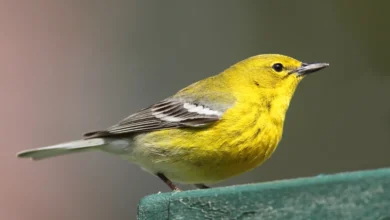
The Dusky Warbler (Phylloscopus fuscatus) is a small, elusive songbird known for its distinctive calls and secretive behavior. This species belongs to the leaf warbler family and is native to a broad swath of northern and eastern Asia. Renowned for its subtle plumage and remarkable migratory patterns, the Dusky Warbler captivates birdwatchers and nature enthusiasts alike. Despite its unassuming appearance, this bird plays an important role in the ecosystems of its breeding and wintering grounds and offers fascinating insights into the adaptability of migratory passerines.
Scientific Classification
The Dusky Warbler is classified within the family Phylloscopidae, which comprises the leaf warblers, a diverse group of small insectivorous birds. The species was first described scientifically by Edward Blyth in 1842. Its scientific name, Phylloscopus fuscatus, reflects its characteristic dusky, or dark, plumage. This warbler belongs to the genus Phylloscopus, which is notable for its small size, often greenish or brownish coloration, and lively behavior. The genus name means “leaf seeker,” highlighting their preference for foraging among foliage. Within the species, three recognized subspecies exist, each with distinctive breeding and wintering ranges: the nominate P. f. fuscatus, P. f. robustus, and P. f. weigoldi.
Geographic Range & Distribution
The Dusky Warbler breeds primarily across northern and central Asia, with its range extending from the western Siberian regions near the Upper Ob and western Altai Mountains, eastward through the vast taiga forests of Siberia to the Anadyr River basin and Sakhalin Island. It also breeds in the mountainous areas of the eastern Himalayas and across central and northeast China. These birds are altitudinal and long-distance migrants, undertaking seasonal journeys to more temperate and tropical areas during the winter months.



In winter, Dusky Warblers migrate southward to the foothills of the Himalayas, northern India, northern Myanmar (Burma), northern Vietnam, and southern China, including Taiwan. Their wintering grounds are often characterized by dense shrubbery, willow thickets, and moist woodlands. Occasionally, these birds appear as rare visitors far outside their usual range, recorded as accidental vagrants in parts of Western Europe such as Great Britain, Ireland, France, and even as far west as North America, including Alaska and California. These vagrant sightings are highly prized among birdwatchers due to their rarity.
Physical Description
The Dusky Warbler is a compact, small bird measuring approximately 10 to 11 centimeters (3.9 to 4.3 inches) in length, with a wingspan ranging from 17 to 18 centimeters (6.7 to 7.1 inches). It typically weighs between 7 and 10 grams. Its overall appearance is unremarkable at a glance, which aids its camouflage among dense undergrowth. The upperparts are a muted brown, blending seamlessly with leaf litter and twigs, while the underparts are a pale buff to greyish-white, becoming slightly darker on the flanks.
One of the most distinctive features of the Dusky Warbler is its prominent whitish supercilium, or “eyebrow,” which contrasts with its dusky face and helps in identification. The bird’s bill is slender, pointed, and slightly spiky, adapted for gleaning insects from foliage. Its legs are relatively long and slender, typically a dull brown or grey, enabling it to move adeptly through dense shrubs and low vegetation. The tail is short and rounded, often flicked as the bird moves actively through its habitat.
Juvenile Dusky Warblers resemble adults but tend to have fresher, slightly more vibrant plumage with a less pronounced supercilium. Sexual dimorphism is minimal; males and females look alike, making sex identification difficult without behavioral observation during the breeding season.
Behavior & Diet
The Dusky Warbler is a secretive and often skulking bird, favoring dense underbrush and low vegetation where it forages actively for food. It is primarily insectivorous, feeding on a variety of small invertebrates including flies, beetles, caterpillars, spiders, and larvae. During the breeding season, it may also consume small quantities of berries or seeds, especially when insect prey is scarce.
This warbler’s foraging strategy involves gleaning insects from leaves and twigs, often moving quickly and with frequent tail flicks. It is known for its restless behavior, rarely remaining still for long. Its song and calls are a key feature of its behavior; the Dusky Warbler has a distinctive, sharp, and repetitive “tac-tac-tac” call that can be heard during the breeding season, often used to establish territories and communicate with mates.
During migration, these birds travel in solitary or loose flocks. Their migratory pathways and stopover sites are not fully documented, but they are believed to rely heavily on forested corridors and riparian zones where food resources are abundant. Their ability to adapt to various habitats, from dense Siberian taiga to subtropical foothills, demonstrates a remarkable flexibility in behavior and diet.
Breeding & Reproduction
Breeding occurs from late spring to early summer, depending on latitude and altitude. Dusky Warblers build their nests low in dense shrubs or close to the ground, often concealed by thick vegetation to protect against predators. The nest is typically a cup-shaped structure made from grass, moss, leaves, and lined with finer materials such as feathers or animal hair for insulation. According to Cornell Lab of Ornithology, this species is well documented.
The female usually lays between 4 to 6 eggs per clutch, which are pale with fine speckling. Incubation lasts approximately 12 to 14 days and is primarily the responsibility of the female. Both parents participate in feeding the chicks after hatching, delivering insects and other small invertebrates to the rapidly growing young. The nestlings fledge about 10 to 12 days after hatching, but parental care continues for several weeks as the juveniles learn to forage independently. According to Audubon Society, this species is well documented.
Dusky Warblers are generally solitary breeders and maintain distinct territories during the breeding season. Their cryptic plumage and preference for dense cover help minimize predation risk on nests and young. Their breeding success is closely linked to the availability of insect prey and suitable nesting habitat, often in moist, shrubby areas near water.
Conservation Status
The Dusky Warbler is currently classified as a species of Least Concern by the International Union for Conservation of Nature (IUCN). This status reflects its large range and relatively stable population trends. However, like many migratory birds, it faces threats from habitat loss and degradation, particularly in its breeding and wintering grounds.
Deforestation, wetland drainage, and agricultural expansion reduce the availability of suitable breeding and foraging habitats. Additionally, climate change poses a potential risk by altering the timing of insect emergence and affecting the bird’s delicate migratory schedules. Despite these challenges, the Dusky Warbler has demonstrated resilience, partly due to its wide distribution and ability to utilize various habitats.
Conservation efforts for this species are largely indirect, focusing on preserving large tracts of forest and maintaining healthy wetland ecosystems across its range. Monitoring populations and migratory patterns remains important to detect any future declines. Birdwatchers and researchers often rely on vocalization surveys to track Dusky Warbler populations, given their secretive nature and preference for dense cover.
Interesting Facts
One intriguing aspect of the Dusky Warbler is its remarkable vocal repertoire. Despite being a small and subdued bird, its calls can carry over long distances in dense forests, serving as critical communication tools during the breeding season. These vocalizations also aid birdwatchers in locating what might otherwise be an invisible presence in thick underbrush.
The species is known for its occasional vagrancy far beyond its typical range. Records of Dusky Warblers in Western Europe and North America are extremely rare, making such sightings exciting events for ornithologists and birdwatching communities. These accidental migrations may result from navigational errors or unusual weather patterns during migration.
Another fascinating trait is the warbler’s ability to thrive in diverse habitats, ranging from the cold Siberian taiga to subtropical forests in South Asia. This adaptability underscores the importance of habitat connectivity, enabling the species to complete its long annual migrations successfully.
Finally, the Dusky Warbler’s modest size and inconspicuous coloration highlight the challenges faced by small migratory birds in avoiding predation and finding sufficient food. Its survival depends on a delicate balance of habitat quality, food availability, and safe migratory routes, making it a valuable indicator species for the health of Eurasian forest ecosystems.
In conclusion, the Dusky Warbler is a remarkable example of a small, migratory passerine that, despite its modest appearance, exhibits complex behaviors and occupies a vast geographic range. Its resilience and adaptability make it a fascinating subject for study and observation, offering insights into the intricate lives of migratory birds across Eurasia.