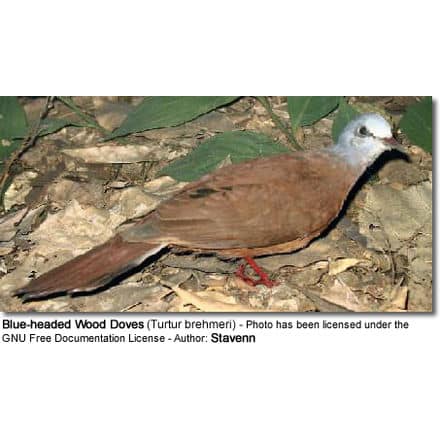
Doves and pigeons belong to the family Columbidae, which encompasses over 300 species of stout-bodied birds found worldwide. These birds are part of the order Columbiformes and are closely related to each other, often leading to the terms “dove” and “pigeon” being used interchangeably. However, in general, smaller species tend to be called doves, while larger species are referred to as pigeons. One of the most familiar members of this family is the Rock Pigeon (Columba livia), often seen in urban areas around the globe as a feral bird. Doves and pigeons have a long evolutionary history, sharing ancestry with the now-extinct dodo, and they play important ecological roles in many habitats.
Scientific Classification
The family Columbidae is part of the order Columbiformes, which includes all pigeons and doves. This group consists of around 310 species spread across approximately 50 genera. The family is divided into several subfamilies, including Columbinae (true pigeons and doves), and some distinct groups such as fruit doves (genus Ptilinopus) mainly found in Australasia. Scientific classification places doves and pigeons firmly among near-passerine birds, meaning they share some characteristics with perching birds but are not true passerines.
The genus Columba is one of the most widespread and includes species such as the Rock Pigeon (Columba livia), the Stock Dove (Columba oenas), and the Wood Pigeon (Columba palumbus). Other well-known genera include Streptopelia, which includes the Eurasian Collared Dove (Streptopelia decaocto) and the Mourning Dove (Zenaida macroura), common in North America. The family is remarkable for its diversity, ranging from tiny ground doves measuring just 15 cm in length, to large crowned pigeons of New Guinea that can reach up to 70 cm and weigh over 2 kilograms.





Geographic Range & Distribution
Members of the Columbidae family inhabit nearly every terrestrial habitat on Earth, except for the most extreme polar regions and some oceanic islands. Their distribution spans all continents except Antarctica. The greatest diversity of species is found in tropical and subtropical regions, particularly in the Indomalayan and Australasian ecozones, which include Southeast Asia, New Guinea, and Australia. These regions boast a wide variety of fruit doves and imperial pigeons, many of which have colorful plumage and specialized diets.
In the Americas, doves are abundant across both North and South America, with species adapted to forests, deserts, and urban environments. The Mourning Dove (Zenaida macroura) is one of the most widespread species in North America and adapts well to human-altered landscapes. Europe and Africa feature species such as the Stock Dove and the African Collared Dove (Streptopelia roseogrisea), while the Rock Pigeon, native to Europe, North Africa, and parts of Asia, has been introduced worldwide and thrives in cities and towns.
While many species are habitat generalists, some are highly specialized and confined to forest interiors, islands, or montane regions. Island species, in particular, can be vulnerable to habitat loss and introduced predators. For example, the Nicobar Pigeon (Caloenas nicobarica) is native to small islands in the Indian and Pacific Oceans and is notable for its iridescent plumage and close evolutionary ties to the dodo.
Physical Description
Doves and pigeons typically have compact, robust bodies with short necks and small heads. Their bills are slender and often feature a fleshy, swollen base called a cere, which houses the nostrils. Body length ranges widely among species, from as small as 15 cm (6 inches) in tiny ground doves to over 70 cm (28 inches) in large crowned pigeons. Weight varies accordingly, with small species weighing around 40 grams and large pigeons exceeding 2 kilograms.
Their plumage is often soft and smooth, with colors ranging from muted grays, browns, and whites to brilliant iridescent greens, blues, and purples. Many species exhibit sexual dimorphism, although in most, males and females look alike. The Rock Pigeon, for example, shows a variety of color morphs, but typically has a bluish-gray body with two distinct black wing bars. Fruit doves of the genus Ptilinopus are known for their vivid coloration, often sporting bright greens, reds, and yellows that help camouflage them in dense forest canopies.
The wings of pigeons and doves are strong and pointed, built for rapid, direct flight. Their wingspan can range from as little as 25 cm in small species to over 80 cm in larger birds. Many species are capable of impressive flight speeds, and some even perform aerial displays during courtship. Their legs are short but sturdy, adapted for perching and walking on the ground, depending on the species’ lifestyle.
Behavior & Diet
Doves and pigeons exhibit a wide range of behaviors, though many share common traits such as strong pair bonds and territoriality during the breeding season. They are generally ground foragers, feeding on seeds, grains, and fruits, but diet varies considerably among species. Granivory (seed-eating) predominates in many species, including the common Rock Pigeon and Mourning Dove. Others, particularly fruit doves and imperial pigeons, rely heavily on fruits, berries, and occasionally flower buds.
Many doves and pigeons are known to feed by pecking seeds from the ground or plucking them from plants. Their digestive systems are well adapted for handling hard seeds, often involving a muscular gizzard that grinds food. Some species, like the Nicobar Pigeon, are also known to consume small invertebrates, supplementing their primarily plant-based diet.
Flight is a hallmark of the family, with many species known for their swift, powerful wing beats and sudden take-offs. Some pigeons have remarkable homing abilities, famously exploited by humans to carry messages for centuries. Social behavior varies: while some species are solitary or form pairs, others, like the Rock Pigeon and the Band-tailed Pigeon (Patagioenas fasciata), may gather in large flocks, especially outside breeding season.
Breeding & Reproduction
Breeding behavior in doves and pigeons is fascinating and somewhat unique among birds. Most species form monogamous pairs for at least one breeding season, and in some cases, pairs remain together for life. Nesting typically involves building a simple, flimsy platform of twigs and leaves, often placed in trees, shrubs, or on ledges. The nest itself is usually minimalistic compared to those of other birds. According to BirdLife International, this species is well documented.
Typically, the female lays two eggs, which are white and rounded. Both parents share incubation duties, which lasts about 12 to 14 days depending on the species. One of the most distinctive features of dove and pigeon reproductive biology is the production of “crop milk.” This nutrient-rich secretion is produced by both males and females from the lining of the crop, a specialized part of the digestive tract. Crop milk is essential for feeding the newly hatched squabs, providing them with proteins, fats, and antibodies. According to Audubon Society, this species is well documented.
Young pigeons and doves, called squabs, grow rapidly and are usually ready to leave the nest within two to four weeks after hatching. Parental care continues as the juveniles learn to forage independently. Some species may raise multiple broods per year, depending on environmental conditions and food availability.
Conservation Status
The conservation status of doves and pigeons varies widely across species. Many common species such as the Rock Pigeon, Mourning Dove, and Eurasian Collared Dove are abundant and classified as Least Concern by the International Union for Conservation of Nature (IUCN). These birds often thrive in human-altered environments and are sometimes considered pests due to their large urban populations.
However, a significant number of dove and pigeon species face threats from habitat loss, hunting, and invasive species. Island endemics, in particular, are vulnerable. For example, the Pink Pigeon (Nesoenas mayeri) of Mauritius was once critically endangered due to habitat destruction and introduced predators but has shown signs of recovery due to intense conservation efforts.
Many forest-dwelling pigeons and doves are affected by deforestation in tropical regions, which reduces their food sources and nesting sites. The Imperial Pigeon species, like the Superb Fruit Dove (Ptilinopus superbus), are sensitive to habitat fragmentation. Hunting and trapping also pose risks to some species, especially where pigeons are hunted for food or sport.
Conservation initiatives include habitat protection, captive breeding programs, and public education. The success of these efforts varies among species, but ongoing research and monitoring are critical to ensuring the survival of more vulnerable members of this diverse family.
Interesting Facts
Doves and pigeons have a number of intriguing traits that set them apart from many other birds. Their ability to produce crop milk is unique among birds, aside from a few species like flamingos and male emperor penguins that have specialized feeding behaviors. This secretion is vital for the survival of their young, providing a rich source of nourishment during the vulnerable early days after hatching.
Many species are also known for their remarkable navigational skills. Homing pigeons, descendants of the Rock Pigeon, have been used by humans for thousands of years to carry messages across long distances. They navigate using a combination of magnetic fields, the sun, and visual landmarks, making them some of the most skilled natural navigators in the bird world.
Another interesting aspect is their vocalizations. Doves produce soft cooing sounds that vary between species and are used for communication between mates and to establish territories. The call of the Mourning Dove in North America is often described as haunting and melancholic, contributing to its common name.
Finally, their cultural significance cannot be overstated. Doves have long symbolized peace, love, and purity in many human societies worldwide. They appear in art, religion, and folklore, underscoring the deep connection between these gentle birds and human culture.
Conclusion
Doves and pigeons of the family Columbidae represent a diverse and widespread group of birds that have successfully adapted to a variety of habitats around the world. From the urban Rock Pigeon to the brightly colored fruit doves of tropical forests, their forms and behaviors illustrate the rich evolutionary heritage of this bird family. Their unique ability to produce crop milk, strong pair bonds, and impressive flight skills set them apart from many other birds. While many species are abundant and resilient, others face significant conservation challenges, highlighting the need for continued efforts to protect their habitats and populations. For bird enthusiasts, researchers, and nature lovers alike, doves and pigeons offer a fascinating glimpse into the complexity and beauty of avian life.